
Credit: Texas Biomed
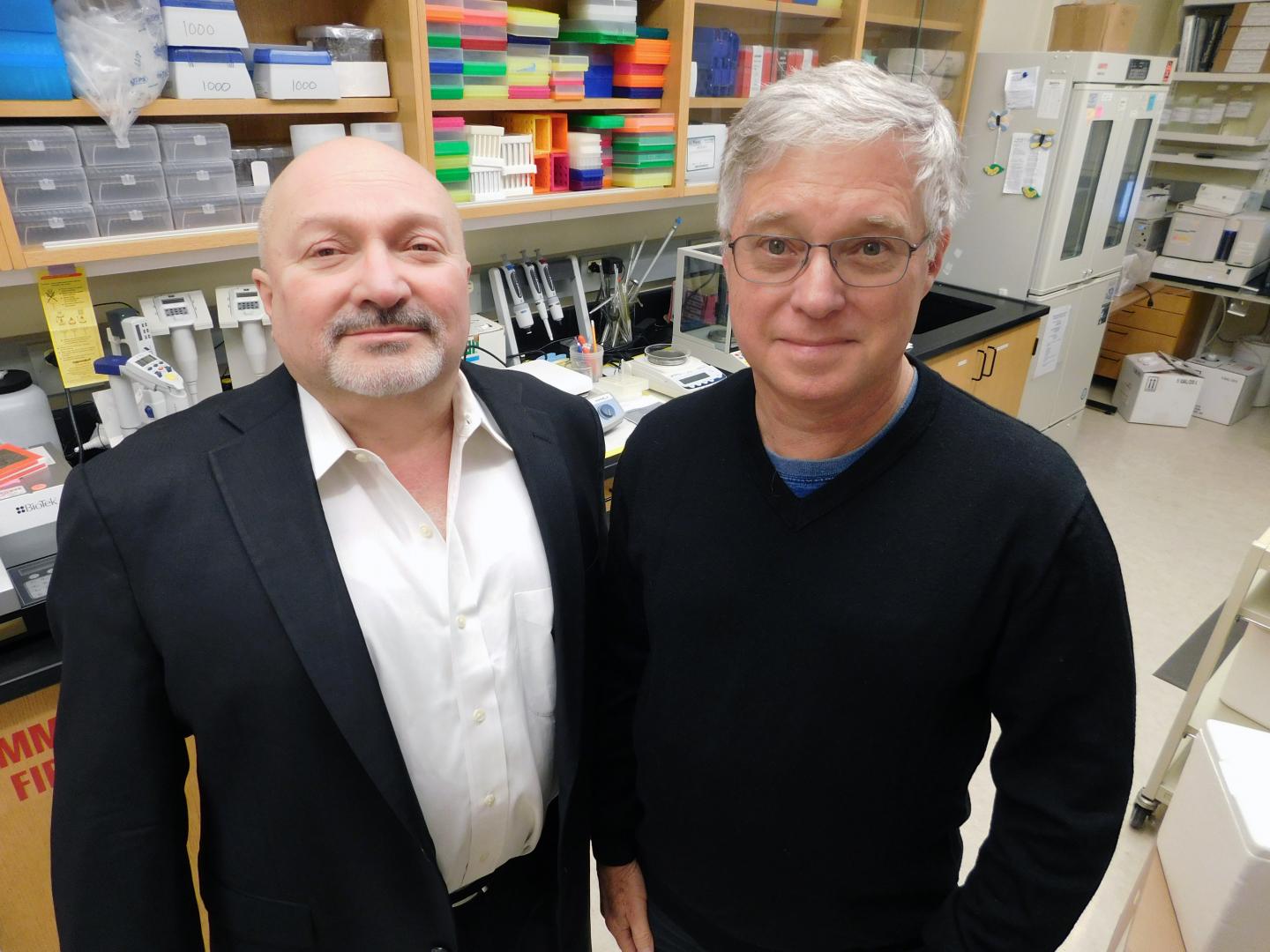
San Antonio, Texas (Nov. 15, 2017) – Texas Biomedical Research Institute scientists have been granted funding from the National Institutes of Health to pursue a promising study on the ultimate causes of heart disease and metabolic disorders. Principal Investigators Raul A. Bastarrachea, MD, and Jack W. Kent Jr., Ph.D., of Texas Biomedical Research Institute have designed the GEMM Family Study (Genetics of Metabolic Diseases in Mexico).
The GEMM Family Study examines volunteers from 10 university hospital sites in Mexico. Blood samples and tissue samples collected from participants are analyzed at Texas Biomedical Research Institute in San Antonio, Texas.
Healthy adults provide baseline blood samples and muscle biopsies at fasting. Then, they are given what's called a meal challenge. The volunteers eat 30 percent of what their bodies need for their individual daily energy needs based on their Base Metabolic Rate (BMR) and activity level.
If their metabolism is working correctly, that food – a balanced mix of proteins, carbohydrates, fat and micronutrients – should be metabolized, oxidized, or stored within five hours. By taking another muscle biopsy and blood samples at several points during the five hours following the meal, the researchers hope to find out why some otherwise healthy people may have an impaired response to a meal which can lead to cardiovascular disease over time.
"The idea behind the GEMM Family Study is to pinpoint novel biomarkers of metabolic responses that could be early predictors of cardiovascular disease," explained Dr. Bastarrachea. Distinguishing those biomarkers could lead to earlier diagnoses and interventions based on individual results.
Heart disease is a major health problem for Hispanic Americans. High rates of obesity, diabetes and high blood pressure put them at great risk for cardiovascular problems like strokes and heart attacks. The scientists anticipate that findings from the GEMM Family Study will have implications for diagnosing and treating cardiovascular disease on both sides of the U.S.-Mexico border.
The National Institute of Diabetes and Digestive and Kidney Diseases, part of the National Institutes of Health, has awarded the GEMM Family Study researchers $544,803 over two years to study data from 40 people in Mexico. Using that preliminary data, Texas Biomed scientists plan to apply for a larger NIH grant that would fund the study of data collected from 400 individuals.
"I take this grant as a strong vote of confidence," Dr. Kent said. "They (the NIH) liked the study design."
Texas Biomed has a long history of researching genetic contributors to heart disease risk in family studies, including ongoing collaboration in the StrongHeart Study of American Indians.
###
Research Partners and Funding
The GEMM Family Study is being supported by the National Institute of Diabetes and Digestive and Kidney Diseases of the National Institutes of Health under Award Number R56DK114703.
This study will involve collaborative research by scientists at Texas Biomed and UT Health San Antonio. Molecular analyses of gene expression will be conducted by the laboratory of Dr. Shelley Cole and the Texas Biomed Genomics Sequencing Core. Other molecular profiling will be conducted at the UT Health Mass Spectrometry Laboratory under the supervision of Drs. Susan Weintraub and Xianlin Han.
The locations in Mexico where volunteers are taking part in the GEMM Family Study are:
- MONTERREY, Facultad de Enfermería, Universidad Autónoma de Nuevo Leon (UANL), Facultad de Salud Pública y Nutrición (Faspyn), UANL, Hospital Metropolitano Monterrey (Dr. Esther Gallegos and Dr. Edna Nava)
- MERIDA, Escuela de Ciencias de la Salud de la Universidad Marista de Mérida (Dr. Hugo Laviada)
- CUERNAVACA, Facultad de Medicina de la Universidad Autónoma del Estado de Morelos (Dr. Jesús Santa-Olalla)
- CHIHUAHUA, Facultad de Medicina de la Universidad Autónoma de Chihuahua (Dr. Irene Leal)
- MORELIA, Universidad Latina de América, Michoacán (Dr. Juan Carlos Castillo y Dr. Areli Murillo)
- GUADALAJARA, Instituto Superior Autónomo de Occidente, A.C., Universidad Católica (UNIVA), Hospital Salud de los Enfermos (Dr. Laura Gonzalez)
- VERACRUZ, Instituto de Investigaciones Medico Biológicas, Universidad Veracruzana (Dr. José Maria Remes)
- CIUDAD VICTORIA, Hospital Infantil de Tamaulipas SSA (Dr. Judith Cornejo)
- SAN LUIS POTOSI, Facultad de Ciencias Químicas, Universidad Autónoma de SLP (Dr. Claudia Escudero)
- MEXICO, Facultad de Ciencias de la Salud Universidad Anáhuac México Norte, CDMX (Dr. Ernesto Rodriguez)
Texas Biomed is one of the world's leading independent biomedical research institutions dedicated to advancing health worldwide through innovative biomedical research. Texas Biomed partners with hundreds of researchers and institutions around the world to develop diagnostics, therapeutics and vaccines against pathogens causing AIDS, hepatitis, tuberculosis, hemorrhagic fevers and parasitic diseases responsible for malaria and schistosomiasis. The Institute also has programs in the genetics of cardiovascular disease, diabetes, obesity, psychiatric disorders and other diseases. For more information on Texas Biomed, go to http://www.TxBiomed.org.
Media Contact
Lisa Cruz
[email protected]
210-258-9527
@txbiomed
Home