Credit: NIAID
WHAT:
Researchers from the National Institute of Allergy and Infectious Diseases (NIAID), part of the National Institutes of Health, modified an experimental malaria vaccine and showed that it completely protected four of eight monkeys that received it against challenge with the virulent Plasmodium falciparum malaria parasite. In three of the remaining four monkeys, the vaccine delayed when parasites first appeared in the blood by more than 25 days.
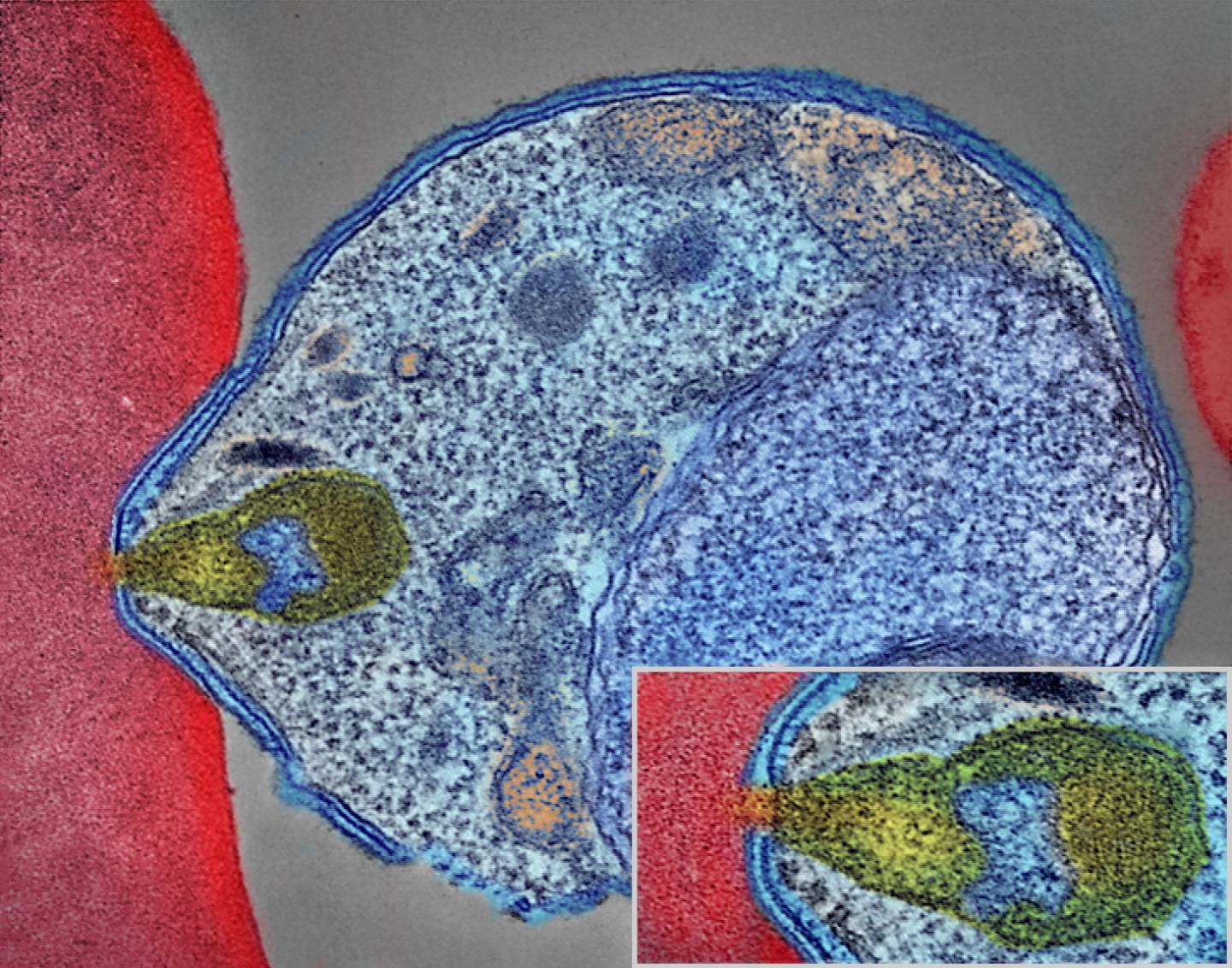
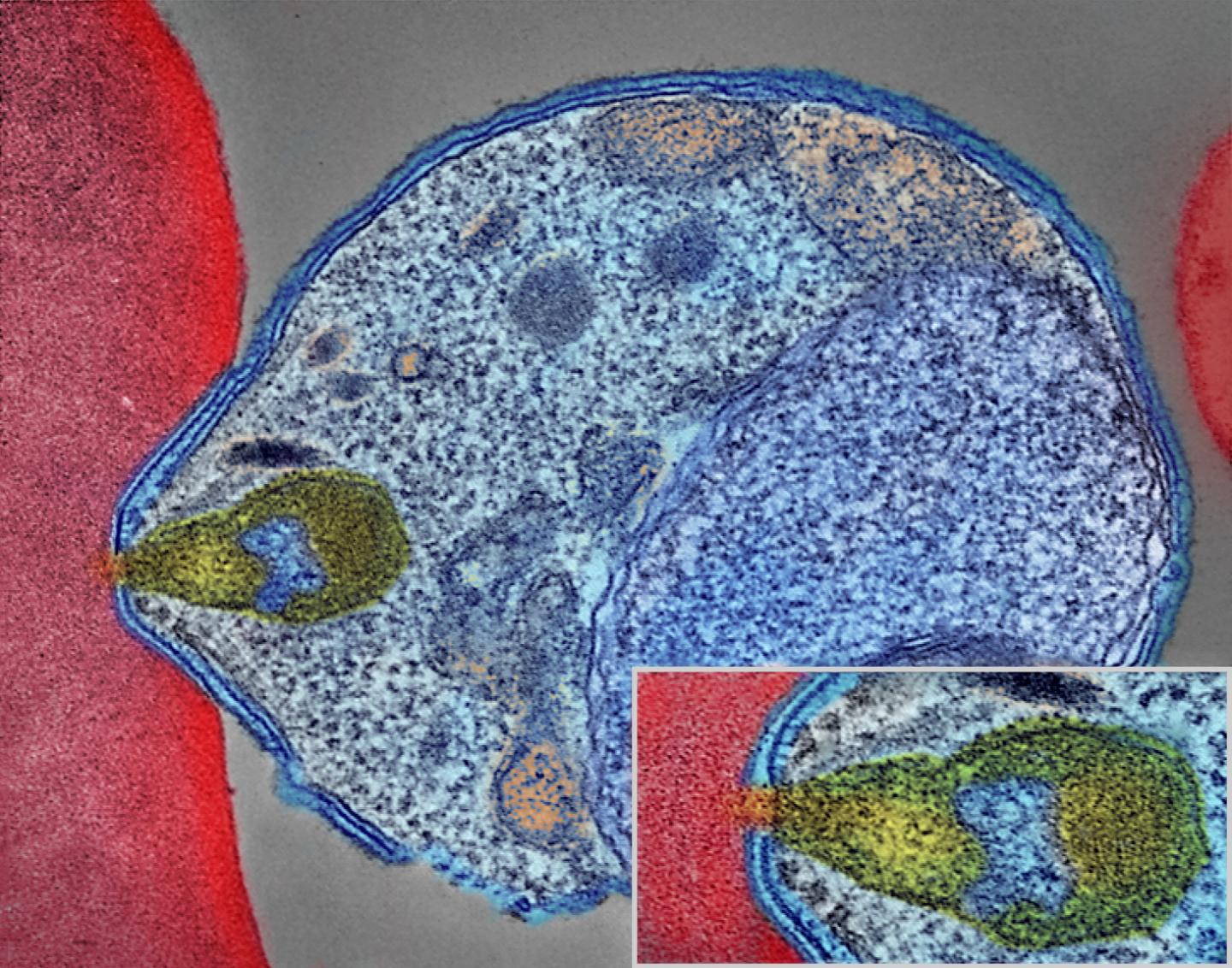
Malaria symptoms occur when parasites replicate inside red blood cells and cause them to burst. To enter blood cells, the parasite first secretes its own receptor protein, RON2, onto the cell's surface. Another parasite surface protein, AMA1, then binds to a specific portion of RON2, called RON2L, and the resulting complex initiates attachment to the outer membrane of the red blood cell.
Several experimental malaria vaccines previously tested in people were designed to elicit antibodies against AMA1 and thus prevent parasites from entering blood cells. Although AMA1 vaccines did generate high levels of antibodies in humans, they have shown limited efficacy in field trials in malaria-endemic settings.
To improve vaccine efficacy, the NIAID scientists modified an AMA1 vaccine to include RON2L so that it more closely mimics the protein complex used by the parasite. Monkeys were vaccinated with either AMA1 alone or with the AMA1-RON2L complex vaccine. Although the overall levels of antibodies generated did not differ between the two groups, animals vaccinated with the complex vaccine produced much more neutralizing antibody, indicating a better quality antibody response with AMA1-RON2L vaccination. Moreover, antibodies taken from AMA1-RON2L-vaccinated monkeys neutralized parasite strains that differed from those used to create the vaccine. This suggests, the authors note, that an AMA1-RON2L complex vaccine could protect against multiple parasite strains. Taken together, the data from this animal study justify progression of this next-generation AMA1 vaccine toward possible human trials, they conclude.
###
ARTICLE:
P Srinivasan et al. A malaria vaccine protects Aotus monkeys against Plasmodium falciparum infection. npjVaccines DOI: 10.1038/s41541-017-0015-7 (2017).
WHO:
Louis H. Miller, M.D., Laboratory of Malaria and Vector Research, NIAID, is available to discuss this research. Prakash Srinivasan, Ph.D., formerly in the NIAID lab of malaria and vector research and now at Johns Hopkins Bloomberg School of Public Health, is also available.
CONTACT:
To schedule interviews, please contact the NIAID Office of Communications and Government Relations, (301) 402-1663, [email protected]
NIAID conducts and supports research–at NIH, throughout the United States, and worldwide–to study the causes of infectious and immune-mediated diseases, and to develop better means of preventing, diagnosing and treating these illnesses. News releases, fact sheets and other NIAID-related materials are available on the NIAID website.
About the National Institutes of Health (NIH): NIH, the nation's medical research agency, includes 27 Institutes and Centers and is a component of the U.S. Department of Health and Human Services. NIH is the primary federal agency conducting and supporting basic, clinical, and translational medical research, and is investigating the causes, treatments, and cures for both common and rare diseases. For more information about NIH and its programs, visit http://www.nih.gov.
Media Contact
NIAID Office of Communications
[email protected]
301-402-1663
@NIAIDNews
http://www.niaid.nih.gov
Related Journal Article
http://dx.doi.org/10.1038/s41541-017-0015-7