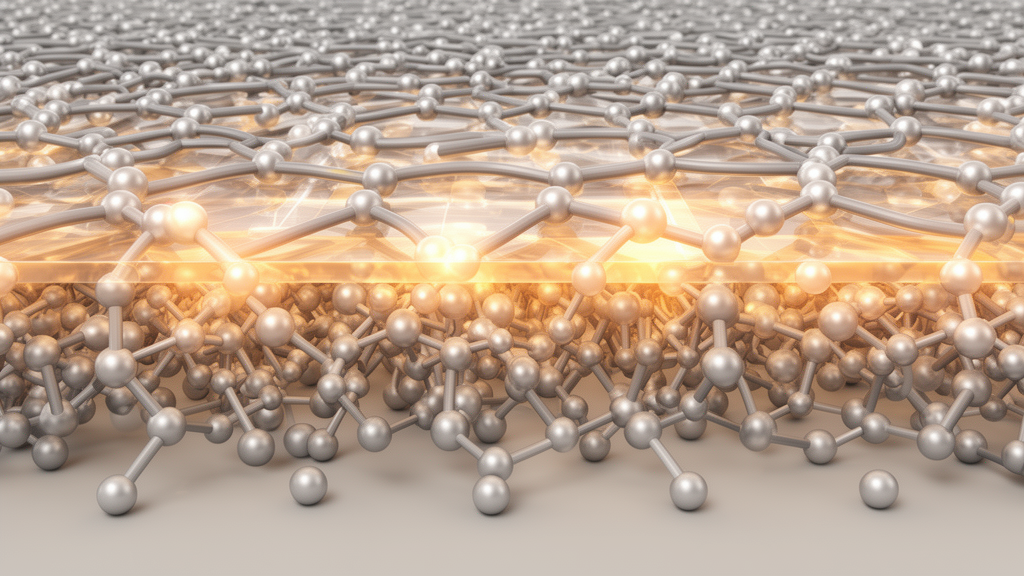
A novel interface-engineered photovoltaic architecture coupling a microwave-synthesized polyaniline-fullerene nanocomposite counter electrode with an ionic liquid polymer gel electrolyte significantly improves charge transfer kinetics in quasi-solid-state dye-sensitized solar cells. Developed to advance scalable, platinum-free photovoltaics, this device architecture couples the conductive composite electrode directly with a lithium iodide-based polymer gel electrolyte formulation. The integrated system targets the electrode and electrolyte boundary to resolve kinetic constraints and lower interfacial charge transfer resistance during device operation.
The polyaniline-fullerene counter electrode was fabricated through rapid in-situ microwave polymerization techniques. When prepared with an optimized 2.5 weight percent fullerene loading, the synthesized nanocomposite material exhibited an electrical conductivity of 288.31 siemens per centimeter alongside a high crystallinity of 41.43 percent. Furthermore, scanning electron microscopy examination confirmed that the synthesized electrode surface formed a rough, interconnected nanostructure, an architectural morphology that directly facilitated efficient charge transfer across the counter electrode surface.
To interface with this nanocomposite counter electrode, researchers developed an ionic liquid polymer gel electrolyte optimized through a systematic design of experiments methodology. The formulation incorporated lithium iodide and 1-butyl-3-propylimidazolium iodide within a polyacrylonitrile host matrix, enabling enhanced ionic mobility and electrochemical stability. In addition, molecular dynamics simulations confirmed accelerated ion transport throughout the medium and revealed favorable molecular interactions at the polyaniline-fullerene interface, directly supporting catalytic and interfacial stability under operating conditions.
During photovoltaic performance testing, the fully optimized quasi-solid-state device achieved an overall power conversion efficiency of 5.71 percent. This recorded output nearly matched the 5.82 percent efficiency attained by a standard reference cell constructed with a platinum counter electrode and liquid electrolyte. Crucially, the engineered quasi-solid-state architecture outperformed other comparison configurations evaluated under identical conditions, exceeding the efficiencies demonstrated by a platinum electrode with gel electrolyte and a polyaniline-fullerene electrode with liquid electrolyte.
The investigators attributed the improved photovoltaic performance to reduced charge transfer resistance at the electrode-electrolyte interface, an improvement that enhanced both fill factor and current density. Extended durability assessments highlighted the operational resilience of the assembly: while the standard platinum and liquid cell suffered catastrophic degradation with efficiency dropping to near zero after thirty days, the quasi-solid-state device retained over 98 percent of its initial performance, demonstrating strong potential for scalable, platinum-free solar energy harvesting.
Subject of Research: Nanocomposite counter electrodes and polymer gel electrolytes for quasi-solid-state dye-sensitized solar cells
Article Title: Interface-driven electrocatalytic enhancement in microwave synthesized polyaniline–fullerene nanocomposites counter electrodes for quasi-solid-state dye-sensitized solar cells
Article References: Rasheed, M. H., Gill, Y. Q., Farooq, M., Younas, M., & Mehmood, U. (2027). Interface-driven electrocatalytic enhancement in microwave synthesized polyaniline–fullerene nanocomposites counter electrodes for quasi-solid-state dye-sensitized solar cells. Polymer Bulletin, 84(1), Article 44. https://doi.org/10.1007/s00289-026-06806-7
Image Credits: AI Generated
DOI: 10.1007/s00289-026-06806-7
Keywords: dye-sensitized solar cells, quasi-solid-state photovoltaics, polyaniline-fullerene nanocomposites, counter electrodes, polymer gel electrolytes, microwave polymerization, charge transfer kinetics, power conversion efficiency, fill factor, current density, molecular dynamics simulations, polyacrylonitrile matrix, lithium iodide, 1-butyl-3-propylimidazolium iodide, platinum-free photovoltaics, electrocatalytic stability, scanning electron microscopy
News Source: Bethany Barker. (November 19, 2026). Polyaniline-Fullerene Electrodes Enable Durable Quasi-Solid-State Dye-Sensitized Solar Cells. Scienmag.