• HOME
  • NEWS
  • EXPLORE
    • CAREER
      • Companies
      • Jobs
    • EVENTS
    • iGEM
      • News
      • Team
    • PHOTOS
    • VIDEO
    • WIKI
  • BLOG
  • COMMUNITY
    • FACEBOOK
    • INSTAGRAM
    • TWITTER
Saturday, February 7, 2026
BIOENGINEER.ORG
No Result
View All Result
  • Login
  • HOME
  • NEWS
  • EXPLORE
    • CAREER
      • Companies
      • Jobs
        • Lecturer
        • PhD Studentship
        • Postdoc
        • Research Assistant
    • EVENTS
    • iGEM
      • News
      • Team
    • PHOTOS
    • VIDEO
    • WIKI
  • BLOG
  • COMMUNITY
    • FACEBOOK
    • INSTAGRAM
    • TWITTER
  • HOME
  • NEWS
  • EXPLORE
    • CAREER
      • Companies
      • Jobs
        • Lecturer
        • PhD Studentship
        • Postdoc
        • Research Assistant
    • EVENTS
    • iGEM
      • News
      • Team
    • PHOTOS
    • VIDEO
    • WIKI
  • BLOG
  • COMMUNITY
    • FACEBOOK
    • INSTAGRAM
    • TWITTER
No Result
View All Result
Bioengineer.org
No Result
View All Result
Home Headlines

Eight children born after uterus transplants

Bioengineer.org by Bioengineer.org
January 25, 2018
in Headlines, Health, Science News
Reading Time: 2 mins read
0
Share on FacebookShare on TwitterShare on LinkedinShare on RedditShare on Telegram
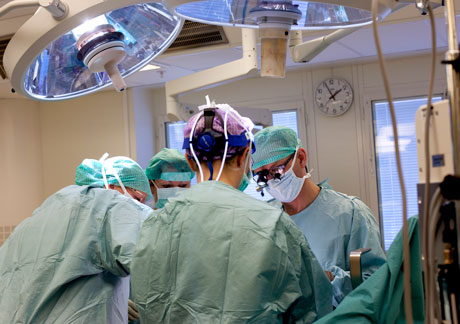
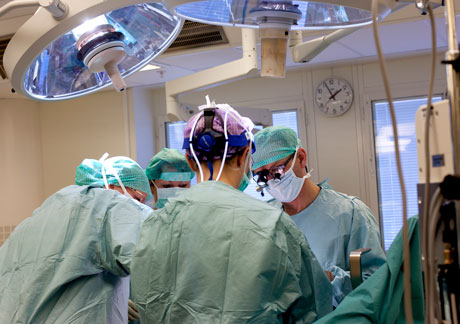
Credits: Johan Wingborg

Eight children born – and the first robot-assisted operation performed. These are some of the results of 18 years of research at Sahlgrenska Academy on uterus transplants. In Gothenburg, the elite of the research world in the field are now gathering for their first congress.

In three years, from September 2014 to today, eight children in the world have been born to mothers who had fertilized eggs returned after undergoing a uterus transplant. All of this has taken place in the scope of the research conducted at Sahlgrenska Academy since 1999.

The first birth enjoyed international attention. When children seven and eight came into the world one week apart this past summer, the framing was considerably calmer. For one of the mothers, it was her second child; she had undergone two pregnancies with the same donated uterus.

In a new project, the researchers in Gothenburg are now focusing on robot-assisted operations. The objective is to more easily handle the challenge of operating inside the woman’s bowl-shaped pelvis. The basic technology is the same as in some cancer operations, such as cervical cancer operations.

Simpler surgery
“The hypothesis in our research is that we can do it significantly faster this way and with an earlier return home for the patients,” says Mats Brännström, Professor of Obstetrics and Gynecology at Sahlgrenska Academy and Senior Physician at Sahlgrenska University Hospital.

One operation took place in May, four await in October and December and the remaining five will be done in coming years. Just like before, the attempts to make the women pregnant begin one year after they have received the transplanted uterus when the situation regarding medication against rejection has stabilized.

Besides the robot-assisted operations, one of which was also done in China, donations from deceased donors is also an issue of current interest. Not for the Swedish researchers, here it has always been about living and related donors, but the ideas are being considered elsewhere in the world.

Soon a clinical reality
Mats Brännström describes uterus transplants as an internationally growing field with a need for a common compulsory register of all procedures done in order for the researchers to get an overview. The register will be an important issue when the year-old organization, International Society for Uterus Transplantation (ISUTx) holds its first congress.

Mats Brännström believes that uterus transplants will also be done outside the research sphere in a few years. He is well aware of the discussion of priorities in healthcare and actually does not want to have opinions on matters other than the medical.

“In the future, this method will become even more effective, and a clinical reality. We don’t know if this will be in Sweden. Medically, it’s fully realistic in five years, but there are many other decisions we have no control over,” he says.

More to read: www.isutx.org. Precongress and congress September 17-19.

Contact: Mats Brännström

Share12Tweet8Share2ShareShareShare2

Related Posts

Barriers and Boosters of Seniors’ Physical Activity in Karachi

February 7, 2026

Evaluating Pediatric Emergency Care Quality in Ethiopia

February 7, 2026

TPMT Expression Predictions Linked to Azathioprine Side Effects

February 7, 2026

Improving Dementia Care with Enhanced Activity Kits

February 7, 2026
Please login to join discussion

POPULAR NEWS

  • Robotic Ureteral Reconstruction: A Novel Approach

    Robotic Ureteral Reconstruction: A Novel Approach

    82 shares
    Share 33 Tweet 21
  • Digital Privacy: Health Data Control in Incarceration

    63 shares
    Share 25 Tweet 16
  • Study Reveals Lipid Accumulation in ME/CFS Cells

    57 shares
    Share 23 Tweet 14
  • Breakthrough in RNA Research Accelerates Medical Innovations Timeline

    53 shares
    Share 21 Tweet 13

About

We bring you the latest biotechnology news from best research centers and universities around the world. Check our website.

Follow us

Recent News

Barriers and Boosters of Seniors’ Physical Activity in Karachi

Evaluating Pediatric Emergency Care Quality in Ethiopia

TPMT Expression Predictions Linked to Azathioprine Side Effects

Subscribe to Blog via Email

Enter your email address to subscribe to this blog and receive notifications of new posts by email.

Join 73 other subscribers
  • Contact Us

Bioengineer.org © Copyright 2023 All Rights Reserved.

Welcome Back!

Login to your account below

Forgotten Password?

Retrieve your password

Please enter your username or email address to reset your password.

Log In
No Result
View All Result
  • Homepages
    • Home Page 1
    • Home Page 2
  • News
  • National
  • Business
  • Health
  • Lifestyle
  • Science

Bioengineer.org © Copyright 2023 All Rights Reserved.