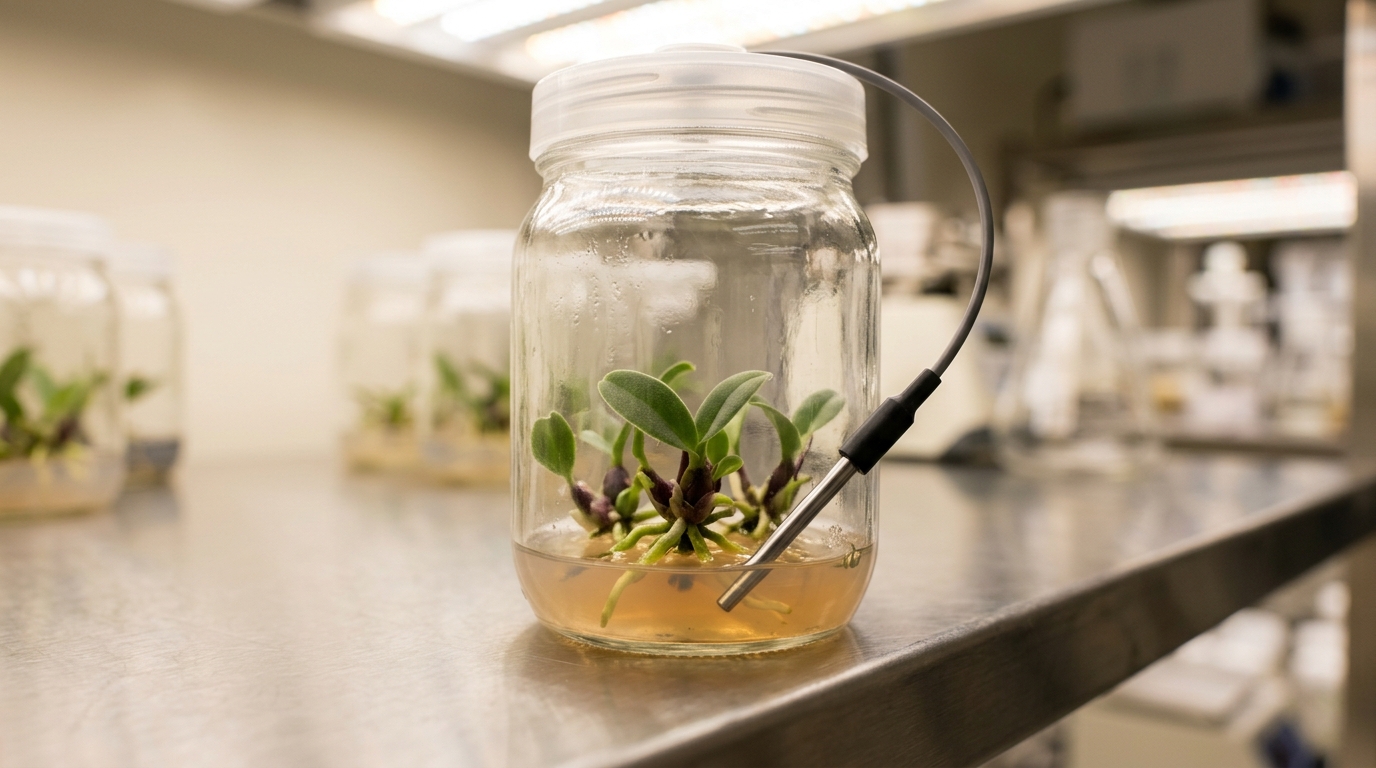
A new research initiative has successfully optimized an Internet of Things (IoT)-integrated temporary immersion system (TIS) for the micropropagation of the endangered black orchid, Coelogyne pandurata. The study, conducted at the Plant Bioscience and Reproduction Biotechnology Laboratory in Indonesia, sought to address the significant decline of this species in its native Bornean habitat, which has been accelerated by overexploitation for the ornamental trade and habitat loss. Traditional propagation methods, such as semi-solid media culture, have long been plagued by limitations including high labor requirements, poor nutrient availability, and low scalability. By leveraging automated environmental control technologies, researchers aimed to develop a reliable protocol to support ex-situ conservation efforts, specifically focusing on the intersection of light exposure duration and nutrient immersion frequency within a controlled bioreactor environment.
The experimental setup employed a completely randomized factorial design to assess the effects of four distinct photoperiods, ranging from 12 to 24 hours of light, and three different immersion frequencies, specifically four, six, and eight times per day, each for a duration of two minutes. The bioreactor system was engineered to facilitate real-time monitoring of crucial parameters, including temperature, humidity, light intensity, and mechanical vibration, utilizing a suite of sensors such as DHT22 and Lux sensors connected to an Arduino Uno and NodeMCU ESP8266 architecture. This digital framework allowed for the precise regulation of the immersion cycles and lighting, ensuring that environmental variables remained within specified operational bounds throughout the 30-day culture period. The system also provided automated data logging via a mobile interface, which minimized human intervention and significantly reduced the potential for operational errors that often compromise the reproducibility of in-vitro orchid tissue cultures.
A critical component of this investigation involved overcoming the persistent challenge of microbial contamination, which historically limits the viability of temporary immersion systems. Preliminary trials initially recorded a 100% contamination rate, prompting a rigorous multi-stage mitigation strategy. The first stage focused on standard sterilization techniques and media formulation, while the second stage implemented double sterilization procedures, including the separate autoclaving of equipment and media followed by handling within a laminar airflow cabinet. The final, most successful stage involved mechanical modifications to the bioreactor components, specifically the replacement of the central tube with a wider-bore design and the redesign of the culture basket to improve nutrient drainage and gas exchange efficiency. Following these integrated modifications, the contamination rate was reduced to approximately 10%, a performance standard that was maintained throughout the final growth experiment, thereby ensuring the integrity of the data collected.
The study results revealed that shoot multiplication, the primary goal for large-scale micropropagation, was most effectively achieved under continuous illumination of 24 hours per day combined with a lower immersion frequency of four times per day. Under these specific conditions, plantlets exhibited the highest average shoot proliferation, yielding 4.98 shoots per explant. Researchers observed that while shorter dark intervals reduced proliferation, the moderate immersion frequency successfully balanced nutrient delivery with sufficient aeration. This finding underscores the potential for continuous photoperiods to sustain the photosynthetic and metabolic activity necessary for organogenesis in this specific orchid species, provided that the immersion schedule is carefully optimized to avoid oxygen depletion and the associated risks of tissue hypoxia.
Plant height and root elongation showed divergent responses compared to shoot multiplication, indicating that optimization must be calibrated to the specific propagation objective. While shoot formation was favored by continuous light, plant height was notably influenced by higher immersion frequencies, with the greatest heights observed under eight immersions per day. Conversely, root elongation was most pronounced in treatments involving frequent immersion combined with a shorter 12-hour photoperiod. This suggests that while more frequent exposure to the liquid medium promotes water uptake and turgor-driven elongation, it may simultaneously reallocate energy away from shoot development. These findings highlight a distinct trade-off where the conditions that promote rapid shoot initiation differ from those that stimulate root elongation, a common phenomenon in plant tissue culture that requires careful management based on the developmental stage of the orchid plantlets.
Physiological parameters such as biomass accumulation, measured as fresh weight, further illustrated the complex trade-offs inherent in the system. The highest average fresh weight was recorded under a 16-hour photoperiod combined with four immersions per day, suggesting that moderate light exposure might be superior for overall biomass accumulation by potentially avoiding the photoinhibitory effects that can sometimes accompany continuous 24-hour illumination. Interestingly, biomass values were significantly lower in treatments characterized by excessive immersion frequencies, such as eight times per day, which suppressed growth. This suppression is likely attributable to the prolonged saturation of the tissue, which restricts gas exchange and induces a hypoxic environment, limiting the plant’s ability to maintain high rates of metabolic activity despite the presence of adequate nutrients.
The incidence of hyperhydricity, a common physiological disorder in tissue-cultured orchids characterized by water-soaked, brittle, and translucent tissues, provided further insight into the mechanical performance of the bioreactor. The results clearly demonstrated that hyperhydricity was significantly exacerbated by higher immersion frequencies, particularly when coupled with shorter photoperiods. Frequent exposure to the liquid medium likely limits the plant’s transpiration and internal gas exchange, promoting ethylene accumulation and tissue vitrification. Conversely, extended light periods and reduced immersion frequencies were associated with significantly lower hyperhydricity scores, indicating that the IoT-integrated control of the TIS allowed for an environment that maintained firmer, greener leaves and more normal morphology, directly supporting the production of healthier, more robust plantlets.
Pigment analysis, focusing on chlorophyll and carotenoid concentrations, provided a biochemical perspective on the observed growth responses. The highest levels of both total chlorophyll and carotenoids were recorded under moderate photoperiods of 12 to 16 hours of light paired with moderate immersion frequencies. In contrast, extended photoperiods of 20 to 24 hours resulted in markedly lower pigment concentrations, potentially reflecting accelerated chlorophyll degradation or photoinhibition under excessive light. The leaf color observations, categorized using the Royal Horticultural Society color chart, corroborated these quantitative findings, revealing that shorter light exposures and moderate immersion regimes consistently produced darker green leaves. This suggests that the combination of optimal light and balanced aeration is critical for ensuring the physiological stability of the plantlets and maintaining the integrity of their photosynthetic apparatus.
Anatomical studies on stomatal development added another layer of understanding, revealing that photoperiod acts as a primary regulator of epidermal characteristics in C. pandurata. Stomatal density was found to be significantly higher under extended illumination periods, likely reflecting an increased photosynthetic demand that triggers developmental responses in the leaf epidermis. While stomatal size was not significantly affected by the treatments, there was an observable tendency toward an inverse relationship between density and size, consistent with classical plant biology theories. The findings suggest that the specific treatment combinations that optimize shoot growth also influence structural traits that are likely to be beneficial during the acclimatization process, supporting better gas exchange efficiency and potential survival when the plantlets are eventually transferred to an ex-vitro environment.
Despite the successful development of the IoT-integrated TIS protocol, the researchers noted several limitations to the current study, primarily that the findings are based on a 30-day laboratory-scale experiment using a single orchid species. While the study effectively demonstrated that environmental control and contamination mitigation were achievable, further investigation is necessary to evaluate the long-term robustness and economic feasibility of the system for commercial or large-scale conservation applications. Future research will be required to assess the post-culture survival rates of these plantlets and to confirm their field establishment performance. Nonetheless, the current data provide a practical framework for refining micropropagation protocols and suggest that precision automation is a vital step forward in the specialized conservation efforts required for endangered species such as the black orchid.
Subject of Research: Micropropagation of the endangered black orchid Coelogyne pandurata using an IoT-integrated temporary immersion system.
Article Title: Optimization of photoperiod and immersion frequency in an IoT-integrated Temporary Immersion System for enhanced growth and reduced contamination of Coelogyne pandurata culture
Article References: Jamaluddin, I., Sjahril, R., Syam‘un, E., Haring, F., & Sampepadang, N. (2026). Optimization of photoperiod and immersion frequency in an IoT-integrated Temporary Immersion System for enhanced growth and reduced contamination of Coelogyne pandurata culture. Journal of the Saudi Society of Agricultural Sciences, 25(6), Article 94. https://doi.org/10.1007/s44447-026-00181-5
Image Credits: AI Generated
DOI: 10.1007/s44447-026-00181-5
Keywords: Coelogyne pandurata, black orchid, micropropagation, temporary immersion system, biotechnology, plant tissue culture, IoT integration, environmental control, photoperiod optimization, immersion frequency, contamination control, shoot multiplication, physiological parameters, plant physiology, endangered species conservation, bioreactor, stomata development, chlorophyll biosynthesis, hyperhydricity reduction
News Source: Margaret Porter. (November 18, 2026). IoT-Integrated System Optimizes Micropropagation for Endangered Black Orchid. Scienmag.