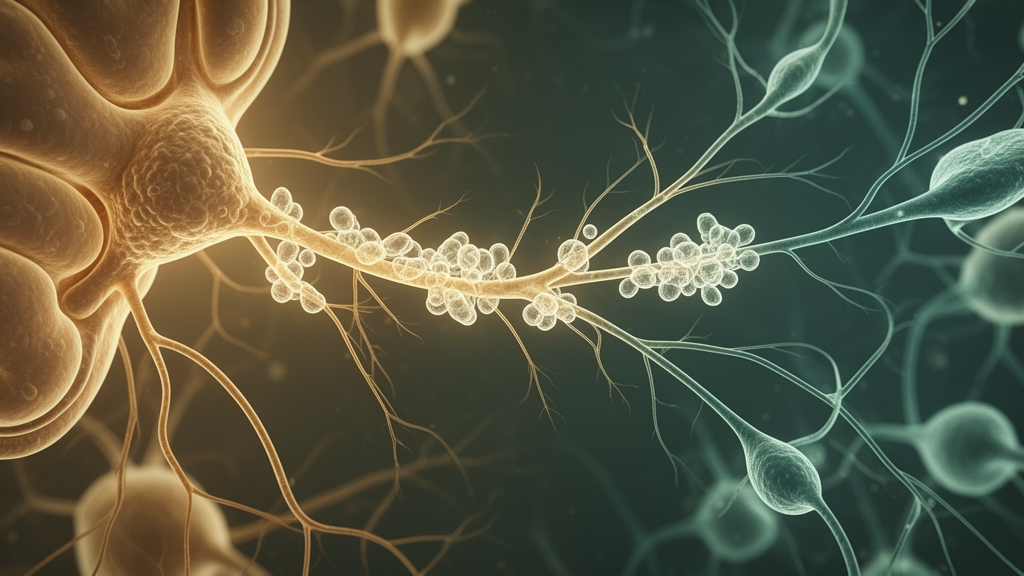
Chronic exposure to methamphetamine triggers the early accumulation of alpha-synuclein in the olfactory bulb, which subsequently contributes to protein accumulation in the basolateral amygdala and drives negative affective behavioral changes in mice, according to experimental findings published in the journal Cell Biology and Toxicology.
Methamphetamine abuse induces profound negative affective states that are frequently accompanied by suicidal ideation, self harm, and violent behavior, imposing a substantial global public health burden. Growing evidence suggests that alpha-synuclein pathology is associated with affective disorders, including anxiety and depression. Although chronic methamphetamine exposure is known to increase alpha-synuclein accumulation across multiple brain regions, whether the protein spreads between distinct brain regions during exposure has remained an open scientific question.
In the newly published study, researchers identified the olfactory bulb as an early anatomical site of alpha-synuclein accumulation following chronic methamphetamine exposure in mice. Their experimental findings suggest that olfactory bulb-derived alpha-synuclein contributes to alpha-synuclein accumulation in the basolateral amygdala.
To test this inter-regional spreading mechanism, the research team performed a selective knockdown of alpha-synuclein specifically within the olfactory bulb. This targeted reduction decreased alpha-synuclein accumulation in the basolateral amygdala. Crucially, the selective knockdown in the olfactory bulb also alleviated both anxiety-like and depression-like behaviors in the chronic methamphetamine-treated mice.
Mechanistically, the investigators discovered that fatty acid binding protein 3, known as FABP3, contributed to the preferential accumulation of alpha-synuclein specifically within parvalbumin-positive interneurons located in the basolateral amygdala.
This localized accumulation was associated with impaired GABAergic signaling and an increased activation of excitatory neurons within the basolateral amygdala. Detailed electrophysiological recordings further demonstrated significantly reduced inhibitory synaptic currents in these basolateral amygdala excitatory neurons, confirming a pronounced functional breakdown in local inhibitory regulation following chronic drug exposure.
To evaluate whether restoring local inhibition could mitigate these observed deficits, the research team tested the pharmacological enhancement of GABAergic inhibition. This pharmacological enhancement partially alleviated the behavioral abnormalities in the mice, demonstrating that restoring inhibitory synaptic transmission can counteract the negative affective changes driven by chronic methamphetamine exposure.
Together, these findings highlight the major contribution of olfactory bulb alpha-synuclein to basolateral amygdala dysfunction and chronic methamphetamine-associated affective abnormalities. The authors conclude that these experimental observations provide valuable new insights into the specific neural mechanisms underlying persistent emotional dysfunction and negative affective states following chronic methamphetamine exposure.
Subject of Research: Olfactory bulb alpha-synuclein and methamphetamine-induced affective dysfunction in mice
Article Title: Olfactory bulb α-synuclein contributes to basolateral amygdala α-synuclein accumulation and affective-like behavioral changes following chronic methamphetamine exposure
Article References: Gu, C., Li, K., Li, Y., Zhu, L., Ling, H., Huang, W., Han, Y., Xie, Q., Tao, B., Wang, Y., Huang, J., Ding, J., & Qiu, P. (2026). Olfactory bulb α-synuclein contributes to basolateral amygdala α-synuclein accumulation and affective-like behavioral changes following chronic methamphetamine exposure. Cell Biology and Toxicology. https://doi.org/10.1007/s10565-026-10335-4
Image Credits: AI Generated
DOI: 10.1007/s10565-026-10335-4
Keywords: methamphetamine, alpha-synuclein, olfactory bulb, basolateral amygdala, affective disorders, anxiety-like behavior, depression-like behavior, FABP3, parvalbumin interneurons, GABAergic signaling, excitatory neurons, electrophysiological recordings, inhibitory synaptic currents, substance abuse, behavioral abnormalities, mouse models
News Source: Glenn Wilkins. (November 18, 2026). Olfactory Bulb Alpha-Synuclein Contributes to Amygdala Accumulation and Behavioral Changes in Mice. Scienmag.