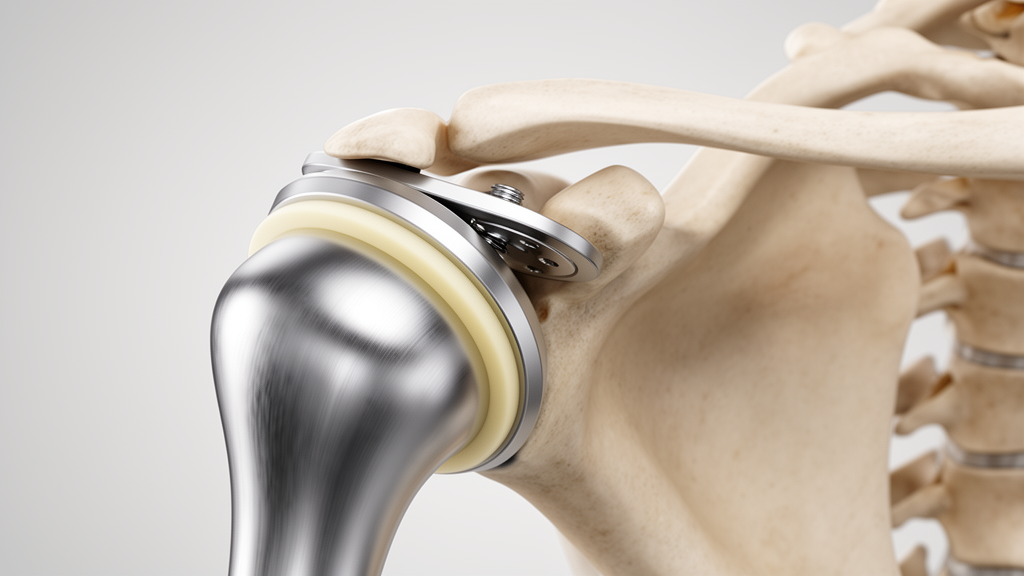
A recent systematic review and meta-analysis published in the Journal of Orthopaedics and Traumatology has provided new clarity regarding the comparative safety profiles of inlay and onlay humeral designs in reverse total shoulder arthroplasty (RTSA). RTSA serves as the standard clinical intervention for patients suffering from rotator cuff tear arthropathy, a condition that severely compromises shoulder function. While these two humeral stem classifications are widely utilized, their distinct risks related to postoperative complications and the necessity for surgical revision had remained a subject of ongoing clinical debate among orthopedic surgeons. This comprehensive evaluation sought to synthesize existing research literature to better inform evidence-based implant selection for clinical practice.
To rigorously examine these outcomes, researchers conducted a systematic review following the Preferred Reporting Items for Systematic Evaluation and Meta-Analysis (PRISMA) guidelines. The investigative team performed an exhaustive search across prominent medical databases, including PubMed, Cochrane, and Embase, to identify all relevant research comparing the clinical performance of the two humeral prosthesis designs. By applying strict inclusion and exclusion criteria, the study successfully identified 13 peer-reviewed studies for inclusion in the final meta-analysis. The aggregate dataset encompassed a large cohort of 16,309 patients, with 5,680 patients receiving onlay implants and 3,261 patients receiving inlay implants, allowing for a robust statistical comparison of clinical outcomes.
The study primarily measured revision rates and a range of specific complication indicators, including scapular notching, infection, periprosthetic fracture, component loosening, and joint dislocation. The meta-analysis revealed distinct, statistically significant differences in specific complication rates between the two design types. Notably, the inlay humeral prosthesis was associated with a significantly higher incidence of scapular notching compared to the onlay design. Specifically, the inlay group demonstrated a scapular notching rate of 17.74%, whereas the onlay group experienced a rate of 9.41%, a difference that reached statistical significance with a p-value of 0.0008.
Conversely, the data indicated that onlay humeral prostheses were associated with an elevated risk of postoperative infection. The meta-analysis found that the onlay group had an infection rate of 1.67%, in contrast to an infection rate of 0.87% observed in the inlay group. This difference in infection incidence was also determined to be statistically significant, with a p-value of 0.02. These findings suggest that both implant designs carry specific postoperative risks that may influence surgical decision-making, particularly in patients with pre-existing risk factors for specific complications like infection or scapular notching.
The researchers also evaluated other common complications, such as periprosthetic fractures, joint dislocations, and component loosening. The analysis showed that the onlay group had a slightly higher rate of periprosthetic fracture at 1.73% compared to 0.59% in the inlay group. In terms of joint dislocation and component loosening, the inlay group showed slightly higher rates, with dislocation occurring at a rate of 1.73% for inlay compared to 0.59% for onlay, and loosening occurring at 0.71% for inlay compared to 0.47% for onlay. However, the study emphasized that these specific differences in fracture, dislocation, and loosening rates did not reach statistical significance, as all p-values exceeded 0.05.
Furthermore, the investigation assessed patient-reported functional outcomes and long-term revision requirements. When comparing clinical scores, including the American Shoulder and Elbow Surgeons (ASES) Score and the visual analog scale (VAS) for pain, the researchers found no statistically significant differences between the two groups. Additionally, while the onlay group showed a slightly higher cumulative revision rate of 3.94% compared to 3.48% for the inlay group, this difference was not statistically significant. This suggests that in terms of overall hardware survival and subjective patient recovery, both design approaches achieve comparable functional success.
The authors concluded that the choice between inlay and onlay humeral designs in reverse total shoulder arthroplasty involves a trade-off of subtle postoperative risks. Onlay stems appear to offer a reduced risk of scapular notching, while inlay stems appear to be associated with a lower incidence of postoperative infection. Because other primary indicators, such as revision rates and patient functional scores, showed no significant disparity, the selection of the implant design may be guided by the patient’s individual anatomical profile and specific risk factors. This research provides a crucial evidence-based framework for surgeons to navigate these design differences, ultimately aiming to optimize patient safety and long-term clinical outcomes in reverse shoulder arthroplasty.
Subject of Research: Comparative analysis of complications and revision rates between inlay and onlay humeral designs in reverse total shoulder arthroplasty.
Article Title: Complications and revisions of inlay versus onlay design for reverse shoulder arthroplasty: a meta analysis and systematic review
Article References: He, X., Lu, W., Jiang, S., Wang, K., Chu, S., Volotovsky, P., Gerasimenko, M., Bespalchuk, A., Xiao, W., Li, Y., & Wei, L. (2026). Complications and revisions of inlay versus onlay design for reverse shoulder arthroplasty: a meta analysis and systematic review. Journal of Orthopaedics and Traumatology. https://doi.org/10.1186/s10195-026-00968-w
Image Credits: AI Generated
DOI: 10.1186/s10195-026-00968-w
Keywords: Reverse total shoulder arthroplasty, Inlay humeral design, Onlay humeral design, Systematic review, Meta-analysis, Scapular notching, Postoperative infection, Rotator cuff tear arthropathy, Orthopedic surgery, Implant selection, Joint revision, Clinical outcomes, Prosthetic complications, ASES score, VAS pain scale, Shoulder arthroplasty, Musculoskeletal surgery, Evidence-based medicine
News Source: Ophelia Keating. (November 18, 2026). Meta-Analysis Compares Complication Rates for Inlay and Onlay Reverse Shoulder Arthroplasty. Scienmag.