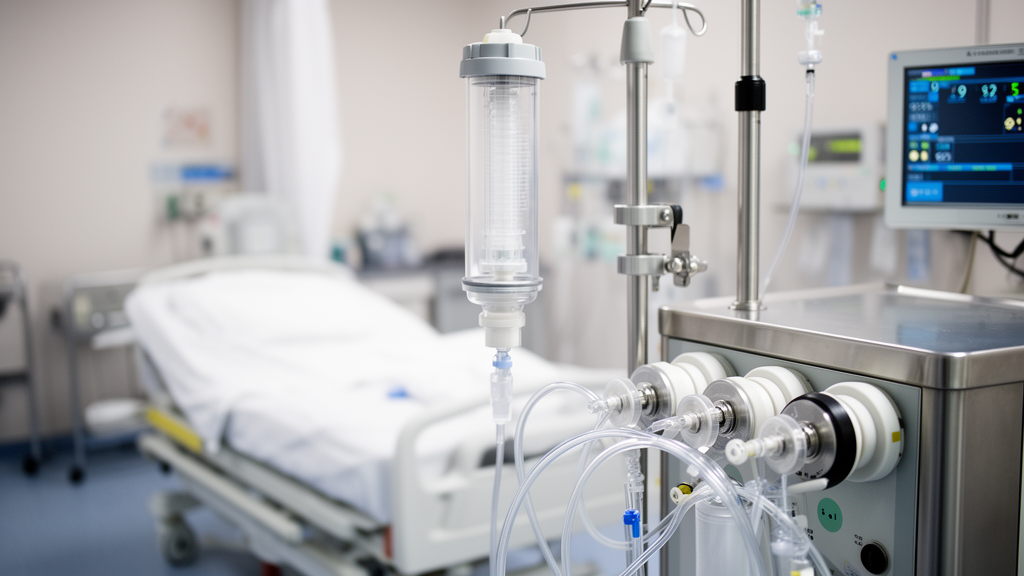
Filter membrane type is the primary determinant of polymyxin B exposure in patients undergoing continuous renal replacement therapy, exerting an effect that exceeds the influence of residual renal function or treatment intensity, according to a pharmacokinetic modeling study published in Frontiers in Pharmacology.
Existing population pharmacokinetic models for polymyxin B in individuals receiving continuous renal replacement therapy remain scarce, and prior models have consistently omitted the effect of filter membrane materials on extracorporeal drug adsorption. Although recent investigations have attempted to integrate pharmacokinetic parameters from patients not receiving extracorporeal therapy with therapy-specific data, those earlier integrated models accounted only for non-renal clearance and continuous renal replacement therapy clearance while excluding residual renal function.
To resolve these limitations, researchers constructed a literature-informed pharmacokinetic framework designed to incorporate intrinsic clearance alongside continuous renal replacement therapy clearance. In this mathematical architecture, intrinsic clearance was adjusted according to creatinine clearance to reflect residual renal function, while continuous renal replacement therapy clearance was divided into transmembrane clearance and adsorptive clearance components.
In setting the model parameters, the authors allocated adsorptive clearance to zero percent for polysulfone membranes and one hundred percent for AN69 membranes. The predictive performance of the resulting framework was subsequently evaluated using two previously published literature datasets comprising 53 and 30 patients, as well as an independent prospective cohort consisting of 10 patients.
Validation analyses demonstrated that the framework provided accurate predictions of polymyxin B exposure across both patients receiving continuous renal replacement therapy and those not receiving the therapy, maintaining a prediction error below 30 percent. Pharmacodynamic simulation analyses defined adequate target attainment as a probability of target attainment of at least 90 percent, alongside an exposure-exceedance threshold specifying that the simulated probability of an area under the curve over 24 hours exceeding 100 mg·h/L should remain at or below 14.5 percent.
Simulation results showed that dosing requirements differed substantially based on filter material for pathogens with a minimum inhibitory concentration of 0.5 mg/L. When using a polysulfone membrane with an AV600S filter, the authors determined that polymyxin B doses should be stratified based on creatinine clearance using standard or reduced dosing regimens. Conversely, for an AN69 membrane paired with an OXIRIS filter, simulations indicated that a high-dose regimen featuring a 200 mg loading dose and a 150 mg maintenance dose administered every 12 hours should be considered for infections at the same minimum inhibitory concentration.
To assist researchers in exploring these model-informed dosing decisions, the investigators established an interactive Shiny web application.
The research was conducted by investigators based in Changsha, China, representing a collaboration between the Hunan Laboratory of Study and Discovery of Small Targeted Molecules of Hunan Province at Hunan Normal University College of Life Sciences, the Department of Pharmacy at The Third Xiangya Hospital of Central South University, and the hospital’s Department of Intensive Medicine. The study team included authors Aoao Pei, Tingting Wu, Jingjing Liu, and Xing Feng, with Liu and Feng serving as corresponding authors for the project. Their work appeared in Frontiers in Pharmacology within the journal’s Pharmacology of Infectious Diseases section, following peer review after initial manuscript submission in August 2026 and subsequent acceptance in October 2026.
Subject of Research: Pharmacokinetic modeling of polymyxin B clearance and dosing during continuous renal replacement therapy
Article Title: A literature-informed pharmacokinetic framework for polymyxin B dosing during continuous renal replacement therapy: integrating renal function and extracorporeal clearance
Article References: Pei, A., Wu, T., Liu, J., & Feng, X. (2026). A literature-informed pharmacokinetic framework for polymyxin B dosing during continuous renal replacement therapy: integrating renal function and extracorporeal clearance. Frontiers in Pharmacology, 17, Article 1955923. https://doi.org/10.3389/fphar.2026.1955923
Image Credits: AI Generated
DOI: 10.3389/fphar.2026.1955923
Keywords: polymyxin B, continuous renal replacement therapy, pharmacokinetics, membrane adsorption, residual renal function, creatinine clearance, AN69 membrane, polysulfone membrane, OXIRIS filter, AV600S filter, transmembrane clearance, extracorporeal clearance, probability of target attainment, therapeutic drug monitoring, area under the curve, minimum inhibitory concentration, Shiny application
News Source: Ophelia Keating. (November 17, 2026). Filter Type Drives Polymyxin B Exposure During Continuous Renal Replacement Therapy. Scienmag.