• HOME
  • NEWS
  • EXPLORE
    • CAREER
      • Companies
      • Jobs
    • EVENTS
    • iGEM
      • News
      • Team
    • PHOTOS
    • VIDEO
    • WIKI
  • BLOG
  • COMMUNITY
    • FACEBOOK
    • INSTAGRAM
    • TWITTER
Tuesday, November 17, 2026
BIOENGINEER.ORG
No Result
View All Result
  • Login
  • HOME
  • NEWS
  • EXPLORE
    • CAREER
      • Companies
      • Jobs
        • Lecturer
        • PhD Studentship
        • Postdoc
        • Research Assistant
    • EVENTS
    • iGEM
      • News
      • Team
    • PHOTOS
    • VIDEO
    • WIKI
  • BLOG
  • COMMUNITY
    • FACEBOOK
    • INSTAGRAM
    • TWITTER
No Result
View All Result
Bioengineer.org
No Result
View All Result
Home NEWS Science News Health

Custom-made prostheses provide functional shoulder reconstruction after scapular tumor resections

by
November 17, 2026
in Health
Reading Time: 2 mins read
0
Custom-made prostheses provide functional shoulder reconstruction after scapular tumor resections

Custom-made prostheses provide functional shoulder reconstruction after scapular tumor resections

Share on FacebookShare on TwitterShare on LinkedinShare on RedditShare on Telegram

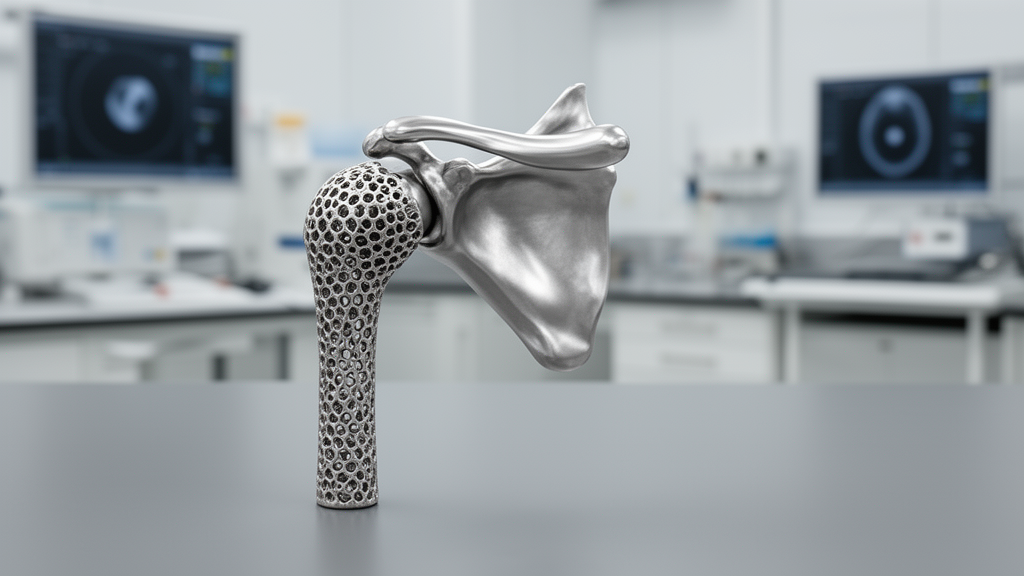
Custom-made prosthetic reconstructions following surgical resection for primary tumors of the scapula can restore shoulder function with a low rate of complications, according to a retrospective study of eight patients published in the Journal of Orthopaedics and Traumatology.

Reconstruction after tumor resection in the scapular region presents substantial clinical difficulties due to the frequent necessity of sacrificing the rotator cuff muscles as well as the glenoid. In response to these reconstructive challenges, the investigators aimed to assess how functional outcomes and complication rates compare across different prosthetic designs and to identify the potential advantages of specific configurations in varied clinical scenarios following resection of primary tumors of the scapula or adjacent soft tissues.

The retrospective cohort included eight patients who underwent surgical intervention, comprising seven individuals treated with total scapulectomy and one patient managed with partial scapulectomy. Five of the patients also received a humeral prosthesis, which utilized a constrained design in four individuals and an anatomical design in one individual. In addition, one patient in the series underwent a transposition of the latissimus dorsi muscle to replace the resected deltoid muscle.

Patient evaluations conducted over a median follow-up period of 55 months, with an observed range extending from 24 to 97 months, revealed two complications that necessitated secondary surgical procedures. These complications comprised one case of local tumor recurrence and one instance of postoperative wound dehiscence. Both adverse events were managed successfully through additional interventions without requiring the removal of the implanted custom-made scapular prostheses.

While the overall cohort achieved a median score of 24 points within a range of 14 to 30, patients fitted with a constrained prosthesis had a median score of 24 points across a range of 19 to 26 points. In contrast, patients in the nonconstrained prosthesis group recorded a median score of 19 points across a range of 14 to 26 points, while the single patient who underwent partial scapular reconstruction reached a score of 30 points.

Reflecting on these findings, the authors observed that custom-made scapular prostheses can achieve acceptable to good functional outcomes alongside a low complication rate in this Level IV evidence study. The data suggest that an anatomic design may offer favorable functional results when the rotator cuff and its innervation remain intact, whereas a constrained prosthetic design provides a stable and painless shoulder construct when the rotator cuff must be sacrificed during resection.

Subject of Research: Functional outcomes and complications of custom-made scapular prostheses following tumor resection

Article Title: Custom-made scapular reconstructions after resections for primary tumors: functional outcomes using different prosthetic design in a series of eight cases

Article References: Scanferla, R., Scoccianti, G., Scorianz, M., Bormioli, C., Beltrami, G., & Campanacci, D. A. (2026). Custom-made scapular reconstructions after resections for primary tumors: functional outcomes using different prosthetic design in a series of eight cases. Journal of Orthopaedics and Traumatology. https://doi.org/10.1186/s10195-026-00976-w

Image Credits: AI Generated

DOI: 10.1186/s10195-026-00976-w

Keywords: scapular reconstruction, custom-made prostheses, primary bone tumors, total scapulectomy, partial scapulectomy, MSTS score, shoulder function, constrained prosthesis, nonconstrained prosthesis, anatomical prosthesis design, rotator cuff sacrifice, latissimus dorsi transposition, humeral prosthesis, wound dehiscence, local recurrence, orthopaedic oncology, level IV evidence

News Source: Nathaniel Bowman. (November 17, 2026). Custom-made prostheses provide functional shoulder reconstruction after scapular tumor resections. Scienmag.

Tags: anatomical prosthesis designconstrained prosthesiscustom-made prostheseshumeral prosthesislatissimus dorsi transpositionlevel IV evidencelocal recurrencemsts scorenonconstrained prosthesisorthopaedic oncologypartial scapulectomyprimary bone tumorsrotator cuff sacrificescapular reconstructionshoulder functiontotal scapulectomywound dehiscence
Share12Tweet7Share2ShareShareShare1

Related Posts

Review Links Posterior White Matter Hyperintensities to Alzheimer's Disease Pathology

Review Links Posterior White Matter Hyperintensities to Alzheimer’s Disease Pathology

November 17, 2026
Modeled Disability Rates Form U-Shaped Age Curve Across Four African Nations

Modeled Disability Rates Form U-Shaped Age Curve Across Four African Nations

November 17, 2026

City of Hope, Adagene Launch Trial Testing Combination Immunotherapy for Colorectal Cancer

November 17, 2026

Repetitive Mild Brain Injury Triggers Chronic Cerebrovascular Inflammation and Glymphatic Suppression

November 17, 2026

POPULAR NEWS

  • City of Hope, Adagene Launch Trial Testing Combination Immunotherapy for Colorectal Cancer

    City of Hope, Adagene Launch Trial Testing Combination Immunotherapy for Colorectal Cancer

    29 shares
    Share 12 Tweet 7
  • Repetitive Mild Brain Injury Triggers Chronic Cerebrovascular Inflammation and Glymphatic Suppression

    29 shares
    Share 12 Tweet 7
  • Durable Remission in Advanced Squamous-Cell Lung Cancer Following Sodium Selenite Treatment

    29 shares
    Share 12 Tweet 7
  • Circulating tRNA Fragments Distinguish Endometriosis Patients in Preliminary Pilot Study

    29 shares
    Share 12 Tweet 7

About

We bring you the latest biotechnology news from best research centers and universities around the world. Check our website.

Follow us

Recent News

Review Links Posterior White Matter Hyperintensities to Alzheimer’s Disease Pathology

U.S. Cities Warm Twenty-Two Percent Faster as Regional Greenness Differences Reverse

Modeled Disability Rates Form U-Shaped Age Curve Across Four African Nations

Subscribe to Blog via Email

Enter your email address to subscribe to this blog and receive notifications of new posts by email.

Join 88 other subscribers
  • Contact Us

Bioengineer.org © Copyright 2023 All Rights Reserved.

Welcome Back!

Login to your account below

Forgotten Password?

Retrieve your password

Please enter your username or email address to reset your password.

Log In
No Result
View All Result
  • Homepages
    • Home Page 1
    • Home Page 2
  • News
  • National
  • Business
  • Health
  • Lifestyle
  • Science

Bioengineer.org © Copyright 2023 All Rights Reserved.