A newly developed transfer learning framework called VFM-Adapter enables pre-trained visual foundation models to identify Parkinson’s disease from optical coherence tomography images, achieving an overall diagnostic accuracy of 77.66 percent. By utilizing adapter learning, the methodology successfully equips large computer vision models with specialized disease recognition capabilities while updating only a small fraction of parameters.
Conventional deep learning approaches typically require an extensive collection of optical coherence tomography images alongside substantial computational resources, making model training and optimization prohibitively expensive in terms of time and computing infrastructure.
To resolve these computational and data barriers, the study introduces the VFM-Adapter framework, which transfers knowledge from pre-trained visual foundation models into the medical domain. By implementing the adapter learning paradigm, the researchers successfully adapt general visual representations for optical coherence tomography recognition by adding only a few trainable parameters to the existing architectures.
The core design of the framework introduces three distinct lightweight adapters: a global adapter, a local adapter, and a token-wise adapter. These modular components work collaboratively to effectively leverage the transferability of feature representations from pre-trained visual foundation models to optical coherence tomography images, providing the underlying models with strong recognition capability.
In empirical performance evaluations, the VFM-Adapter model demonstrated balanced diagnostic accuracy across multiple evaluation metrics.
The researchers reported that VFM-Adapter outperformed established state-of-the-art deep neural networks, including standard convolutional neural networks, attention-based convolutional neural networks, and vision transformers. Furthermore, extensive ablation studies conducted by the team confirmed the structural effectiveness of each individual adapter, verifying that competitive performance was maintained while updating only a small number of parameters.
The study concludes that VFM-Adapter provides an effective, parameter-efficient transfer learning framework for automated optical coherence tomography-based Parkinson’s disease recognition. By substantially fine-tuning a small number of trainable parameters while preserving competitive recognition performance, the framework offers a promising and practical alternative for automated screening workflows in real-world clinical diagnosis scenarios.
Subject of Research: Parameter-efficient transfer learning for Parkinson's disease recognition using optical coherence tomography
Article Title: Visual foundation models with adapter learning for Parkinson’s disease recognition based on OCT images
Article References: Zhang, J., Wang, T., Shao, D., Yang, Y., He, J., Zheng, M., Yang, Z., Wang, J., Jin, Z., Shen, M., Lv, F., Zhang, X., Zhang, X., Chen, J.-F., & Xu, T. (2026). Visual foundation models with adapter learning for Parkinson’s disease recognition based on OCT images. BMC Medical Informatics and Decision Making. https://doi.org/10.1186/s12911-026-03979-z
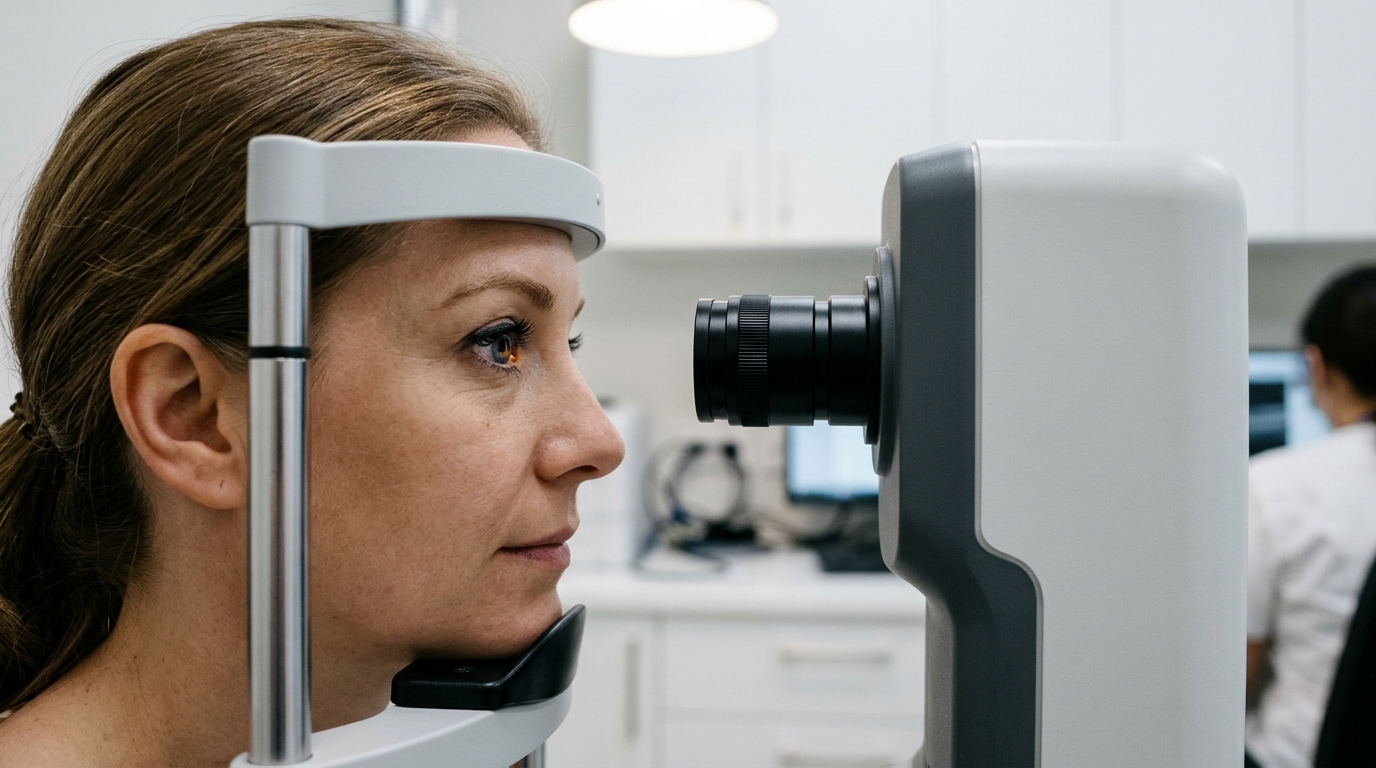
Image Credits: AI Generated
DOI: 10.1186/s12911-026-03979-z
Keywords: Parkinson's disease, optical coherence tomography, OCT imaging, visual foundation models, adapter learning, VFM-Adapter, transfer learning, global adapter, local adapter, token-wise adapter, deep neural networks, convolutional neural networks, vision transformers, ablation studies, parameter efficiency, neurodegenerative disorders, medical informatics
News Source: Cassandra Pierce. (November 17, 2026). Visual Foundation Models With Adapters Recognize Parkinson’s Disease From OCT Scans. Scienmag.