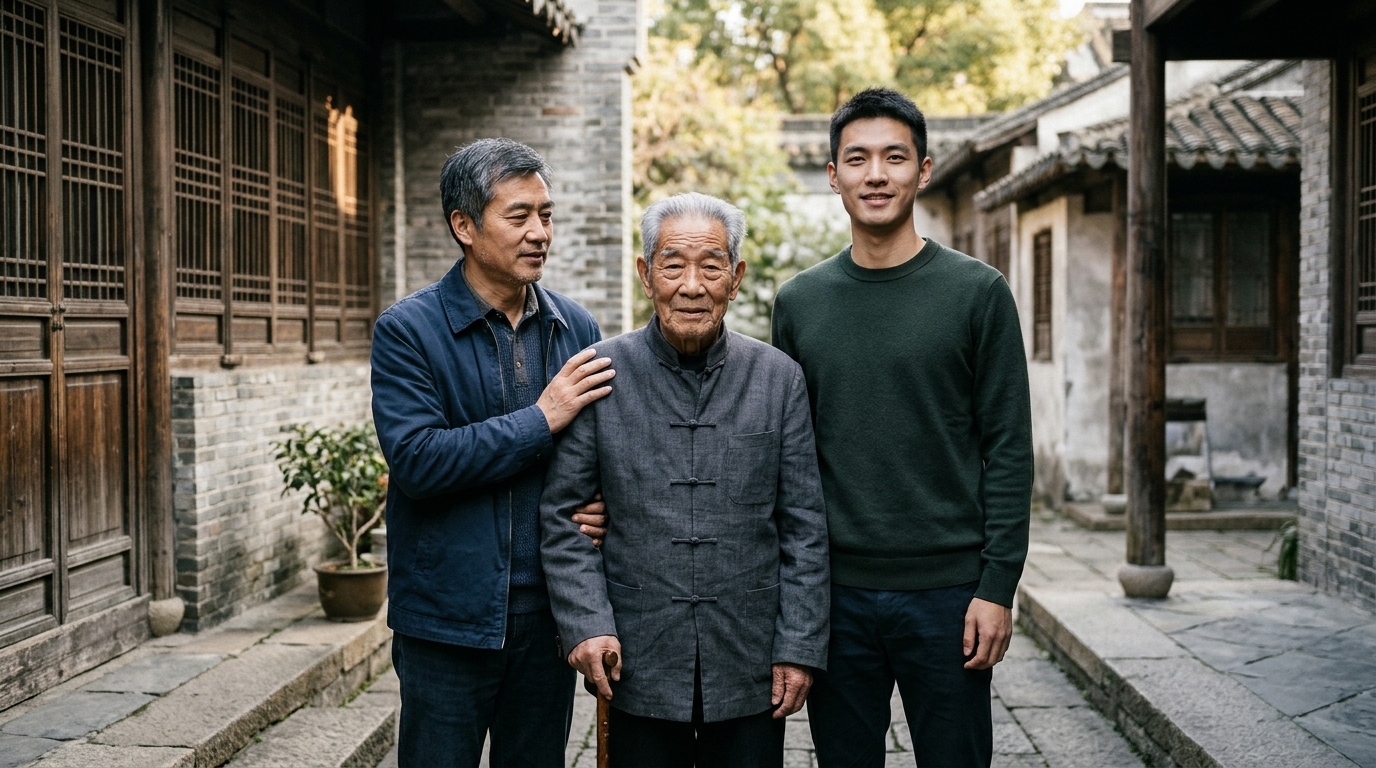
Researchers investigating paternal lineages in China have applied a high-resolution genetic profiling system to uncover distinct demographic trajectories and population structures in the Guangxi Zhuang and Yanbian Korean groups. Published in the International Journal of Legal Medicine, the study utilized massively parallel sequencing technology across 97 Y-chromosomal short tandem repeat loci to achieve in-depth characterization of paternal genetic features. The findings demonstrated that while both target populations share core East Asian paternal ancestries, their historical connections with neighboring regional groups diverged substantially over time.
Y-chromosomal short tandem repeats, commonly designated as Y-STRs, serve as pivotal molecular markers for tracing paternal lineage evolution and differentiating closely related males who share a common paternal background. Conventional analytical workflows have predominantly relied on capillary electrophoresis typing methods.
To resolve these technical constraints, the investigative team deployed a comprehensive 97-plex Y-STR multiplex system powered by massively parallel sequencing. When evaluated across the Guangxi Zhuang and Yanbian Korean cohorts, this advanced platform exhibited excellent potential for male individual identification. The high-resolution sequencing revealed extensive hidden sequence variants among isoalleles, which the researchers determined arose primarily from variations within the core repeat motifs of the targeted loci.
Population genetic analyses revealed that both the Guangxi Zhuang and Yanbian Korean groups are predominantly characterized by typical East Asian paternal lineages, specifically the O1b and O2 haplogroups. Despite sharing these overarching haplogroup foundations, the two populations displayed markedly distinct patterns of relatedness when compared against other Chinese reference groups. The Guangxi Zhuang cohort exhibited marked genetic isolation, maintaining a distinct paternal profile with limited regional admixture.
In sharp contrast to the isolation observed in the Guangxi Zhuang group, the Yanbian Korean population demonstrated strong genetic affinity and substantial historical gene flow with northern and eastern Chinese populations.
The researchers also reconstructed the demographic histories of both groups using inferences derived from a newly observed East Asian pedigree mutation rate. These demographic models indicated that both the Guangxi Zhuang and Yanbian Korean populations underwent robust, exponential population expansions following the Last Glacial Maximum.
Beyond broad population history, the study identified seven discriminative Y-STR loci that showed strong potential as candidate markers for developing high-precision biogeographic ancestry inference panels. The authors concluded that the 97-plex sequencing system establishes a robust high-resolution tool for differentiating closely related males, deciphering paternal architecture, and supplying empirical data on fine-scale genetic differentiation in these Chinese populations.
Subject of Research: Paternal genetic structure and demographic history of Guangxi Zhuang and Yanbian Korean populations using high-resolution Y-STR sequencing
Article Title: Unraveling the genetic structure and demographic history of the Guangxi Zhuang and Yanbian Korean populations using a high-resolution 97-plex Y-STR system
Article References: Liu, Q., Shi, X., Shen, R., Zhuo, C., Li, Y., Zhao, M., Shen, C., & Zhu, B. (2026). Unraveling the genetic structure and demographic history of the Guangxi Zhuang and Yanbian Korean populations using a high-resolution 97-plex Y-STR system. International Journal of Legal Medicine. https://doi.org/10.1007/s00414-026-04055-x
Image Credits: AI Generated
DOI: 10.1007/s00414-026-04055-x
Keywords: Guangxi Zhuang, Yanbian Korean, Y-STR loci, 97-plex Y-STR system, massively parallel sequencing, paternal genetic structure, demographic history, O1b haplogroup, O2 haplogroup, Last Glacial Maximum, genetic isolation, gene flow, male individual identification, isoalleles, core repeat motif variations, East Asian pedigree mutation rate, biogeographic ancestry inference, International Journal of Legal Medicine
News Source: Juliet Wilcox. (November 17, 2026). 97-Plex Y-STR System Reveals Distinct Paternal Lineages in Two Chinese Groups. Scienmag.