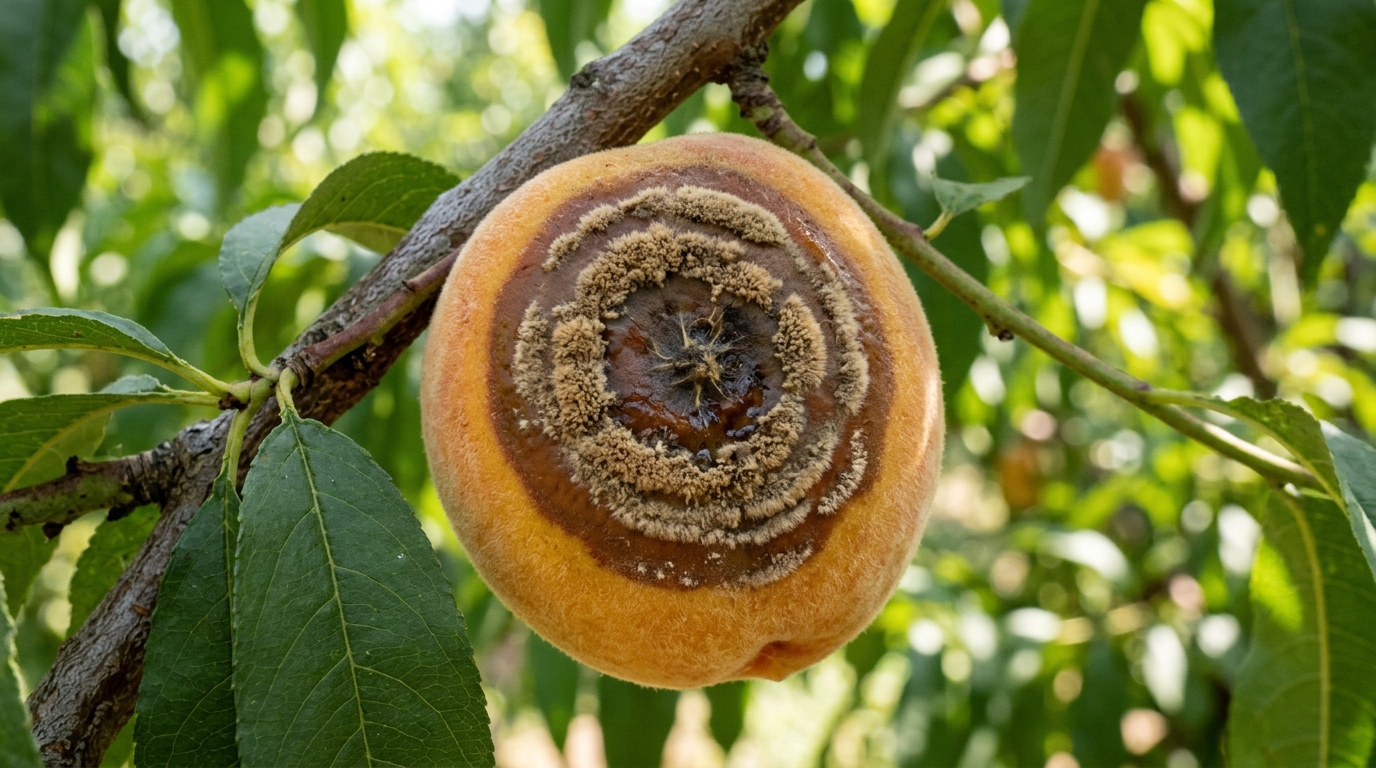
A comprehensive comparative genomic investigation of the fungal genus Monilinia has uncovered an evolutionary link between species divergence, lineage-specific gene family contractions, and host preference shifts from stone fruits to pome fruits. Pathogenic fungi within this genus are the primary causative agents of destructive brown rot disease across economically crucial stone and pome fruit crops in the family Rosaceae, as well as selected heath plants. By generating high-coverage de novo genome assemblies for two previously unsequenced taxa, Monilinia yunnanensis and Monilinia mumecola, and evaluating them alongside four established Monilinia species and related outgroups, researchers identified distinct genomic signatures that mirror the chronological divergence of their respective host plants. The newly resolved evolutionary framework demonstrates that ancestral lineages predominantly associated with stone fruit hosts diverged significantly earlier than recently emergent species that favor pome fruits. Beyond resolving long-standing taxonomic relationships, the investigation pinpoints candidate genomic modifications, including the progressive loss of a putative secondary metabolite gene cluster and functional mutations within a necrosis-inducing secreted protein, that illuminate the biological trajectories of agricultural fungi.
Brown rot represents a persistent agricultural threat responsible for extensive post-harvest decay and pre-harvest crop destruction worldwide. Historically, three dominant species have accounted for the majority of reported agricultural damage: Monilinia fructicola, Monilinia laxa, and Monilinia fructigena. However, regional surveys conducted across Europe and Asia have documented additional specialized relatives, including Monilinia polystroma, Monilinia mumecola, and Monilinia yunnanensis. Despite sharing common morphological features and causing symptomatically similar necrotic decay on host tissue, these species exhibit pronounced differences in primary host preference. Field isolates recovered in Greece, Serbia, and China demonstrate that Monilinia fructicola and Monilinia laxa serve as the primary pathogens of stone fruits such as peach and plum, whereas Monilinia fructigena, Monilinia polystroma, and Monilinia yunnanensis are isolated far more reliably from pome fruits like apple and pear. Monilinia mumecola, first isolated from Japanese plum, has remained largely restricted to stone fruit hosts. To resolve the genetic architecture underlying these persistent host preferences, investigators designed a comparative framework pairing sequencing technologies with molecular functional assays.
To build an authoritative genomic foundation, investigators sequenced the genomes of Monilinia fructicola, Monilinia mumecola, and Monilinia yunnanensis using an Illumina HiSeq 4000 platform. The experimental design combined paired-end libraries featuring 350-base-pair insert lengths with mate-pair libraries featuring five-kilobase insert lengths, generating 150-base-pair reads. Read optimization and genome size estimations were conducted using KmerGenie, which predicted assembly footprints of 44.0 megabases for Monilinia fructicola, 38.9 megabases for Monilinia mumecola, and 41.1 megabases for Monilinia yunnanensis. De novo assembly performed with Platanus-allee generated final draft assemblies measuring 45.04 megabases with an N50 scaffold length of 2.19 megabases for Monilinia fructicola, 40.19 megabases with an N50 of 0.84 megabases for Monilinia mumecola, and 42.82 megabases with an N50 of 0.86 megabases for Monilinia yunnanensis. Assembly completeness evaluated via Benchmarking Universal Single-Copy Orthologs using the 5,177 core genes of the Helotiales database reached 97.8 percent, 98.0 percent, and 97.9 percent, respectively. Subsequent gene prediction modeling through AUGUSTUS, using Botrytis cinerea and Monilinia fructicola protein data, yielded 9,936 predicted protein-coding genes in Monilinia fructicola, 9,817 in Monilinia mumecola, and 9,667 in Monilinia yunnanensis.
Structural and repeat composition analyses exposed substantial architectural divergence among the sequenced fungal genomes. Repeat sequence masking identified repetitive DNA representing 14.46 percent of the Monilinia fructicola genome, 7.86 percent of Monilinia mumecola, and 12.00 percent of Monilinia yunnanensis. The distribution of transposable elements varied distinctly: retrotransposons comprised 3.03 percent of the Monilinia fructicola assembly, exclusively representing long terminal repeat elements, whereas Monilinia mumecola harbored 1.59 percent long interspersed nuclear elements and 0.31 percent long terminal repeats. Monilinia yunnanensis exhibited an expanded transposable element burden containing 2.47 percent long interspersed nuclear elements and 3.86 percent long terminal repeats. Aligning read data against the high-quality Monilinia fructicola reference strain CPMC6 revealed single nucleotide polymorphisms, small insertions and deletions, and copy number variations across both species. Notably, structural variation analysis uncovered reference-relative deletion events designated MueDel and YunDel located on scaffold RKRL01000007.1. While MueDel covered an unexpressed transposon segment in Monilinia mumecola, YunDel spanned a broader region in Monilinia yunnanensis encompassing twelve functional genes present in stone-fruit-infecting relatives.
Phylogenomic reconstruction grounded in 6,251 single-copy orthologous genes established an evolutionary timeline for the diversification of brown rot fungi. Ultrametric trees rooted against outgroup species Botrytis cinerea and Sclerotinia sclerotiorum, with calibration constraints anchored at 133 million years ago, indicated four successive divergence stages. Monilinia fructicola diverged earliest among the examined species at approximately 24 million years ago, followed by the shared lineage of Monilinia mumecola and Monilinia laxa between 14 and 16 million years ago. Monilinia yunnanensis differentiated subsequently at approximately 9 million years ago, while Monilinia polystroma and Monilinia fructigena emerged most recently around 3 million years ago. This phylogenetic progression aligns with the evolutionary history of their respective host plants within the Rosaceae family. Paleobotanical evidence indicates that stone fruit ancestors belonging to the genus Prunus diverged roughly 80 to 90 million years ago, whereas pome fruit lineages including Malus and Pyrus evolved substantially later, approximately 40 to 50 million years ago. The chronological alignment indicates that ancestral brown rot pathogens were historically adapted to stone fruits before emergent lineages specialized on younger pome fruit hosts.
Gene family evolution modeling using the Computational Analysis of gene Family Evolution program demonstrated widespread gene contractions rather than expansions throughout Monilinia lineage divergence, contrasting with the expansion patterns documented in Botrytis cinerea. A prominent example of this reductive evolution involves a twelve-gene cluster designated as the specific active secondary metabolite locus, located within the deleted segment identified in Monilinia yunnanensis. Detailed structural mapping confirmed that this locus encodes two polyketide synthases alongside ten auxiliary enzymes and transporters associated with polyketide synthesis, modification, and export. The complete twelve-gene cluster remains intact in early-diverging stone fruit pathogens, including Monilinia fructicola, Monilinia mumecola, and Monilinia laxa, and transcriptomic profiling confirms that these genes undergo coordinated transcriptional activation during the infection of peach fruit. However, in the pome-associated Monilinia yunnanensis, eleven of the twelve genes are completely lost, leaving behind only a truncated residual fragment. In the most recently diverged pome pathogens, Monilinia polystroma and Monilinia fructigena, the entire cluster is deleted and flanking syntenic boundaries are disrupted, demonstrating progressive genomic loss across speciation stages.
Comparative profiling of broad functional gene classes demonstrated contrasting patterns of evolutionary stability and plasticity. Quantitative inventories revealed that carbohydrate-active enzymes and transport proteins remained conserved across all six Monilinia genomes, spanning 398 to 414 carbohydrate-active enzymes and 1,048 to 1,087 transporters per species, with stable major facilitator superfamily and ATP-binding cassette transporter representation. Genome-wide orthogroup analysis confirmed that 85.2 percent of carbohydrate-active enzymes and 85.8 percent of transporters were shared across all six species. Conversely, secreted proteins displayed marked variability, with only 47.1 percent of secretome orthogroups conserved across every examined taxon. Tracking missing secreted proteins against genome-wide orthogroups indicated that only 16.8 percent of corresponding gene families were entirely absent from the genomic sequence. This quantitative discrepancy demonstrates that many orthologous genes remain embedded within the chromosome but have lost their functional secretion capabilities, predominantly through accumulated point mutations, signal peptide disruptions, or shifts in cellular targeting properties.
Analysis of selective pressures using pairwise non-synonymous to synonymous substitution rates further distinguished the evolutionary trajectories of these functional categories. Measuring Ka over Ks ratios relative to Monilinia fructicola showed that most orthologous gene pairs exhibited values well below one, confirming the pervasive presence of purifying selection across core physiological machinery. However, genes encoding secreted proteins consistently mapped to elevated regions of the Ka over Ks distribution relative to carbohydrate-active enzymes and transport proteins. This heightened sequence diversification suggests that secreted proteins operated under relaxed purifying selection or accelerated adaptation during speciation. Among individual candidate loci, the small cysteine-rich protein MfSPP1 and hydrophobic surface-binding proteins MfHsbA1 and MfHsbA2 exhibited some of the highest non-synonymous substitution rates observed within the dataset. Because secreted effectors engage host defense mechanisms at the plant-pathogen interface, these elevated evolutionary rates highlighted surface-binding proteins as potential drivers of functional divergence between stone and pome fruit pathogens.
Experimental assays provided functional evidence that structural mutations in hydrophobic surface-binding protein A 1 alter host plant immune responses. Monilinia fructicola carries five distinct genes encoding HsbA domains, with MfHsbA1 through MfHsbA4 possessing an N-terminal signal peptide and an HsbA domain. When these four candidates were cloned into potato virus X vectors and transiently expressed in Nicotiana benthamiana foliage via Agrobacterium tumefaciens infiltration, only MfHsbA1 elicited widespread necrosis-like symptoms at twelve days post-inoculation. Yeast secretion trap assays in strain YTK12 confirmed that the predicted signal peptides of MfHsbA1, MfHsbA2, and MfHsbA3 actively directed extracellular invertase secretion, whereas MfHsbA4 lacked secretory activity. Crucially, expressing a truncated variant lacking the signal peptide, MfHsbA1Δsp, completely abolished its capacity to induce tissue necrosis in tobacco leaves. Nucleotide sequence comparisons across species identified a single cytosine deletion at position thirty in the first exon of MfHsbA1 in both Monilinia polystroma and Monilinia fructigena. This specific frameshift mutation disrupts the reading frame, eliminates the native signal peptide, and abolishes necrosis-inducing activity in these recently diverged pome-fruit-infecting pathogens.
While these comparative and functional discoveries establish strong correlations between lineage divergence, host preference, and genomic alterations, the researchers highlighted key biological and ecological caveats. The host association patterns analyzed in the study reflect compiled literature records and may be influenced by regional sampling intensity or geographic bias. Furthermore, centuries of human-mediated transport of plant material and agricultural commodities may have obscured ancestral geographic distributions. The authors emphasized that descriptive comparative genomic signals, including the absence of the specific active secondary metabolite cluster, do not constitute conclusive causal proof that these specific loci govern host range. Because the exact chemical products of the polyketide synthase cluster remain uncharacterized, its biological function during infection requires future validation via high-performance liquid chromatography profiling and targeted fungal transformation. Nevertheless, the newly assembled Monilinia mumecola and Monilinia yunnanensis genomes, deposited in public databases under BioProject PRJNA1039322, provide indispensable empirical benchmarks for deciphering the molecular mechanisms governing fungal adaptation across Rosaceae fruit crops.
Subject of Research: Comparative genomic analysis of host adaptation and evolutionary divergence in Monilinia species
Article Title: From stone fruits to pome fruits: genomic analysis revealed the host adaptation and evolution of Monilinia spp.
Article References: Cai, M.-Z., Xiao, Y.-L., Zhang, M.-M., Jiang, H., Yin, L.-F., Yin, W.-X., Li, G.-L., Schnabel, G., Hsiang, T., & Luo, C.-X. (2026). From stone fruits to pome fruits: genomic analysis revealed the host adaptation and evolution of Monilinia spp.. Horticulture Advances, 4(1), Article 36. https://doi.org/10.1007/s44281-026-00127-5
Image Credits: AI Generated
DOI: 10.1007/s44281-026-00127-5
Keywords: Monilinia, brown rot, comparative genomics, host adaptation, polyketide synthase, secreted proteins, carbohydrate-active enzymes, transporters, MfHsbA1, phylogenetics, gene family contraction, Monilinia yunnanensis, Monilinia mumecola, Monilinia fructicola, Rosaceae, plant pathology, effector proteins
News Source: Gavin Prescott. (November 17, 2026). Comparative Genomics Uncovers Evolutionary Host Shifts in Fruit Brown Rot Pathogens. Scienmag.