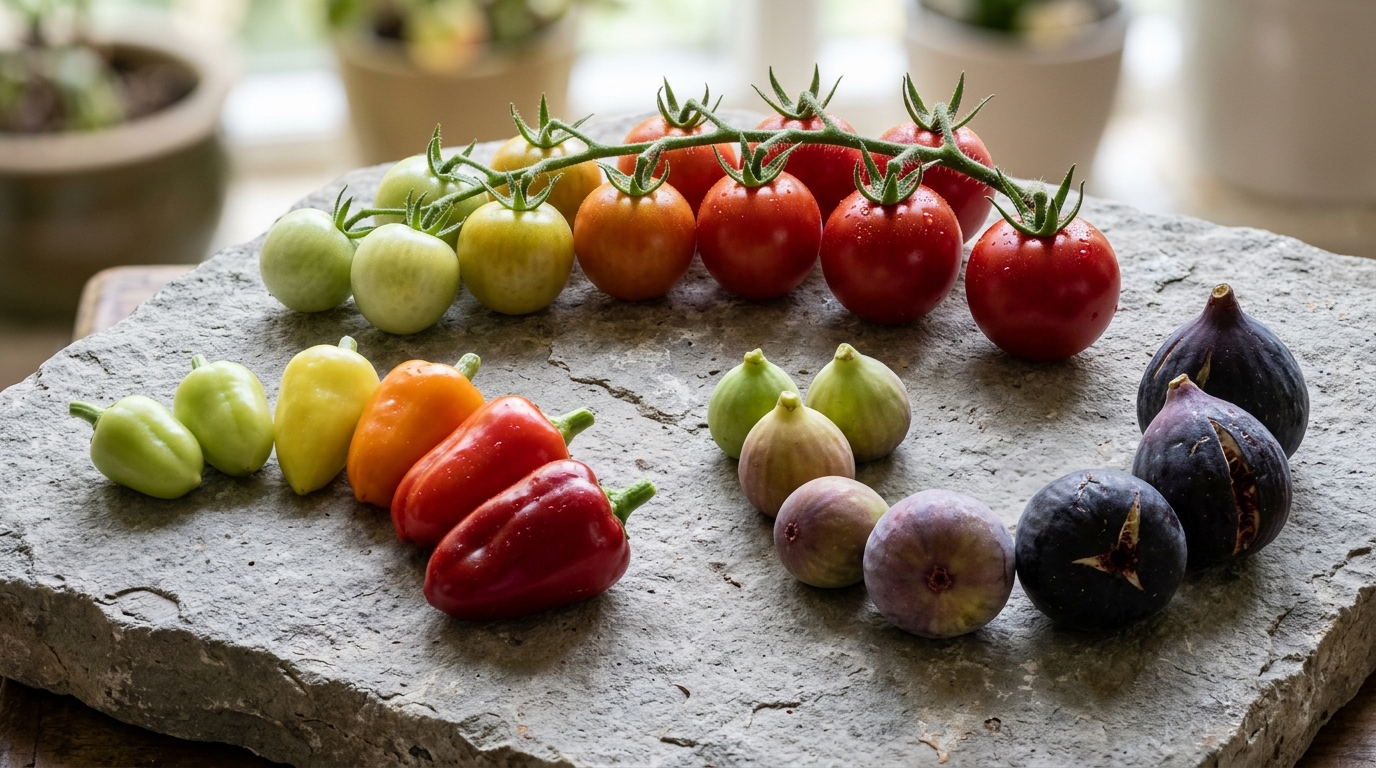
The development of the Fruit and Vegetable Ripening and Senescence database, designated FVRS and accessible online at https://fvripening-senescence.biocloud.net, establishes the first dedicated cross-species multi-omics platform tailored for investigating postharvest ripening and senescence. Fruits and vegetables serve as essential dietary staples providing vitamins, minerals, fibre, and antioxidants for human nutrition, while simultaneously offering tractable experimental systems for examining organ development, ripening, and senescence. Postharvest ripening and subsequent tissue senescence cause physical softening, colour changes, off-flavour development, and nutrient decline, culminating in major food losses and economic costs as identified by Giovannoni (2004). Elucidating the underlying regulatory networks responsible for these changes represents a core objective of postharvest biology. Although high-throughput sequencing and mass spectrometry have generated extensive multi-omics datasets across crops (Guo et al. 2022; Ma et al. 2024; Tao et al. 2025), these resources have historically remained scattered across diverse public repositories, supplementary files, and species-specific platforms. This dispersion has persistently hampered data reuse, meta-analyses, and comparative plant research. To bridge this operational gap, researchers developed FVRS as a centralized, publicly accessible computational resource.
At the architectural core of the current FVRS release lies the systematic integration of three primary data pillars designed to provide comprehensive multi-omic coverage of horticultural postharvest physiology. The first foundational pillar consists of an extensive multi-omics repository consolidating 255 curated datasets drawn from 164 independent empirical studies. In total, this multi-omics collection encompasses 734 distinct biological samples derived from 49 species spanning major fleshy fruits, vegetables, and other economically valuable horticultural crops. Taxonomically, these 49 investigated species are distributed across 25 distinct plant families, ensuring broad phylogenetic representation across the plant kingdom. Across these diverse biological samples, the database catalogs a cumulative total of 1,378,030 molecular records structured across five distinct molecular tiers: transcriptomics, metabolomics, proteomics, epigenomics, and epitranscriptomics. By consolidating these previously isolated datasets into a harmonized repository, the platform enables investigators to evaluate molecular phenomena across multiple organizational levels rather than analyzing transcript abundance, protein translation, or metabolite accumulation in total isolation.
The distribution of records across the five molecular layers documented in the repository demonstrates substantial analytical depth within distinct biochemical categories. The transcriptomics module represents by far the largest molecular layer within the platform, encompassing 1,232,390 records and incorporating mRNA sequencing data derived from 590 samples spanning 44 species and 135 studies, alongside comprehensive profiles for long non-coding RNA, circular RNA, and microRNA. The metabolomics layer incorporates 24,000 quantitative records documenting biochemical alterations across 30 plant species, while the proteomics layer contributes 17,293 protein records collected across 11 species. Epigenomic modifications are systematically captured through 91,913 total records, which specifically consist of 26,423 DNA methylation records sourced from three species alongside 65,490 chromatin accessibility records obtained from three other species. Completing the molecular architecture, the epitranscriptomics layer features 12,434 total records, consisting of 10,424 RNA methylation entries and 2,010 RNA acetylation records. Together, these five interconnected molecular tiers capture a remarkably detailed quantitative panorama of postharvest molecular dynamics.
The second major data pillar established within FVRS comprises an expansive reference genome collection consisting of 323 genomic assemblies representing 66 distinct plant species. To ensure high analytical standards and facilitate reliable downstream computational analysis, the curators applied stringent quality inclusion rules: genomic assemblies were retained in the repository only when both complete genome FASTA sequence files and matching GFF gene annotation files were simultaneously available. Among the 66 represented species, 49 species possess both reference genome assemblies and corresponding multi-omics datasets within the platform, establishing direct physical links between structural genomic loci and functional molecular profiles. The remaining 17 species within the assembly collection are represented by reference genomes alone, providing crucial structural scaffolds for future omic characterization. To encourage broad academic reuse and facilitate reproducible computational analyses, all compiled reference genome sequences and associated GFF structural annotation files can be freely downloaded directly through the dedicated Tools module of the web platform.
The third foundational pillar supporting the database consists of a specialized compendium of 298 functionally validated genes identified from empirical literature published between 1988 and the present across 186 independent studies. Every gene included in this curated set has been directly verified through rigorous genetic characterization methods, including gain-of-function approaches such as transient and stable overexpression, as well as loss-of-function methodologies encompassing RNA interference (RNAi), virus-induced gene silencing (VIGS), antisense RNA suppression, and CRISPR/Cas9-mediated targeted gene knockout. These 298 characterized genes are functionally associated with pivotal developmental and postharvest biological phenomena, specifically organ development, ripening progression, tissue softening, pigmentation and coloration, soluble sugar accumulation, aromatic flavour development, plant hormone biosynthesis and signalling cascades, tissue senescence, and overall postharvest commodity quality. This curated compendium bridges a critical gap in postharvest research by organizing previously isolated molecular genetics discoveries into an easily accessible, standardized functional registry that allows researchers to inspect verified genetic mechanisms across diverse horticultural species.
To maximize scientific value, each functionally validated gene in the compendium is comprehensively cataloged across 21 structured annotation fields, which record the genetic background, observed phenotype, genetic manipulation method, and experimental evidence level supporting each functional claim. For example, querying the platform with the biological term “ethylene biosynthesis” immediately retrieves 114 functionally validated regulators displaying diverse postharvest roles. These retrieved factors span upstream master transcription factors, such as RIN in tomato, down to specific downstream structural effectors and regulators, such as MdPG1 in apple, MaNAC1 and MaNAC2 in banana, PpNAC1 and PpNAC2 in peach, and CpERF9 in papaya. However, the study authors emphasize that this curated gene set remains subject to substantial literature-driven sampling bias. Because of its long-standing status as a premier model plant, tomato is heavily overrepresented in the published literature and database, meaning recorded gene numbers reflect historical research intensity rather than true biological significance. Consequently, cross-species comparisons based on this set should be interpreted cautiously, and conclusions regarding conserved mechanisms must be regarded as preliminary until additional data become available.
Data curation across FVRS adhered to predefined methodological quality criteria designed to guarantee technical reliability and scientific reproducibility. Of the 164 curated multi-omics studies, 51 originated from in-house experimental investigations, whereas 113 datasets were identified from published literature through targeted keyword searches across PubMed, Web of Science, and ScienceDirect. Studies were incorporated into the platform only if they provided clearly defined experimental-versus-control comparisons or precise temporal time-series supported by at least three independent biological replicates. Datasets lacking essential metadata parameters were entirely excluded from the database, whereas studies missing only secondary descriptive fields were retained and explicitly annotated as unspecified. Non-genomic datasets are systematically organized around paired contrasts spanning pre-harvest developmental stages and postharvest storage treatments. Furthermore, the Transcriptomics, Proteomics, Metabolomics, and Epigenomics modules incorporate dedicated Data submodules—restricted to chromatin accessibility in the Epigenomics section—that deliver biological replicate-averaged quantitative profiles completely independent of predefined comparison groups.
User interactions within the FVRS platform are supported by a versatile query interface permitting gene-level searches across official gene symbols, KEGG-derived abbreviations, Swiss-Prot identifiers, exact gene IDs, and specific database accession numbers across the transcriptomic, epigenomic, and epitranscriptomic modules. Strict fuzzy matching capable of tolerating spelling errors is not implemented in the current system; instead, the search engine utilizes flexible substring matching—such as retrieving ACO1, ACO3, and related genes when entering “ACO”—while automated orthology-based cross-species homolog retrieval is omitted at the single-gene level. Within the Multi-omics module, an interactive Single-Gene Change Atlas enables users to choose a specific species and gene, immediately aggregating its molecular alterations across available transcriptomic, epigenomic, and epitranscriptomic datasets. In addition, an integrated Cross-species Comparison function aligns mRNA homologs across species using KEGG Orthology identifiers under comparable treatments, reporting full differential statistics when conditions match and regulatory directional trends when conditions differ, with equivalent comparative matching supported for metabolomics.
A primary defining characteristic of FVRS is its thematic curation strategy anchored around a treatment-oriented experimental focus, ensuring that every integrated dataset directly addresses postharvest fruit and vegetable ripening, senescence, and preservation. The platform curates physical storage interventions—including low-temperature cold storage, postharvest heat treatment, ionizing irradiation, and controlled atmosphere conditions—alongside chemical treatment applications such as the ethylene inhibitor 1-methylcyclopropene (1-MCP), exogenous ethylene, methyl jasmonate, and salicylic acid, as well as biological interventions involving antagonistic biocontrol microorganisms and elicitors. While the specialized Cross-treatment Comparison function spans all five omics layers to examine multi-level responses across varying preservation strategies, the authors note that the Cross-species Comparison tool is currently limited to transcriptomics and metabolomics, without extending to proteomics, epigenomics, or epitranscriptomics. This targeted curation framework nonetheless enables researchers to conduct rigorous comparative assessments of intervention efficacy and mechanistic preservation pathways across diverse horticultural commodity systems.
Architecturally and conceptually, FVRS is structured to complement rather than replace established public biological repositories, maintaining unique thematic depth despite overlapping with specialized databases. Unlike MethBank and m6A-Atlas, which provide organism-wide DNA methylation and epitranscriptomic atlases across varied plant organs and developmental stages, FVRS restricts its curation strictly to ripening and senescence in edible crops under a treatment-oriented design. Similarly, while the Leaf Senescence Database focuses exclusively on foliar senescence, and platforms such as fruitENCODE and TomOmics target fleshy fruit epigenomes or single-species tomato multi-omics, FVRS unifies 49 species across five omic layers within a single framework. Beyond data hosting, the platform integrates functional bioinformatics tools including BLAST sequence alignment, Primer3 oligonucleotide primer design, and JBrowse genome visualization. Supported by scheduled twice-yearly updates that will incorporate expanding multi-omics datasets and broader taxonomic species coverage, the database provides a foundational cross-species resource expected to advance postharvest biology, facilitate molecular breeding for prolonged shelf life, and support precision postharvest preservation technologies.
Subject of Research: A cross-species multi-omics database for postharvest fruit and vegetable ripening and senescence.
Article Title: FVRS: a cross-species multi-omics database for fruit and vegetable ripening and senescence
Article References: Ma, L., Wang, Y., Ren, Y., Wu, C., Jiang, Y., Tao, J., He, X., Feng, X., Li, T., Liu, X., Jin, J., Zuo, J., & Zheng, Y. (2026). FVRS: a cross-species multi-omics database for fruit and vegetable ripening and senescence. Molecular Horticulture, 6(1), Article 79. https://doi.org/10.1186/s43897-026-00284-1
Image Credits: AI Generated
DOI: 10.1186/s43897-026-00284-1
Keywords: FVRS, fruit ripening, vegetable senescence, multi-omics database, postharvest biology, transcriptomics, metabolomics, proteomics, epigenomics, epitranscriptomics, reference genomes, KEGG Orthology, functional gene validation, ethylene biosynthesis, postharvest storage, horticultural crops, biological replicates
News Source: Alan Morgan. (November 16, 2026). New Cross-Species Database Consolidates Multi-Omics Data for Fruit and Vegetable Ripening. Scienmag.