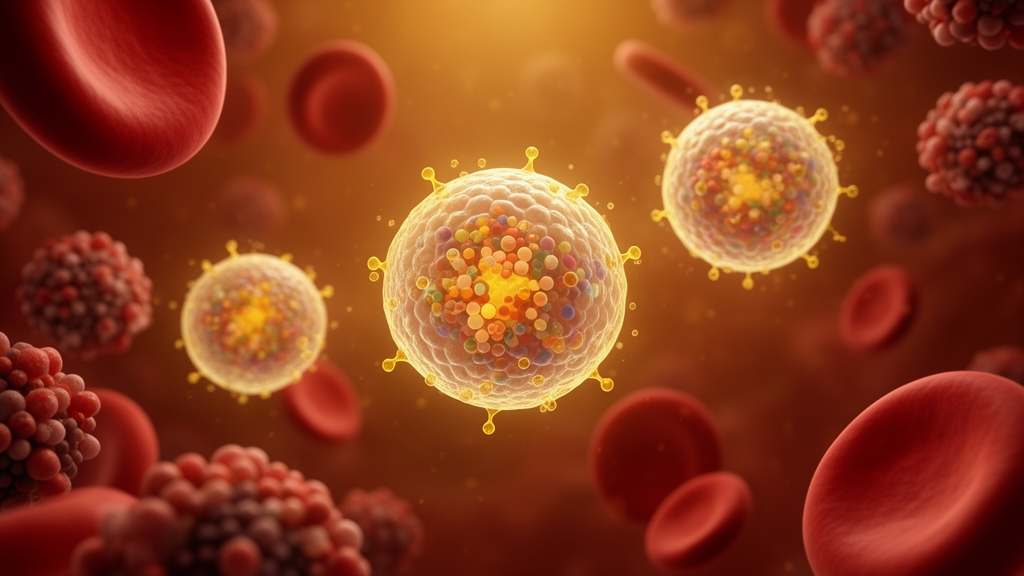
In an exploratory pilot investigation published in Molecular Medicine, researchers evaluating circulating extracellular vesicles identified metabolic distinctions across clinical subtypes of Parkinson’s disease defined by sleep disorder status. The study evaluated plasma-derived extracellular vesicles enriched for the neural marker L1 cell adhesion molecule, commonly designated as L1CAM, to assess molecular heterogeneity between patients presenting with and without rapid eye movement sleep behavior disorder.
Parkinson’s disease is widely recognized as clinically and biologically heterogeneous across affected individuals. Patients presenting with co-occurring rapid eye movement sleep behavior disorder, abbreviated as RBD, typically exhibit a distinct and frequently more aggressive clinical disease phenotype. Despite the clinical importance of this subtype, minimally invasive molecular methods designed to capture, track, and resolve the biological heterogeneity associated with RBD have remained limited in neurodegenerative research.
To address this diagnostic challenge, investigators performed high-resolution untargeted liquid chromatography-tandem mass spectrometry (LC-MS/MS) metabolomics on plasma-derived L1CAM-enriched extracellular vesicles, or L1EVs. The pilot investigation examined twenty-eight participants divided into three clinical cohorts: eleven Parkinson’s disease patients without rapid eye movement sleep behavior disorder (PD-noRBD), nine Parkinson’s disease patients diagnosed with the sleep disorder (PD-RBD), and eight healthy controls (HC). Following data acquisition, researchers retained 775 quality-control-filtered metabolic features for downstream analysis, with 316 unique metabolites putatively annotated.
The research team evaluated the resulting metabolomic profiles through multivariate statistical analysis, screening for candidate differentially abundant metabolites, and metabolic pathway analysis. The analytical protocol also incorporated exploratory Spearman correlation analyses evaluating relationships between vesicle metabolites, clinical variables, and regional brain iron deposition measured via quantitative susceptibility mapping. Furthermore, the investigators conducted cross-omics integration using a previously generated L1EV proteomic dataset from the exact same participant cohort, alongside a direct comparison against an independent published plasma metabolomics dataset.
Comparative screening across the clinical subgroups identified distinct candidate differentially abundant metabolites, with the most extensive variation observed in the PD-noRBD group. Specifically, PD-noRBD samples displayed sixty-two candidate differentially abundant metabolites compared to the PD-RBD group, and forty-nine candidate metabolites compared to healthy controls. By contrast, only three candidate differentially abundant metabolites were detected between PD-RBD patients and healthy controls. Pathway-level evaluations revealed that sphingolipid metabolism formed a recurrent, top-ranked nominal pathway-level signal across comparative analyses involving the PD-noRBD subgroup.
Exploratory correlation assessments indicated that selected L1EV metabolites exhibited nominal associations with motor severity, disease duration, constipation, type 2 diabetes mellitus, and regional brain iron deposition detected on quantitative susceptibility mapping. Cross-omics integration demonstrated concordance between L1EV metabolomic alterations and metabolism-related proteomic variation within the cohort. Additionally, contrasting the extracellular vesicle dataset with the published plasma metabolomics dataset revealed both shared lipid-related alterations and distinct differences in fold-change patterns between the two analytical matrices.
The study authors concluded that plasma L1EV metabolomics successfully identified exploratory metabolic differences across RBD-defined Parkinson’s disease subgroups, with the most prominent biological alterations observed in patients without the sleep disorder. Lipid-related features, particularly components within sphingolipid metabolism and glycerophospholipid metabolism, emerged as candidate targets for further investigation into disease mechanisms. The investigators emphasized that these findings remain strictly hypothesis-generating, noting that preliminary results from this pilot study require validation in larger independent and longitudinal clinical cohorts.
Subject of Research: Extracellular vesicle metabolomics in Parkinson's disease subtypes
Article Title: L1CAM-enriched extracellular vesicle metabolomics reveals Parkinson’s disease subtype heterogeneity: a pilot study
Article References: Zhang, W., Zhou, Y., Lu, Y., Chen, Z., Chen, J., Zhou, Y., Xu, X., Chan, R. W. Y., Li, C., Zhao, Z., & Jiang, C. (2026). L1CAM-enriched extracellular vesicle metabolomics reveals Parkinson’s disease subtype heterogeneity: a pilot study. Molecular Medicine. https://doi.org/10.1186/s10020-026-01698-9
Image Credits: AI Generated
DOI: 10.1186/s10020-026-01698-9
Keywords: Parkinson's disease, extracellular vesicles, L1CAM, metabolomics, rapid eye movement sleep behavior disorder, liquid chromatography-tandem mass spectrometry, sphingolipid metabolism, glycerophospholipid metabolism, quantitative susceptibility mapping, brain iron deposition, motor severity, constipation, type 2 diabetes mellitus, cross-omics integration, proteomics, pilot study
News Source: Cassandra Pierce. (November 16, 2026). Pilot Study Identifies Blood Vesicle Metabolic Differences in Parkinson’s Disease Subtypes. Scienmag.