• HOME
  • NEWS
  • EXPLORE
    • CAREER
      • Companies
      • Jobs
    • EVENTS
    • iGEM
      • News
      • Team
    • PHOTOS
    • VIDEO
    • WIKI
  • BLOG
  • COMMUNITY
    • FACEBOOK
    • INSTAGRAM
    • TWITTER
Wednesday, November 18, 2026
BIOENGINEER.ORG
No Result
View All Result
  • Login
  • HOME
  • NEWS
  • EXPLORE
    • CAREER
      • Companies
      • Jobs
        • Lecturer
        • PhD Studentship
        • Postdoc
        • Research Assistant
    • EVENTS
    • iGEM
      • News
      • Team
    • PHOTOS
    • VIDEO
    • WIKI
  • BLOG
  • COMMUNITY
    • FACEBOOK
    • INSTAGRAM
    • TWITTER
No Result
View All Result
Bioengineer.org
No Result
View All Result
Home NEWS Science News Biology

Adult Salamanders Show Context-Dependent Dispersal Patterns in Headwater Streams

by
November 16, 2026
in Biology
Reading Time: 2 mins read
0
Adult Salamanders Show Context-Dependent Dispersal Patterns in Headwater Streams

Adult Salamanders Show Context-Dependent Dispersal Patterns in Headwater Streams

Share on FacebookShare on TwitterShare on LinkedinShare on RedditShare on Telegram

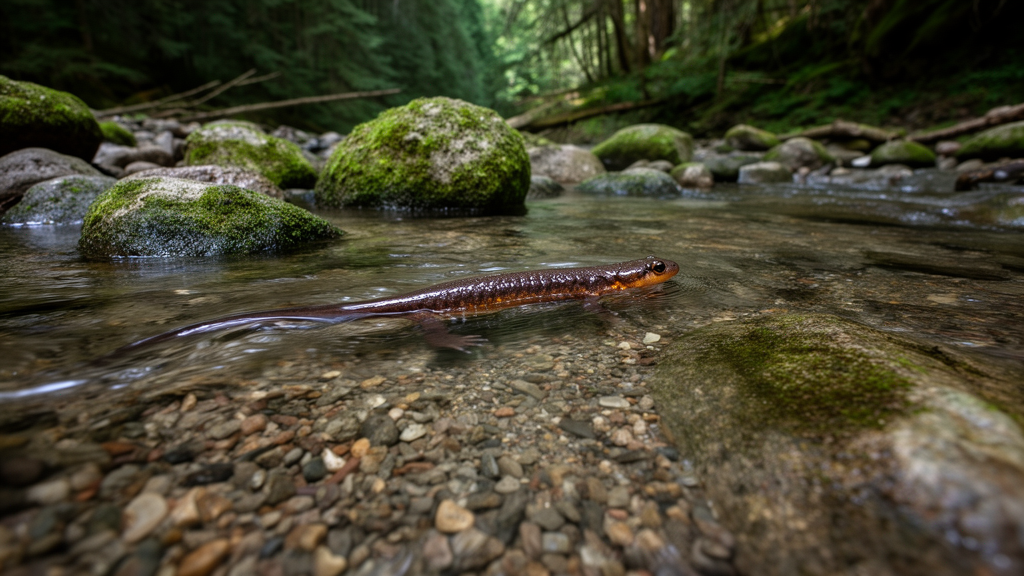
Adult salamanders living in headwater streams demonstrate a nuanced behavioral strategy when moving through their environment, showing a clear tendency to disperse in different directions depending on their specific location within the stream. Researchers found that adult Gyrinophilus porphyriticus individuals modify their movement patterns based on the spatial landscape, a finding that highlights the role of environmental context in shaping animal behavior. While previous studies have often looked at single risk factors, this research illustrates how organisms navigate complex, multi-risk systems.

The study utilized 12 years of spatially explicit capture-mark-recapture data, focusing on 1,375 individual salamanders. Scientists conducted weekly surveys across 1,000 meters of three independent headwater streams to evaluate how movement dynamics varied based on different life history stages. By tracking these individuals over an extended period, the team aimed to determine if dispersal directionality was a consistent trait or one that fluctuated based on where an individual was situated in the stream network.

The investigators discovered that adult salamanders exhibit a directional bias that aligns with the risk landscapes present in these high-energy headwater environments. Specifically, individuals residing in the furthest upstream reaches of the stream are significantly more likely to disperse downstream compared to those found at the stream’s base. Conversely, salamanders positioned at the base of the stream showed a higher probability of moving upstream.

A key observation from the data was that this directional movement was exclusive to the adult life stage. This age-related difference points to the importance of considering life history when modeling dispersal behavior.

Quantitative analysis revealed a notable disparity in movement choices: adult salamanders in the most upstream portions were approximately 1.74 times more likely to move downstream than their counterparts at the stream’s base. While these specific directional preferences were pronounced, the researchers also examined the overall propensity for dispersal. They found that the proportion of salamanders choosing to move at all remained consistent across the three studied populations. This indicates that while the choice of direction is highly sensitive to the individual’s spatial context, the underlying drive to disperse remains a stable feature of the species.

The results suggest that integrating these context-dependent patterns into wider models of animal movement could lead to more accurate predictions for various species.

Subject of Research: Behavioral ecology of headwater salamander dispersal directionality.

Article Title: Context-dependent dispersal directionality in a headwater stream salamander

Article References: Lyons, E. L., & Lowe, W. H. (2026). Context-dependent dispersal directionality in a headwater stream salamander. Movement Ecology. https://doi.org/10.1186/s40462-026-00717-y

Image Credits: AI Generated

DOI: 10.1186/s40462-026-00717-y

Keywords: Gyrinophilus porphyriticus, salamander behavior, dispersal ecology, movement ecology, stream ecosystems, population dynamics, spatial capture-mark-recapture, headwater streams, animal movement, dispersal directionality, behavioral adaptation, risk landscape, ecological research, biological movement, watershed ecology

News Source: Gavin Prescott. (November 16, 2026). Adult Salamanders Show Context-Dependent Dispersal Patterns in Headwater Streams. Scienmag.


Tags: animal movementbehavioral adaptationbiological movementdispersal directionalitydispersal ecologyecological researchGyrinophilus porphyriticusheadwater streamsmovement ecologypopulation dynamics`risk landscapesalamander behaviorspatial capture-mark-recapturestream ecosystemswatershed ecology
Share12Tweet7Share2ShareShareShare1

Related Posts

Weighted Residual Attention Deep Learning Framework Accelerates Drug-Target Interaction Prediction

Weighted Residual Attention Deep Learning Framework Accelerates Drug-Target Interaction Prediction

November 18, 2026
Cryo-EM Uncovers How Human Nitric Oxide Synthase Coordinates Intermonomer Electron Transfer

Cryo-EM Uncovers How Human Nitric Oxide Synthase Coordinates Intermonomer Electron Transfer

November 18, 2026

Epithelial Exosomal miR-124 Regulates Endothelial Cell Apoptosis in COPD via RhoA Pathway

November 18, 2026

Melatonin May Mitigate Health Risks From Emerging Environmental Contaminants

November 18, 2026

POPULAR NEWS

  • Elite Luge Athletes Experience Seasonal Shifts in Body Composition and Biomarkers

    Elite Luge Athletes Experience Seasonal Shifts in Body Composition and Biomarkers

    29 shares
    Share 12 Tweet 7
  • Olive Oil Supplementation Remodels Plasma Lipids and Metabolites in Aged Tauopathy Mice

    29 shares
    Share 12 Tweet 7
  • Mitophagy Inhibitor Ac220 Enhances Magnolol Antitumor Action in Ewing Sarcoma

    29 shares
    Share 12 Tweet 7
  • Systematic Review Finds Long-Term Data Scarce for Chronic Neuropathic Pain Treatments

    29 shares
    Share 12 Tweet 7

About

We bring you the latest biotechnology news from best research centers and universities around the world. Check our website.

Follow us

Recent News

Social Force Guided Neural Network Improves Pedestrian Trajectory Predictions in Tests

Simulated Grey Wolf Optimization Cuts Rehabilitation Robot Tracking Error by 55 Percent

Calibrated Drucker-Prager Model Accurately Predicts Robotic Apple Harvesting Forces

Subscribe to Blog via Email

Enter your email address to subscribe to this blog and receive notifications of new posts by email.

Join 88 other subscribers
  • Contact Us

Bioengineer.org © Copyright 2023 All Rights Reserved.

Welcome Back!

Login to your account below

Forgotten Password?

Retrieve your password

Please enter your username or email address to reset your password.

Log In
No Result
View All Result
  • Homepages
    • Home Page 1
    • Home Page 2
  • News
  • National
  • Business
  • Health
  • Lifestyle
  • Science

Bioengineer.org © Copyright 2023 All Rights Reserved.