Metabolic syndrome (MetS), a growing global health challenge, involves a cluster of risk factors including insulin resistance, hypertension, and dyslipidemia. Research increasingly highlights endothelial dysfunction and arterial stiffness as the critical bridge between these metabolic irregularities and the development of cardiovascular diseases (CVDs). A recent review in Clinical Phytoscience synthesizes preclinical and clinical evidence on the potential of curcumin—a bioactive polyphenol derived from Curcuma longa—to mitigate these vascular complications. By examining molecular mechanisms such as the suppression of NF-κB-mediated inflammation and the restoration of nitric oxide bioavailability, the authors propose that curcumin may serve as a beneficial adjunctive therapy for enhancing vascular health in patients with metabolic syndrome.
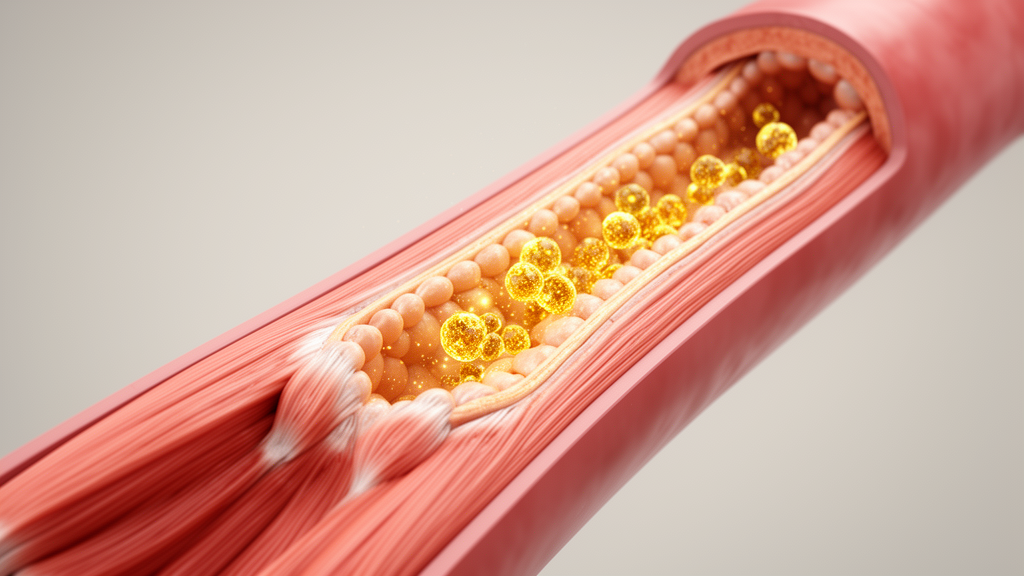
The endothelium, a singular layer of cells lining the blood vessels, serves as a vital regulator of vascular homeostasis, managing blood pressure, coagulation, and local blood flow. In metabolic syndrome, systemic inflammation, insulin resistance, and oxidative stress disrupt this balance, resulting in endothelial dysfunction. This impairment, marked by a decline in nitric oxide synthesis and an elevation of vasoconstrictive substances like endothelin-1 and reactive oxygen species, often precedes structural vascular damage. Arterial stiffness, a consequence of decreased vascular compliance due to extracellular matrix remodeling, fibrosis, and advanced glycation end products, further exacerbates this cardiovascular decline, elevating the risk of ischemic events, hypertension, and heart failure.
Curcumin exerts its cardioprotective effects through a multitargeted approach, addressing the underlying inflammatory and oxidative drivers of vascular decline. Central to its activity is the inhibition of the nuclear factor kappa-light-chain-enhancer of activated B cells (NF-κB) signaling pathway, which is highly conserved and responsible for orchestrating the inflammatory cascade. By impeding NF-κB nuclear translocation and inhibiting related kinases, curcumin downregulates the expression of proinflammatory cytokines such as IL-6, IL-1β, and TNF-α, as well as enzymes like cyclooxygenase-2 (COX-2) and inducible nitric oxide synthase (iNOS). This anti-inflammatory action not only limits vascular damage but also helps modulate the expression of adhesion molecules such as VCAM-1 and ICAM-1, which are critical in leukocyte recruitment and atherosclerotic lesion development.
Beyond its anti-inflammatory properties, curcumin effectively neutralizes reactive oxygen species (ROS) and reactive nitrogen species (RNS), safeguarding cells against oxidative stress. As a potent lipophilic scavenger, it functions as a chain-breaking antioxidant, mitigating the harmful effects of superoxide anions. Crucially, it stimulates the Nrf2 pathway—a key relay in the antioxidant response—leading to the upregulation of essential enzymes such as superoxide dismutase (SOD), catalase, and glutathione peroxidase. By reducing ROS-mediated inactivation of nitric oxide synthase (eNOS), curcumin promotes higher nitric oxide bioavailability, which is indispensable for maintaining vasodilation and vascular elasticity. These findings are supported by evidence that curcumin restores endothelium-dependent vasorelaxation and counteracts age-related stiffness in preclinical animal models.
Despite these preclinical successes, translating curcumin’s potential into clinical applications faces significant hurdles, most notably the compound’s inherently poor systemic bioavailability. Oral consumption of raw curcumin results in limited absorption, extensive hepatic metabolism, and rapid elimination, leaving only trace concentrations in the peripheral circulation. To overcome these limitations, researchers have developed various advanced formulations aimed at improving solubility and tissue uptake. First-generation interventions combined curcumin with metabolic inhibitors such as piperine to impede breakdown. Second-generation approaches utilized emulsifiers, lipid complexes, and nanopreparations to enhance solubility. More recently, third-generation delivery systems like Longvida have focused on increasing the bioavailability of free (unconjugated) curcumin, facilitating better membrane transport and intracellular availability.
Meta-analyses of human trials have shown that these bioavailable formulations can yield measurable improvements in cardiometabolic markers. For instance, in MetS patients, curcumin supplementation has been associated with decreased serum levels of inflammatory markers like TNF-α, IL-6, and C-reactive protein (CRP), and improvements in antioxidant indices such as superoxide dismutase activity. While some studies observed significant reductions in MDA levels—an indicator of lipid peroxidation—results remain somewhat heterogeneous across different patient populations and dosages. For example, some clinical trials reported significant enhancement in flow-mediated dilation (FMD) and reductions in systolic blood pressure, while others found no significant changes in pulse wave velocity (PWV) or other arterial stiffness markers, potentially due to variations in intervention duration, baseline vascular status, and the specific delivery mechanism employed.
The inconsistency in clinical outcomes underscores the complexity of curcumin’s pharmacokinetic profile and the necessity for further research to establish standardized dosing regimens. While high-bioavailability nanoformulations have demonstrated remarkable increases in plasma concentrations in some trials, the specific concentrations required to trigger clinical cardiovascular benefits remain elusive. Future research must prioritize long-term, large-scale clinical trials that utilize consistent formulations to determine the sustained efficacy and safety of curcumin across diverse age demographics. Additionally, investigating the synergistic interactions between curcumin and established pharmaceuticals, such as SGLT2 inhibitors or RAAS blockers, could offer a more nuanced understanding of how to optimize therapeutic strategies for patients with residual cardiovascular risk who are not fully addressed by conventional medicine alone.
Another emerging area of interest is the personalization of curcumin-based therapies, as individual genetic variations and gut microbiome diversity may substantially influence the metabolism and therapeutic potential of the compound. Genetic differences in metabolizing enzymes may affect how effectively patients absorb and utilize curcumin, while variations in the gut microbiota could alter the conversion and systemic processing of bioactive metabolites. As diagnostic capabilities improve, tailoring curcumin supplementation based on these individual traits might allow for more precise interventions, particularly for vulnerable populations managing metabolic syndrome or early-stage arterial aging. Exploring these biomarkers could transform curcumin from a generic nutraceutical into a precisely targeted adjunct therapy for protecting the vascular system.
In summary, the evidence suggests that curcumin holds meaningful potential as a complementary agent for managing the cardiovascular and metabolic sequelae of metabolic syndrome. Its multitargeted mechanism of action, which addresses chronic low-grade inflammation, oxidative stress, and vascular structural remodeling, offers a unique therapeutic angle that may help bridge gaps where standard pharmacotherapies are limited. However, it must not be viewed as a substitute for evidence-based medicine; rather, its role lies in enhancing the therapeutic outcomes for individuals with complex conditions. Moving forward, a rigorous, evidence-based approach is required to integrate curcumin into clinical protocols responsibly, balancing its favorable safety profile with the need for better-defined, standardized evidence of its systemic impacts on human vascular health.
As researchers continue to refine delivery technologies and define the optimal clinical utility of curcumin, the focus remains on enhancing its systemic bioavailability and standardizing its effects on resistant and conduit arteries. By targeting these diverse aspects of vascular dysfunction—from the molecular pathways governing inflammatory signaling to the physiological measurements of arterial stiffness—curcumin-based interventions could play a decisive role in mitigating cardiovascular disease risk associated with metabolic aging. Ultimately, the successful clinical adoption of curcumin hinges on continued rigorous investigation, ensuring that the promise of this bioactive polyphenol is grounded in robust, reproducible clinical data that can guide practitioners toward safe and effective implementation.
In resistant arteries, an intervention in healthy middle-aged and older adults demonstrated that 12 weeks of curcumin supplementation improved endothelium-dependent dilation, measured via forearm blood flow responses to acetylcholine, without changing vascular responses to sodium nitroprusside. This endothelium-specific response was accompanied by heightened sensitivity to nitric oxide synthase inhibition via L-NMMA and a blunted response during vitamin C co-infusion, pointing directly to reduced oxidative stress and improved nitric oxide availability. Similarly, in a trial involving thirty-two postmenopausal women, daily curcumin ingestion raised flow-mediated dilation and peak oxygen consumption while reducing systolic blood pressure, confirming functional gains in conduit vessels without adverse side effects. Other investigations in healthy male cohorts observed improved flow-mediated dilation following meals containing curry powder enriched with curcumin, although several broader evaluations note that functional benefits often exhibit marked sex-specific disparities, with male participants experiencing greater improvements in certain vascular measures.
Clinical trials evaluating specific cytokine profiles offer additional insight into how curcumin modulates vascular inflammation. In an eight-week randomized trial of 117 individuals diagnosed with metabolic syndrome, coadministration of one gram of curcumin with ten milligrams of piperine produced notable decreases in circulating interleukin-6, monocyte chemoattractant protein-1, tumor necrosis factor-alpha, and transforming growth factor-beta compared to placebo. With the exception of interleukin-6, these reductions remained statistically significant after adjusting for baseline cytokine concentrations, glucose, and serum lipid shifts. The intervention also produced significant reductions in circulating non-HDL cholesterol, total cholesterol, triglycerides, and lipoprotein(a). In an additional study examining 36 obese participants across a 30-day crossover protocol, daily supplementation with one gram of curcumin and ten milligrams of piperine lowered triglycerides significantly, though body mass index, body fat, and high-sensitivity C-reactive protein showed no meaningful shifts over that shorter duration. Beyond metabolic cohorts, administering 4,000 milligrams daily of a curcuminoid mixture to patients undergoing coronary artery bypass grafting reduced malondialdehyde concentrations by 5.7 millimoles per milliliter.
Preclinical research in animal models supplies additional biological context for these clinical observations. In aortic rings extracted from two-kidney, one-clip hypertensive rats, curcumin treatment significantly increased acetylcholine-induced endothelium-dependent vasorelaxation, upregulated endothelial nitric oxide synthase expression, downregulated the p47phox subunit of NADPH oxidase, and decreased superoxide production in vascular tissues. Furthermore, four weeks of dietary curcumin supplementation in aged mice improved large artery compliance and reversed age-related arterial stiffness. Researchers attributed these structural benefits to diminished collagen type I deposition, lower vascular superoxide generation, and the attenuation of advanced glycation end products. Together, these experimental findings clarify how curcumin targets mechanical and molecular remodeling in stiffened vasculature.
Subject of Research: Cardiometabolic benefits of curcumin supplementation in metabolic syndrome
Article Title: The cardiometabolic benefits of curcumin: a focus on endothelial dysfunction and arterial stiffness in metabolic syndrome
Article References: Dimeji, I. Y., Jabba, H. L., Adeoye, S. W., Murtala Audu, N., Baba, Z. M., Ayodeji, A. S., & Samson, A. O. (2025). The cardiometabolic benefits of curcumin: a focus on endothelial dysfunction and arterial stiffness in metabolic syndrome. Clinical Phytoscience, 11(1), Article 27. https://doi.org/10.1186/s40816-025-00404-2
Image Credits: AI Generated
DOI: 10.1186/s40816-025-00404-2
Keywords: curcumin, metabolic syndrome, endothelial dysfunction, arterial stiffness, cardiovascular disease, inflammation, oxidative stress, nitric oxide, bioavailability, nutraceuticals, vascular health, NF-κB pathway, pulse wave velocity, flow-mediated dilation, adipokines, metabolic health
News Source: Ophelia Keating. (November 16, 2026). Curcumin Shows Potential to Mitigate Endothelial Dysfunction and Arterial Stiffness. Scienmag.