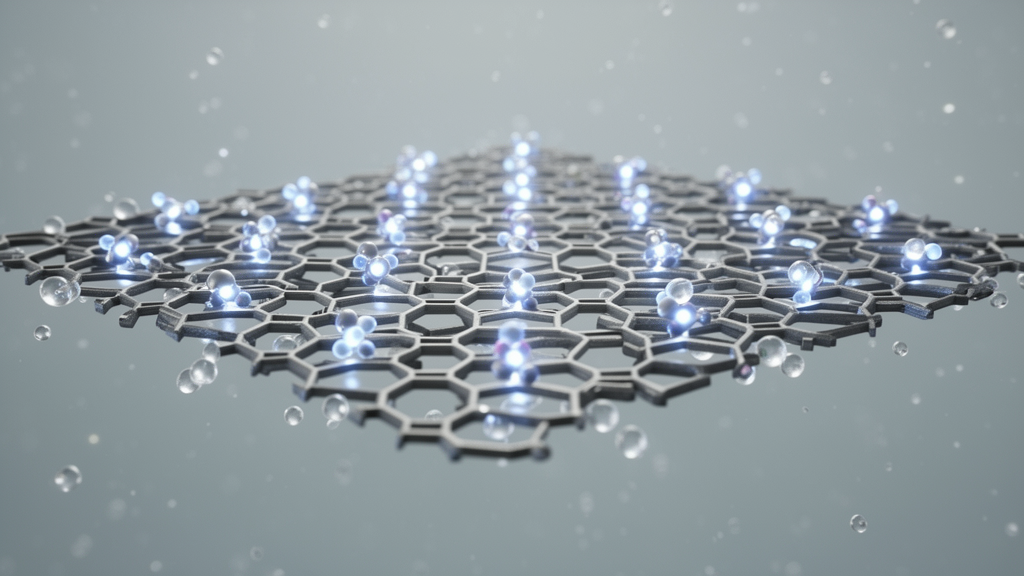
In a comprehensive review published in Carbon Neutrality, researchers led by Ziwu He and Jun Wan systematically evaluated how engineering porous two-dimensional nanomaterials advances electrocatalytic small-molecule oxidation for decarbonized energy infrastructure. Small-molecule electrooxidation reactions, including water, alcohol, urea, ammonia, formic acid, aldehyde, and hydrazine oxidation, underpin vital technologies such as clean hydrogen production, chemical valorization, and wastewater remediation. Conventional electrocatalysts, such as zero-dimensional nanoparticles and one-dimensional nanowires, face severe operational limitations. Nanoparticles suffer from aggregation driven by high surface energies, while one-dimensional structures exhibit low surface-to-volume ratios that limit active site density. Furthermore, dense nanostructure assemblies create severe diffusion barriers that impede reactant infiltration and product removal, leading to catalyst deactivation. In contrast, porous two-dimensional materials overcome these limitations by offering ultrahigh surface areas, tunable electronic configurations, abundant reactive defects, and open diffusion channels that accelerate mass transport, reduce overpotentials, and enhance catalytic durability across diverse operational environments.
The efficiency of electrocatalytic small-molecule oxidation is determined by interfacial charge transfer dynamics and multistep proton-coupled electron transfer mechanisms at solid-liquid interfaces. During oxidation, reactants undergo successive dehydrogenation or oxygen insertion, generating surface-bound intermediates prior to final product desorption. Proton-coupled electron transfer steps govern overall reaction kinetics, as simultaneous proton and electron transfer requires extensive reorganization of interfacial hydrogen-bond networks, solvation environments, and surface adsorption configurations. These coupled reorganizations present higher activation barriers than decoupled electron or proton transfers, rendering reaction kinetics sensitive to local catalytic environments. Hierarchical porosity in two-dimensional materials establishes a direct structure-performance relationship by simultaneously expanding electrochemically active surface areas and accelerating mass transport. Within these systems, micropores and mesopores maximize active site exposure, while interconnected channels shorten diffusion pathways and promote rapid product removal. This cooperative transport architecture reduces operating overpotentials, increases current densities, and protects active surfaces against intermediate fouling during continuous electrochemical operation.
Among evaluated reactions, the oxygen evolution reaction serves as the critical anodic half-reaction in water splitting, yet remains sluggish due to high activation barriers in four-electron oxygen-oxygen bond formation. The reaction proceeds through either the adsorbate evolution mechanism, forming adsorbed hydroxyl, oxygen, and hydroperoxyl intermediates on discrete metal centers, or the lattice oxygen mechanism, where catalyst lattice oxygen directly participates in oxygen coupling. The lattice pathway occurs in materials with strong metal-oxygen covalency and elevated oxygen 2p bands, bypassing adsorbate scaling relations but risking lattice degradation. Similarly, alcohol oxidation reactions, including methanol and ethanol electrooxidation in direct alcohol fuel cells, require catalysts that balance carbon-hydrogen activation with resistance to carbon monoxide poisoning. Lowering the metal d-band center reduces electron back-donation to carbon monoxide antibonding orbitals, weakening poisoning adsorption. Furthermore, alloying and support interactions facilitate hydroxyl adsorption at lower potentials, promoting carbon monoxide oxidation to carbon dioxide via Langmuir-Hinshelwood pathways and regenerating active catalytic sites.
The review details mechanistic principles across urea, ammonia, formic acid, aldehyde, and hydrazine electrooxidation. Urea oxidation operates at a low theoretical onset potential of approximately 0.37 volts versus the reversible hydrogen electrode, enabling energy-saving hydrogen production during wastewater treatment, though carbonate accumulation can cause electrode fouling. Ammonia oxidation involves stepwise dehydrogenation to dinitrogen, where catalyst selectivity must suppress harmful nitrogen oxide byproducts. In formic acid oxidation, catalysts navigate direct dehydrogenation to carbon dioxide and indirect dehydration to carbon monoxide. Creating isolated active sites in porous frameworks disrupts contiguous metal ensembles, sterically suppressing carbon monoxide formation while favoring direct dehydrogenation. Aldehyde oxidation utilizes nucleophilic hydroxyl attack to generate value-added carboxylates without overoxidation to carbon dioxide. In contrast, hydrazine oxidation exhibits rapid kinetics with low activation barriers; its rate-determining step involves initial hydrazine deprotonation, where optimizing d-band centers tunes metal-nitrogen binding to prevent intermediate blockage and maintain steady turnover.
Porous two-dimensional metal oxides and derivatives exhibit notable electrocatalytic activity due to strong metal-oxygen covalency, tunable d-band states, and abundant oxygen vacancies that facilitate charge transfer and intermediate binding. In experimental studies highlighted in the review, He and colleagues engineered grain-boundary-rich porous ruthenium dioxide nanosheets via salt-assisted recrystallization, generating local lattice strain that delivered an acidic oxygen evolution overpotential of 187 millivolts at 10 milliamperes per square centimeter, a small Tafel slope of 34.5 millivolts per decade, and continuous operation exceeding 550 hours. To improve urea oxidation kinetics, Wu and colleagues utilized an ultrafast microwave-shock method to synthesize porous cubic lanthanum nickelate nanosheets within seconds, achieving an onset potential of 1.27 to 1.28 volts and a Tafel slope of 33.1 millivolts per decade. Furthermore, Shih and co-workers developed metal-organic framework-derived nickel oxide and nickel-carbon nanosheets for wastewater ammonia oxidation, while Wang and colleagues synthesized single-crystalline mesoporous high-entropy oxide nanoplates that exhibited enhanced kinetics and high 2,5-furandicarboxylic acid selectivity during biomass-derived 5-hydroxymethylfurfural electrooxidation.
Porous two-dimensional metal hydroxides and layered double hydroxides facilitate electrooxidation through dense surface hydroxyl groups that promote proton-coupled electron transfer. Under oxidative potentials, these materials dynamically restructure into catalytically active oxyhydroxide phases. Zheng and colleagues demonstrated this by constructing a FeNi layered double hydroxide and metal-organic framework hybrid, delivering an oxygen evolution overpotential of 272 millivolts at 100 milliamperes per square centimeter with a Tafel slope of 34.1 millivolts per decade. In alcohol oxidation, Zhu and co-workers fabricated nickel-manganese layered double hydroxide nanosheet arrays, achieving cell potentials of 1.33 and 1.41 volts at 10 and 100 milliamperes per square centimeter with nearly 100 percent Faradaic efficiency during methanol-to-formate conversion. Additionally, Feng and colleagues decorated cobalt-nickel layered double hydroxides with fullerene quantum dots, reaching 10 milliamperes per square centimeter at 1.36 volts with a Tafel slope of 17 millivolts per decade. Furthermore, Wang and co-workers incorporated boron and manganese into nickel hydroxide nanosheets, attaining 100 milliamperes per square centimeter at 1.36 volts and achieving a 99.2 percent 2,5-furandicarboxylic acid yield.
Porous two-dimensional metal sulfides and phosphides provide enhanced metal-anion covalency, reduced electronegativity, and superior electrical conductivity compared to oxides. In sulfides, metal-sulfur hybridization moderates intermediate adsorption, while sulfur vacancies reduce activation barriers. Zhao and colleagues synthesized an ultrathin nickel sulfide and nickel oxide nanomesh requiring a 300 millivolt overpotential at 200 milliamperes per square centimeter for water oxidation, while Du and colleagues developed a cobalt sulfide and nickel sulfide heterojunction reaching 100 milliamperes per square centimeter at 1.22 volts during urea oxidation with a Tafel slope of 33.43 millivolts per decade. Metal phosphides similarly feature delocalized electronic states and form active oxyphosphide surfaces. Li and colleagues constructed carbon-coated iron-doped nickel phosphide nanosheets that achieved 200 and 400 milliamperes per square centimeter at overpotentials of 255 and 269 millivolts, while Ru-doped nickel-iron phosphide reached 1000 milliamperes per square centimeter at 331 millivolts overpotential in alkaline seawater. Additionally, Meng and co-workers incorporated tungsten-oxygen species into cobalt phosphide nanoflakes, driving hydrazine oxidation at 1000 milliamperes per square centimeter with a low overpotential of 78.99 millivolts and a Tafel slope of 8.43 millivolts per decade.
Porous two-dimensional metal carbides and nitrides, including MXenes, exhibit metallic conductivity that reduces charge-transfer resistance and accelerates intermediate turnover. Their covalent frameworks provide structural resilience against oxidative dissolution, while moderate intermediate adsorption prevents surface poisoning. Kou and colleagues fabricated holey molybdenum carbide and molybdenum nitride heterostructured nanosheets from bimetallic frameworks, achieving an oxygen evolution overpotential of 276 millivolts at 50 milliamperes per square centimeter and a Tafel slope of 82 millivolts per decade. In urea oxidation, Wang and co-workers synthesized nickel nitride and molybdenum nitride heterostructures, lowering the potential required for 200 milliamperes per square centimeter by 328 millivolts compared to water oxidation. Chen and colleagues designed iridium-coupled nickel nitride nanosheets that delivered 100 milliamperes per square centimeter at 1.37 volts with a Tafel slope of 27.73 millivolts per decade, while Zhao and colleagues synthesized antiperovskite copper-substituted nickel nitride nanosheets that exhibited a 26.1 millivolts per decade Tafel slope and 95 percent Faradaic efficiency during benzylamine oxidation.
Emerging porous two-dimensional architectures, including single-atom catalysts, mesoporous noble-metal sheets, and nanowire networks, further expand electrocatalytic capabilities through atomic active sites and anisotropic pore structures. Cui and colleagues constructed an iron-manganese dual single-atom catalyst on porous nitrogen-doped carbon nanosheets, providing a surface area of 1700 square meters per gram and achieving an alkaline oxygen evolution Tafel slope of 96 millivolts per decade. For fuel cell applications, Fan and colleagues synthesized anisotropic platinum-rhodium-lead mesoporous nanosheets, achieving an ethanol oxidation mass activity of 7.8 amperes per milligram of noble metal by promoting carbon-carbon bond cleavage. In formic acid oxidation, Zhang and colleagues utilized a microfluidic laminar-flow strategy to fabricate continuous two-dimensional palladium-bismuth nanowire networks, achieving a mass activity of 2669.1 milliamperes per milligram and high operational stability. Furthermore, Zhao and colleagues developed ultrathin porous platinum-silver-bismuth-tellurium nanosheets via visible-light-driven synthesis, delivering a hydrazine oxidation mass activity of 13.5 amperes per milligram of platinum with a small Tafel slope of 13.9 millivolts per decade.
Despite these achievements, significant technical challenges must be overcome before porous two-dimensional electrocatalysts can be deployed in industrial decarbonization technologies. Applied oxidative potentials frequently trigger dynamic restructuring and phase transformations, which expose active metastable phases but introduce uncertainties regarding structural reversibility, active site retention, and long-term durability. Moreover, quantitative relationships connecting local electronic charge density variations to product selectivity across complex oxidation pathways remain insufficiently established. Translating laboratory nanosheet syntheses to scalable production presents further challenges in maintaining hierarchical pore networks, defect densities, and interlayer spacing while preventing spontaneous restacking and mechanical degradation under industrial current densities. The review authors conclude that future research must prioritize stimuli-responsive catalytic systems, multifunctional hybrid interfaces, and machine-learning models incorporating descriptors such as d-band centers, work functions, and intermediate adsorption energies. Coupled with operando characterization techniques, including synchrotron X-ray absorption spectroscopy, Raman spectroscopy, and ambient-pressure X-ray photoelectron spectroscopy, these strategies will provide mechanistic insights necessary to design durable, high-performance porous two-dimensional electrocatalysts for sustainable energy systems.
Subject of Research: Porous two-dimensional electrocatalysts for small-molecule electrooxidation in clean energy systems
Article Title: Engineering porous 2D materials for electrocatalytic small-molecule oxidation in decarbonized energy systems
Article References: He, Z., Zhu, K., Chen, R., Zhou, L., Ma, Y., & Wan, J. (2026). Engineering porous 2D materials for electrocatalytic small-molecule oxidation in decarbonized energy systems. Carbon Neutrality, 5(1), Article 19. https://doi.org/10.1007/s43979-026-00174-x
Image Credits: AI Generated
DOI: 10.1007/s43979-026-00174-x
Keywords: Porous 2D Materials, Electrocatalytic Small-Molecule Oxidation, Oxygen Evolution Reaction, Alcohol Oxidation, Urea Oxidation Reaction, Formic Acid Oxidation, Hydrazine Oxidation, Ammonia Oxidation, Proton-Coupled Electron Transfer, Defect Engineering, Layered Double Hydroxides, Transition Metal Sulfides, Transition Metal Phosphides, Transition Metal Carbides and Nitrides, Single-Atom Catalysts, Mass Transport, Decarbonized Energy Systems, Operando Spectroscopy
News Source: Denise Maddox. (November 16, 2026). Porous Two-Dimensional Electrocatalysts Accelerate Small-Molecule Oxidation for Decarbonized Energy Systems. Scienmag.