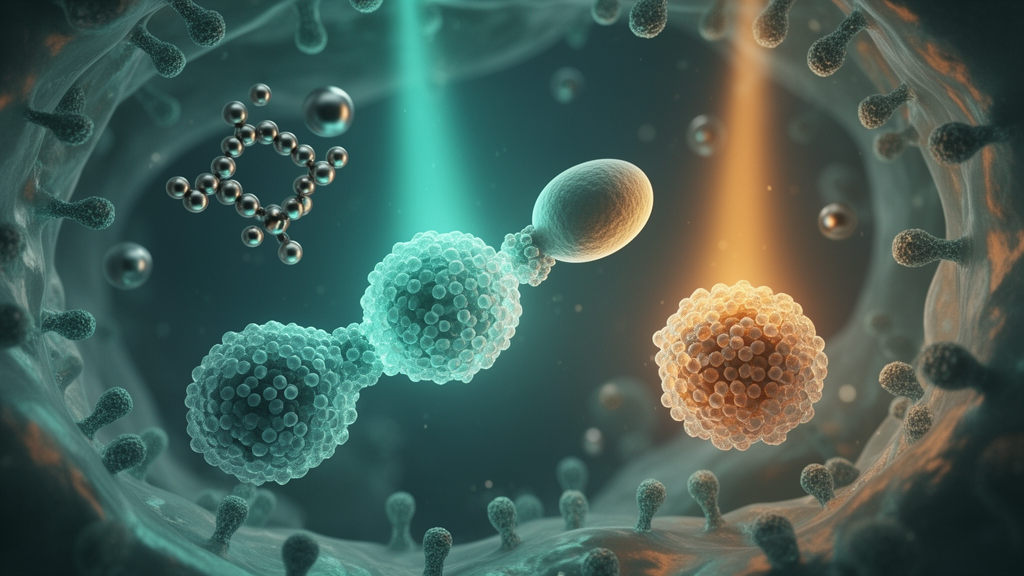
Infectious diseases remain among the leading causes of illness and death globally, with antimicrobial resistance continuing to undermine established pharmaceutical treatments and causing an estimated 700,000 fatalities each year according to the World Health Organization. Concurrently, viral pathogens such as influenza and emerging coronaviruses frequently outpace antiviral countermeasures through rapid mutation, limited activity spectrums, and drug toxicity. To address the looming challenges of a post-antibiotic era where routine infections could become life-threatening, a comprehensive review published in Discover Nano evaluates second-generation nanoparticle therapeutics. The authors outline an integrated conceptual framework that unites four cutting-edge technologies: computational artificial intelligence modeling, CRISPR-Cas gene editing delivery, bacteriophage hybrid mechanics, and host immune system modulation.
The physical properties of engineered nanoparticles, which typically operate within the 1 to 100 nanometer range, provide versatile biophysical mechanisms that conventional small-molecule drugs cannot replicate. These nanomaterials feature high surface area-to-volume ratios, tunable sizes, adjustable shapes, and extensive surface functionalization capacities. Metallic nanoparticles formulated with elements such as silver or zinc can directly disrupt microbial cell membranes or inhibit viral particles, whereas polymer- and lipid-based nanoparticles encapsulate sensitive molecular payloads to enhance chemical stability, extend biological half-lives, and permit sustained release. The synthesized evidence demonstrates that lipid nanoparticles have already proven foundational as universal vaccine delivery systems during recent coronavirus outbreaks, offering rapid structural adaptation once genetic pathogen sequences are known.
Artificial intelligence forms the first foundational layer of the reviewed architecture, directing the rational design and physicochemical optimization of nanoparticles prior to laboratory synthesis. Machine learning and deep learning architectures, notably graph neural networks and convolutional neural networks, systematically analyze genomic, proteomic, and structural datasets to model interactions at host-pathogen interfaces. Reported validations demonstrate that graph neural networks have attained an area under the curve of 0.92 in predicting binding affinity, while convolutional neural networks have achieved classification accuracies exceeding 88 percent in evaluating surface interactions. Furthermore, variational autoencoders have generated active antimicrobial peptides, and Bayesian optimization has reduced experimental screening iterations by 60 percent while preserving therapeutic potency.
The second layer focuses on nanoparticles serving as protective delivery nanocarriers for CRISPR-Cas gene editing machinery. Nucleases and proteases in bloodstream and tissue environments rapidly degrade naked guide RNA and Cas proteins or their encoding messenger RNA, while their large size and negative charge impede crossing cellular and bacterial membranes. Engineered lipid nanoparticles and polymeric carriers encapsulate these CRISPR components to protect cargo integrity and enable intracellular delivery. Experimental proof-of-concept investigations have demonstrated targeted genome editing in bacteria, including the reversal of antibiotic resistance genes such as blaKPC in Klebsiella pneumoniae, as well as the in vivo application of rationally optimized Cas13a lipid nanoparticles in Escherichia coli and the excision of latent viral reservoirs such as human immunodeficiency virus proviral DNA in CD4-positive T cells.
Efficient intracellular release of CRISPR components relies fundamentally on overcoming the endosome, where carrier polymer chemistry dictates the specific route of endosomal escape. Polymers containing amine groups, such as polyethylenimine, rely on the proton sponge mechanism: as endosomal luminal pH falls during organelle maturation, tertiary amines absorb protons pumped across the membrane by vacuolar-type ATPase, driving compensatory influx of chloride ions and water that builds osmotic pressure until membrane rupture occurs. Conversely, anionic polymers undergo pH-dependent charge inversion to directly destabilize lipid bilayers, while charge-conversion polymers transition from anionic to cationic states to trigger membrane disruption. The authors stress that cellular internalization pathways, whether clathrin-dependent endocytosis, caveolin-dependent uptake, or macropinocytosis, alter internal pH and trafficking dynamics, requiring artificial intelligence models to design particle charge and size around specific cellular uptake mechanisms.
The third functional pillar integrates bacteriophages with nanoparticles to create synergistic antibacterial biohybrids that circumvent standard limitations of standalone phage therapies. Standalone phages face rapid immune neutralization, poor stability across physiological fluid flows, and narrow strain-specific host ranges. The review classifies hybrid strategies into three distinct configurations: encapsulation of whole phages within polymeric or liposomal matrices for prolonged circulation and slow release; direct surface decoration of phage capsids with metallic nanoparticles such as gold, silver, or zinc oxide to combine host targeting with reactive oxygen species generation and photothermal lysis; and indirect combinations where nanoparticles degrade protective bacterial biofilm matrices to allow unhindered phage penetration.
Despite the functional advantages of phage-nanoparticle platforms, the authors identify key biological and safety hurdles that complicate broad application. Because phages possess precise bacterial strain specificity, single formulations cannot easily address heterogeneous clinical infections. Moreover, horizontal gene transfer via phage-mediated generalized transduction represents an unquantified clinical risk, with estimated in vitro baseline transduction frequencies occurring between 10⁻⁶ and 10⁻⁸ per plaque-forming unit per generation. To curb unintentional gene transfer while preserving bactericidal potency, researchers have explored CRISPR-modified, strictly lytic phages engineered to selectively disrupt transduction-associated genes, complemented by surface PEGylation strategies designed to prolong in vivo biological half-lives against neutralizing immune responses.
The fourth therapeutic pillar harnesses engineered nanocarriers for dual-action immunomodulation, balancing active pathogen clearance against the prevention of fatal hyperinflammation. In immunostimulatory contexts, nanocarriers function as adjuvants taken up by antigen-presenting cells, promoting antigen presentation through major histocompatibility complex class II molecules, driving T-cell and B-cell activation, and inducing pro-inflammatory cytokines such as interleukin-12 and interferon-gamma. Conversely, in immunosuppressive contexts aimed at mitigating septic cytokine storms, nanoparticles target dysfunctional macrophages to suppress tumor necrosis factor-alpha and interleukin-6 while stimulating anti-inflammatory mediators such as interleukin-10, transforming growth factor-beta, and regulatory T cells.
The biological behavior and immunological outcome of these platforms depend strictly on engineered physicochemical characteristics and in vivo interface modifications. Nanoparticles smaller than 100 nanometers preferentially target dendritic cells to stimulate T-cell responses, whereas particles larger than 200 nanometers are predominantly cleared by macrophages. Positively charged cationic nanoparticles stimulate reactive oxygen species generation and drive pro-inflammatory M1 macrophage polarization, while neutral or anionic formulations favor anti-inflammatory M2 macrophage uptake. However, systemic circulation promptly coats foreign particles with endogenous proteins, forming a dynamic protein corona that masks synthetic targeting ligands, presents unexpected opsonin epitopes, and remains a primary source of discrepancy between laboratory predictions and living biological responses.
Translating these multi-layered nanomedicines from experimental models to clinical practice faces substantial technical, manufacturing, and regulatory obstacles. Multi-functional nanoparticles that combine automated computational predictions, gene editing components, viral phages, and immunomodulatory chemistries encounter ambiguous evaluation standards from regulatory bodies accustomed to assessing single-agent drugs. Furthermore, small discrepancies in batch synthesis, particle diameter, surface charge, and ligand density can significantly undermine reproducible performance. The authors conclude that advancing next-generation nanoparticle therapeutics will necessitate standardized Good Manufacturing Practice production protocols, systematic Adverse Outcome Pathway immunotoxicity profiling, and international public-private collaborations to ensure equitable global distribution across resource-limited healthcare settings.
Future advancements in the field depend heavily on establishing artificial intelligence-driven “closed-loop” design-testing cycles. These systems integrate automated synthesis, high-throughput characterization, and active learning algorithms that iteratively inform model refinement. In laboratory settings, these closed-loop pipelines have demonstrated initial success in accelerating the discovery of structure-property relationships through robotic synthesis. However, translating these efficiencies into clinical-grade reproducibility within Good Manufacturing Practice (GMP)-compliant environments remains a significant hurdle. Furthermore, integrating real-time biological readouts—such as nuanced immune activation profiles or real-time CRISPR editing rates—into these iterative loops is conceptually compelling but currently unrealized. Significant technological progress in multiparametric biosensing and feedback algorithms is required before such automated platforms can achieve clinical relevance. These cycles represent a move from empirical, trial-and-error laboratory development to an intelligent, data-driven engineering paradigm designed to minimize development timelines while maximizing therapeutic predictability.
Personalized nanomedicine is set to play an increasingly central role, particularly during infectious disease outbreaks where rapid response is critical. By tailoring nanoparticle features such as size, surface targeting ligands, and intrinsic immunogenicity to a patient’s specific genomic profile or microbiome state, researchers anticipate the development of more effective therapies and vaccines. While this level of precision has shown promise in oncological applications, its transition to infectious disease contexts requires rigorous validation in large-scale clinical trials. This is especially pertinent for highly variable pandemic pathogens, where the rapid evolution of viral antigens may outpace the timelines required for personalized nanoparticle formulation. Successful implementation will necessitate robust, prospective clinical evidence to ensure that individualized design can reliably meet the demands of rapid therapeutic intervention without sacrificing consistency or patient safety across diverse clinical cohorts.
The progression of these technologies must be accompanied by a commitment to ethical and global health imperatives. Technical innovation alone is insufficient; the field must address complex issues including informed consent for genomic data, patient privacy, and the potential for these advanced therapies to exacerbate existing global health inequities. Scoping reviews indicate that the legal and ethical challenges extend beyond safety and risk management to encompass critical concerns regarding justice in access and fair benefit sharing. Building comprehensive, global ethical frameworks and international collaborations is therefore essential. Such initiatives are intended to ensure that the transformative potential of advanced nanotherapeutics is accessible and beneficial to all populations, rather than being confined to high-resource settings. This inclusive approach will be as critical to real-world success as the underlying engineering of the therapeutic platforms themselves.
Subject of Research: Integrated nanoparticle therapeutics for infectious diseases
Article Title: Nanoparticle therapeutics for infectious diseases integrating AI-guided design, crispr delivery, phage synergy, and immune modulation
Article References: Mehmood, M. S., Javaid, F., Afroz, E., Saleem, M., Ullah, H., Moh’d, A. M., Shahid, I., & Nazari, M. J. (2026). Nanoparticle therapeutics for infectious diseases integrating AI-guided design, crispr delivery, phage synergy, and immune modulation. Discover Nano, 21(1), Article 644. https://doi.org/10.1186/s11671-026-05108-1
Image Credits: AI Generated
DOI: 10.1186/s11671-026-05108-1
Keywords: nanoparticles, antimicrobial resistance, CRISPR-Cas, bacteriophages, artificial intelligence, immune modulation, lipid nanoparticles, endosomal escape, drug delivery, infectious diseases, macrophage polarization, biofilms, transduction, protein corona, preclinical translation, nanomedicine
News Source: Juliet Wilcox. (November 16, 2026). Review Outlines Nanoparticle Framework Merging AI, CRISPR, Phages, and Immune Control. Scienmag.