

• HOME
  • NEWS
  • EXPLORE
    • CAREER
      • Companies
      • Jobs
    • EVENTS
    • iGEM
      • News
      • Team
    • PHOTOS
    • VIDEO
    • WIKI
  • BLOG
  • COMMUNITY
    • FACEBOOK
    • INSTAGRAM
    • TWITTER
Saturday, February 7, 2026
BIOENGINEER.ORG
No Result
View All Result
  • Login
  • HOME
  • NEWS
  • EXPLORE
    • CAREER
      • Companies
      • Jobs
        • Lecturer
        • PhD Studentship
        • Postdoc
        • Research Assistant
    • EVENTS
    • iGEM
      • News
      • Team
    • PHOTOS
    • VIDEO
    • WIKI
  • BLOG
  • COMMUNITY
    • FACEBOOK
    • INSTAGRAM
    • TWITTER
  • HOME
  • NEWS
  • EXPLORE
    • CAREER
      • Companies
      • Jobs
        • Lecturer
        • PhD Studentship
        • Postdoc
        • Research Assistant
    • EVENTS
    • iGEM
      • News
      • Team
    • PHOTOS
    • VIDEO
    • WIKI
  • BLOG
  • COMMUNITY
    • FACEBOOK
    • INSTAGRAM
    • TWITTER
No Result
View All Result
Bioengineer.org
No Result
View All Result
Home Headlines

New cardiac catheter combines light and ultrasound to measure plaques

Bioengineer.org by Bioengineer.org
January 24, 2018
in Headlines, Health, Science News
Reading Time: 2 mins read
0
Share on FacebookShare on TwitterShare on LinkedinShare on RedditShare on Telegram
IMAGE

Credit: Marcu Lab/UC Davis

To win the battle against heart disease, cardiologists need better ways to identify the composition of plaque most likely to rupture and cause a heart attack. Angiography allows them to examine blood vessels for constricted regions by injecting them with a contrast agent before X-raying them. But because plaque does not always result in constricted vessels, angiography can miss dangerous buildups of plaque. Intravascular ultrasound can penetrate the buildup to identify depth, but lacks the ability to identify some of the finer details about risk of plaque rupture.

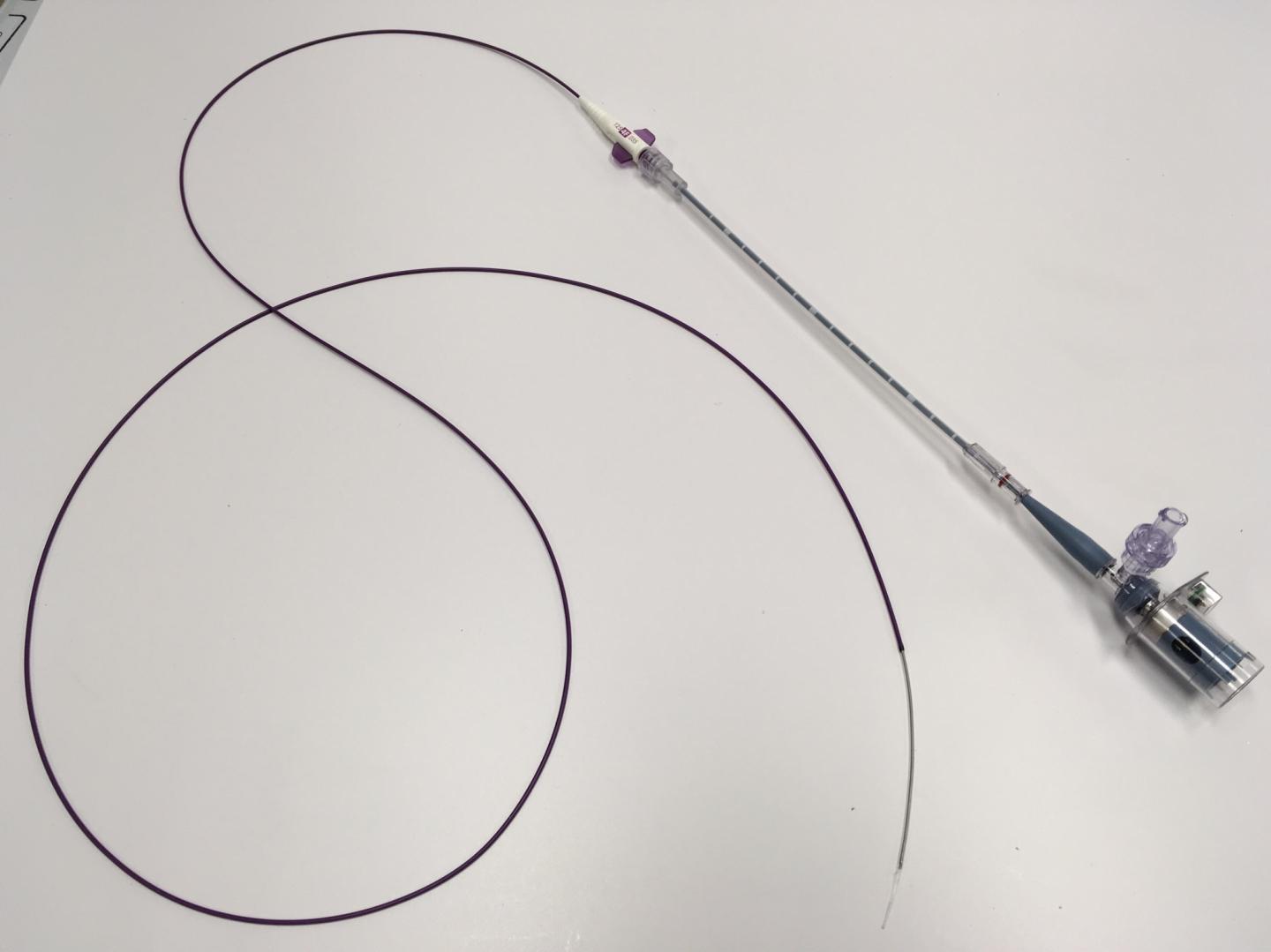
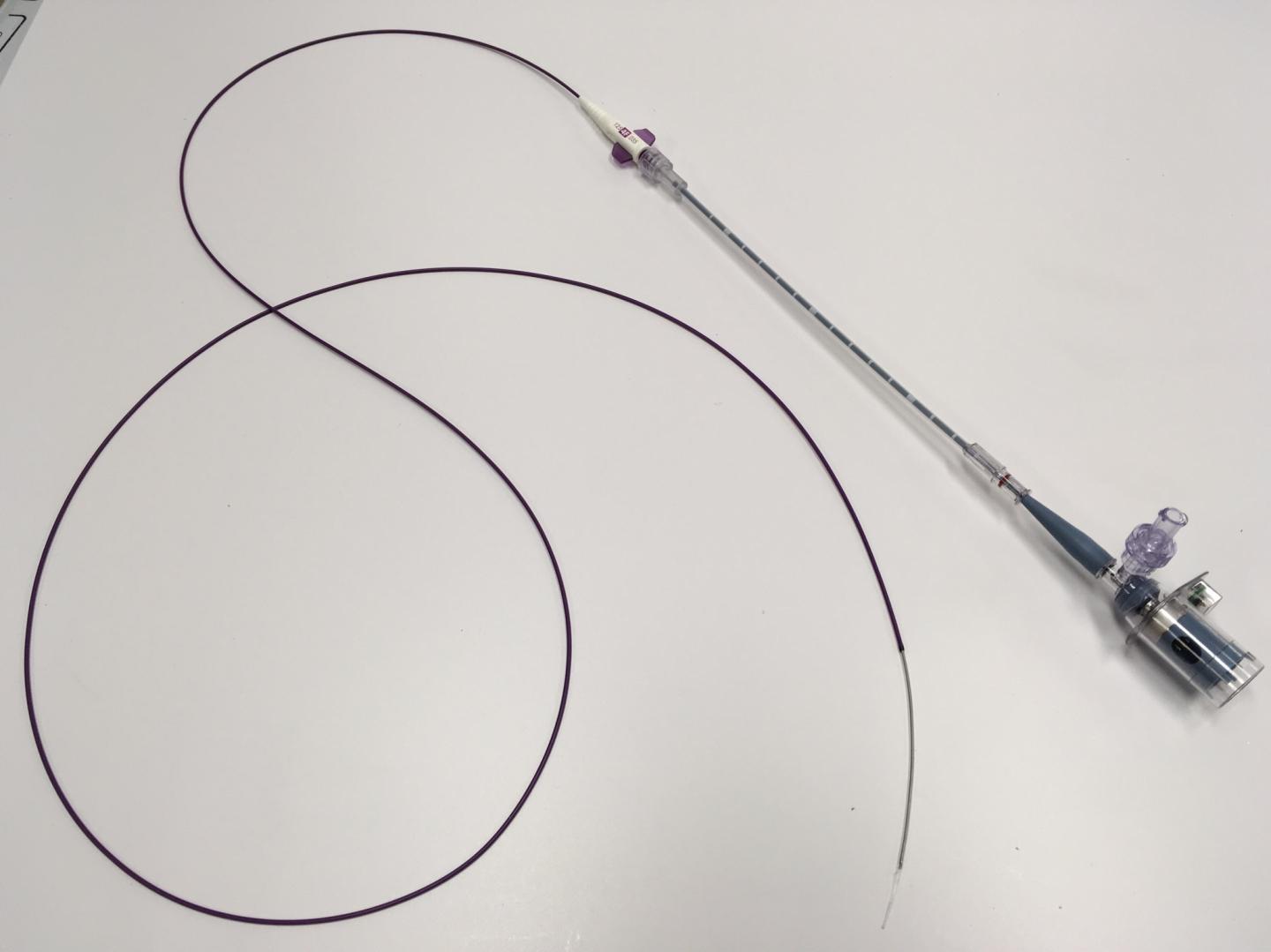
Professor Laura Marcu's lab in the Department of Biomedical Engineering at UC Davis has now combined intravascular ultrasound with fluorescence lifetime imaging (FLIm) in a single catheter probe that can image the tiny arteries of a living heart. The new catheter can simultaneously retrieve structural and biochemical information about arterial plaque that could more reliably predict heart attacks.

The new device is described in a recent paper published in Scientific Reports.

An optical fiber in the catheter sends short laser pulses into surrounding tissue, which fluoresces with tiny flashes of light in return. Different kinds of tissue (collagen, proteins, lipids) emit different amounts of fluorescence.

At the same time, an ultrasound probe in the catheter records structural information about the blood vessel.

Seeking FDA Approval for Human Trials

The combination FLIm-IVUS imaging catheter provides a comprehensive insight into how atherosclerotic plaque forms, aiding diagnosis and providing a way to measure how plaques shrink in response to therapy.

The new catheter has been tested in living swine hearts and samples of human coronary arteries.

The catheter used in the study is flexible enough to access coronary arteries in a living human following standard procedures. It does not require any injected fluorescent tracers or any special modification of the catheterization procedures.

The new technique could not only can improve understanding of mechanisms behind plaque rupture – an event with fatal consequences- but also the diagnosis and treatment of patients with heart disease.

Marcu's group is currently working to obtain FDA approval to test this new intravascular technology on human patients.

###

Media Contact

Andy Fell
[email protected]
@ucdavisnews

http://www.ucdavis.edu

Original Source

http://blogs.ucdavis.edu/egghead/2017/10/03/new-cardiac-catheter-combines-light-ultrasound-measure-plaques/ http://dx.doi.org/10.1038/s41598-017-08056-0


Share12Tweet8Share2ShareShareShare2

Related Posts

Boosting Remote Healthcare: Stepped-Wedge Trial Insights

February 7, 2026

Barriers and Boosters of Seniors’ Physical Activity in Karachi

February 7, 2026

Evaluating Pediatric Emergency Care Quality in Ethiopia

February 7, 2026

TPMT Expression Predictions Linked to Azathioprine Side Effects

February 7, 2026
Please login to join discussion

POPULAR NEWS

  • Robotic Ureteral Reconstruction: A Novel Approach

    Robotic Ureteral Reconstruction: A Novel Approach

    82 shares
    Share 33 Tweet 21
  • Digital Privacy: Health Data Control in Incarceration

    63 shares
    Share 25 Tweet 16
  • Study Reveals Lipid Accumulation in ME/CFS Cells

    57 shares
    Share 23 Tweet 14
  • Breakthrough in RNA Research Accelerates Medical Innovations Timeline

    53 shares
    Share 21 Tweet 13

About

We bring you the latest biotechnology news from best research centers and universities around the world. Check our website.

Follow us

Recent News

Boosting Remote Healthcare: Stepped-Wedge Trial Insights

Barriers and Boosters of Seniors’ Physical Activity in Karachi

Evaluating Pediatric Emergency Care Quality in Ethiopia

Subscribe to Blog via Email

Enter your email address to subscribe to this blog and receive notifications of new posts by email.

Join 73 other subscribers
  • Contact Us

Bioengineer.org © Copyright 2023 All Rights Reserved.

Welcome Back!

Login to your account below

Forgotten Password?

Retrieve your password

Please enter your username or email address to reset your password.

Log In
No Result
View All Result
  • Homepages
    • Home Page 1
    • Home Page 2
  • News
  • National
  • Business
  • Health
  • Lifestyle
  • Science

Bioengineer.org © Copyright 2023 All Rights Reserved.
