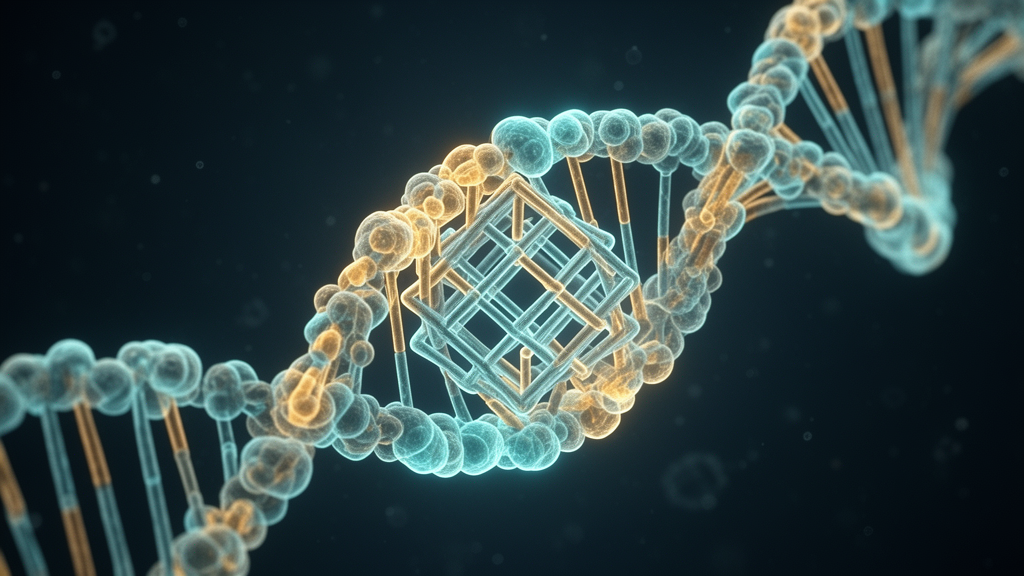
The recombinase enzyme RAD51 selectively binds parallel G-quadruplex DNA structures and integrates them into specialized nucleoprotein filaments that support homologous recombination, according to a study published in Nature Structural and Molecular Biology. G-quadruplexes represent noncanonical secondary nucleic acid structures capable of inducing cellular replication stress. While RAD51 is widely recognized as an essential factor in double-strand break repair and replication fork stabilization, its specific mechanistic involvement in G-quadruplex metabolism had previously remained poorly defined.
Structural and biophysical investigations demonstrated that the architecture of the RAD51–G4 complex differs markedly from the canonical nucleoprotein filament formed on single-stranded DNA. Although the overall process of G-quadruplex incorporation proceeds through an assembly pathway analogous to that of standard single-stranded DNA filaments, the physical configuration of the resulting complex displays distinct structural characteristics.
Detailed molecular characterization revealed that RAD51 accommodates folded G-quadruplexes through dynamic, multivalent contacts within the filament lattice.
Functional assays showed that the folded structures facilitate RAD51-mediated homology search and catalyze strand invasion steps.
Cellular experiments reinforced these biophysical conclusions by demonstrating the physiological consequences of depleting RAD51 in living cells. In the absence of RAD51, cells exhibited significant accumulation of folded G-quadruplexes and suffered exacerbated replication stress when exposed to G-quadruplex-stabilizing conditions. Furthermore, this elevated stress response coincided with a pronounced buildup of postreplicative single-stranded DNA gaps, showing that impaired RAD51 activity compromises the timely processing and protection of replication intermediates at quadruplex-forming loci.
The cellular recruitment of the recombinase was further supported by the formation of RAD51 foci dependent on the primase-polymerase PRIMPOL. Based on these observations, the authors proposed that RAD51 stabilizes and preserves folded quadruplexes situated within postreplicative gaps to facilitate error-free repair through template-switch recombination. Collectively, the study uncovers an essential, previously unrecognized mechanism whereby RAD51 nucleoprotein filaments safeguard genomic stability across challenging G4-rich chromosome regions.
Subject of Research: RAD51 filament accommodation of G-quadruplex DNA structures in recombination
Article Title: RAD51 filaments accommodate G-quadruplexes to promote recombination
Article References: Bednarova Pospisilova, M., Kubicek, K., Prokop, Z., Stadlbauer, P., Sommerova, L., Nikulenkov, F., Spirek, M., Zuev, A., Dobrovolna, J., Skehel, M., Sponer, J., Chapman, J. R., & Krejci, L. (2026). RAD51 filaments accommodate G-quadruplexes to promote recombination. Nature Structural & Molecular Biology. https://doi.org/10.1038/s41594-026-01915-3
Image Credits: AI Generated
DOI: 10.1038/s41594-026-01915-3
Keywords: RAD51, G-quadruplexes, homologous recombination, nucleoprotein filaments, parallel G4 structures, replication stress, single-stranded DNA, PRIMPOL, template-switch recombination, genome stability, double-strand break repair, replication fork stabilization, postreplicative ssDNA gaps, homology search, strand invasion, multivalent interactions, structure-guided mutants
News Source: Drew Townsend. (November 16, 2026). RAD51 Protein Filaments Accommodate Parallel G-Quadruplex Structures to Support Recombination. Scienmag.