• HOME
  • NEWS
  • EXPLORE
    • CAREER
      • Companies
      • Jobs
    • EVENTS
    • iGEM
      • News
      • Team
    • PHOTOS
    • VIDEO
    • WIKI
  • BLOG
  • COMMUNITY
    • FACEBOOK
    • INSTAGRAM
    • TWITTER
Monday, November 16, 2026
BIOENGINEER.ORG
No Result
View All Result
  • Login
  • HOME
  • NEWS
  • EXPLORE
    • CAREER
      • Companies
      • Jobs
        • Lecturer
        • PhD Studentship
        • Postdoc
        • Research Assistant
    • EVENTS
    • iGEM
      • News
      • Team
    • PHOTOS
    • VIDEO
    • WIKI
  • BLOG
  • COMMUNITY
    • FACEBOOK
    • INSTAGRAM
    • TWITTER
No Result
View All Result
Bioengineer.org
No Result
View All Result
Home NEWS Science News Technology

Small Dataset Machine Learning Accurately Predicts Hybrid Composite Impact Strength

by
November 16, 2026
in Technology
Reading Time: 2 mins read
0
Small Dataset Machine Learning Accurately Predicts Hybrid Composite Impact Strength

Small Dataset Machine Learning Accurately Predicts Hybrid Composite Impact Strength

Share on FacebookShare on TwitterShare on LinkedinShare on RedditShare on Telegram

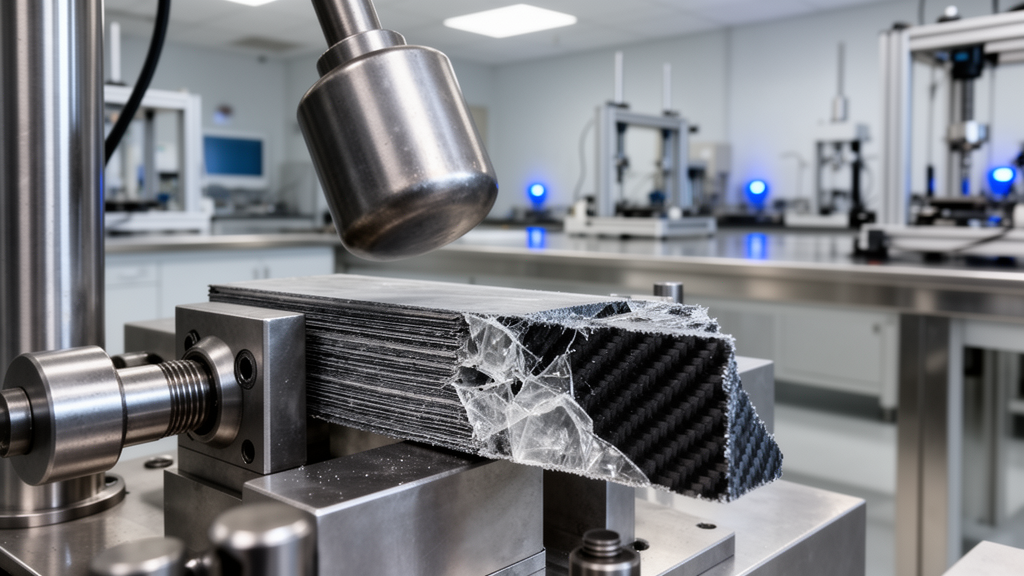
Researchers have evaluated machine-learning performance on small composite materials datasets by reanalysing a five-formulation hybrid polyester composite system. The study, conducted by P. Sundaravadivel, S. Sathees Kumar, and R. Muthalagu, examined a formulation set comprising jute fibre (JF), Prosopis juliflora bark (PJb), and kenaf fibre (KF). In the investigated material, jute fibre was fixed at 50 wt%, while the proportions of PJb and KF were varied complementarily across five specimens designated A through E. Before conducting predictive modelling, the researchers identified and corrected an existing data-alignment error in the dataset.

To model the material properties, the team evaluated fourteen distinct regression algorithms using leave-one-out cross-validation (LOOCV), alongside feature-importance analysis, principal component analysis (PCA), t-distributed stochastic neighbour embedding (t-SNE), and k-means clustering. The analysis revealed that predicting mechanical performance from very small experimental sample sizes produces starkly contrasting results depending on the specific mechanical metric under evaluation. For tensile strength, all fourteen regression algorithms returned negative LOOCV coefficient of determination (R²) values. The best-performing model for tensile strength was support vector regression with a radial basis function kernel (SVR-RBF), which reached an R² of -0.376.

In sharp contrast to the poor predictability observed for tensile strength, impact strength was modelled with high accuracy. Ridge regression achieved an LOOCV R² of 0.883 and a mean absolute error (MAE) of 1.34 J/m² when predicting impact performance. The researchers attributed the failure of tensile predictions to the interaction between the limited five-formulation sample count, the presence of only a single effective compositional degree of freedom, and the peaked nature of the material’s tensile response curve.

Direct mechanical measurements across the specimens revealed distinct property changes as kenaf fibre content progressively increased from specimen A to specimen E. Higher KF content raised the flexural modulus by 37%, flexural strength by 17%, hardness by 17%, and impact strength by 50%. Conversely, tensile strength and tensile modulus did not increase monotonically across the formulations; instead, both metrics peaked at the balanced KF25/JF50/PJb25 composition identified as specimen C.

These findings demonstrate that the reliability of machine-learning models applied to small composite datasets does not depend on sample size alone, but represents a joint function of sample size, effective dimensionality, and response shape. To establish statistically defensible predictive modelling for this material class, the authors recommend expanding future experimental designs to 15 to 20 independently varied formulations accompanied by replicate measurements.

Subject of Research: Machine learning property prediction in hybrid natural fibre polyester composites

Article Title: Cross validated small data machine learning for composition property analysis of jute/prosopis juliflora bark/kenaf hybrid polyester composites

Article References: Sundaravadivel, P., Sathees Kumar, S., & Muthalagu, R. (2026). Cross validated small data machine learning for composition property analysis of jute/prosopis juliflora bark/kenaf hybrid polyester composites. Discover Materials. https://doi.org/10.1007/s43939-026-01040-4

Image Credits: AI Generated

DOI: 10.1007/s43939-026-01040-4

Keywords: jute fibre, Prosopis juliflora bark, kenaf fibre, hybrid polyester composites, leave-one-out cross-validation, ridge regression, support vector regression, tensile strength, impact strength, flexural modulus, flexural strength, hardness, principal component analysis, t-SNE, k-means clustering, feature importance, small data machine learning, data-alignment error

News Source: Teresa Odom. (November 16, 2026). Small Dataset Machine Learning Accurately Predicts Hybrid Composite Impact Strength. Scienmag.


Tags: data-alignment errorfeature importanceflexural modulusflexural strengthhardnesshybrid polyester compositesimpact strengthjute fibreK-Means clusteringkenaf fibreleave-one-out cross-validationprincipal component analysisProsopis juliflora barkridge regressionsmall data machine learningsupport vector regressiont-SNEtensile strength
Share12Tweet7Share2ShareShareShare1

Related Posts

Generative Adversarial Networks and Convolutional Models Improve Imbalanced Data Classification Accuracy

Generative Adversarial Networks and Convolutional Models Improve Imbalanced Data Classification Accuracy

November 16, 2026
Cognitive Grounding Improves Large Language Models in Simulating Human Collective Behavior

Cognitive Grounding Improves Large Language Models in Simulating Human Collective Behavior

November 16, 2026

Interpretable Graph Learning Framework CGMap Prioritizes Cancer Genes Across Biomolecular Networks

November 16, 2026

Deep Learning Framework Enhances Real-Time Sign Language Recognition Accuracy

November 16, 2026

POPULAR NEWS

  • Information-Based Prescription Review Systems Evolve from Manual Screening to Intelligent Interception

    Information-Based Prescription Review Systems Evolve from Manual Screening to Intelligent Interception

    29 shares
    Share 12 Tweet 7
  • Study Reveals Incidence of Rare Pediatric Hip Disorders in Japanese Children

    29 shares
    Share 12 Tweet 7
  • Children With Nephrotic Syndrome Exhibit Severe Disruption Across Gut Microbial Kingdoms

    29 shares
    Share 12 Tweet 7
  • Automated Platform Maps Genomic Hotspots in CHO Cells for Antibody Production

    29 shares
    Share 12 Tweet 7

About

We bring you the latest biotechnology news from best research centers and universities around the world. Check our website.

Follow us

Recent News

Spin Infection Protocol Enhances Adenoviral Gene Delivery in Mesenchymal Stromal Cells

Aroid Corms Reveal Contrasting Calcium Oxalate Crystal Deposition and Mineral Profiles

Spectrophotometric Methods Accurately Quantify Chlorpheniramine Maleate in Formulations Using Bromocresol Green

Subscribe to Blog via Email

Enter your email address to subscribe to this blog and receive notifications of new posts by email.

Join 88 other subscribers
  • Contact Us

Bioengineer.org © Copyright 2023 All Rights Reserved.

Welcome Back!

Login to your account below

Forgotten Password?

Retrieve your password

Please enter your username or email address to reset your password.

Log In
No Result
View All Result
  • Homepages
    • Home Page 1
    • Home Page 2
  • News
  • National
  • Business
  • Health
  • Lifestyle
  • Science

Bioengineer.org © Copyright 2023 All Rights Reserved.