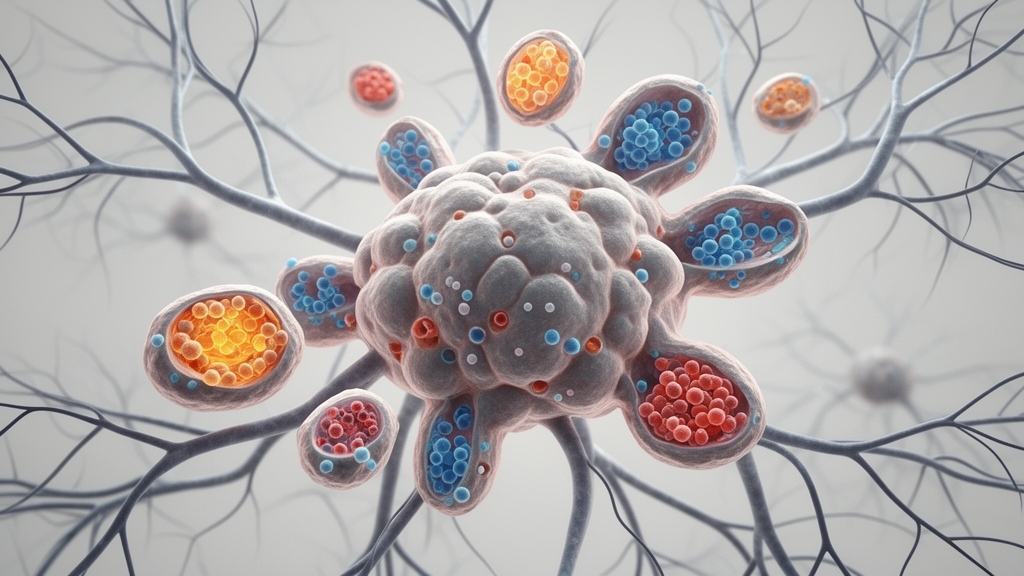
Chronic infection with the parasite Toxoplasma gondii, which affects approximately one-third of the global human population, relies on the formation of tissue cysts within the host’s brain to establish persistence. This localized infection triggers a sustained and complex immune response within the central nervous system, yet the precise cellular heterogeneity and functional organization of this neuroimmune network have remained incompletely defined. In a recent exploratory study, researchers performed single-cell RNA sequencing on brain cells isolated from mice infected with T. gondii to descriptively characterize the composition of immune cells during chronic cerebral toxoplasmosis. By analyzing a single pooled sample per condition, the study team aimed to provide new insights into the transcriptional signatures governing neuroinflammation in the presence of these persistent parasites.
The analysis revealed a transcriptional signature indicative of a prominent interferon-gamma (IFN-γ) signaling axis active within the brain environment. The results suggested that T cells serve as the primary source of IFN-γ, while monocytes act as the principal responding population to this cytokine signal. This response was not limited to myeloid cells alone; interferon-stimulated genes, including Nos2, Iigp1, Igtp, and Gbp2, showed broad expression patterns that extended to include endothelial cells and oligodendrocytes. These resident CNS cells also concurrently exhibited high levels of MHC class I transcripts, suggesting a coordinated activation of various resident brain cell types in response to the chronic parasitic presence.
A critical component of this investigation involved the subclustering of infiltrating monocytes, which uncovered four distinct populations characterized by unique transcriptional profiles. The first identified population consisted of inflammatory Ly6C+MHC II− monocytes, which exhibited enhanced phagocytic signatures. A second group, identified as IFN-γ-responsive Ly6C+MHC II+ monocytes, was notably enriched for both interferon-stimulated genes and various cytotoxic mediators. The researchers also identified a third group, Ly6C−MHC II+ monocytes, which displayed a phenotype resembling antigen-presenting cells, and a fourth group composed of Ly6C−MHC IIint non-classical monocytes that were characterized by specific lipid metabolism and vascular surveillance programs.
The expression patterns of peripheral monocyte markers, combined with the low or absent expression of granulocyte-associated markers, supported the conclusion that these infiltrating cells were of a peripheral origin. These findings collectively suggest that there is significant transcriptional and metabolic heterogeneity among the infiltrating myeloid cells recruited to the brain during chronic infection. This diversity in cell populations is potentially involved in balancing the need for pathogen control with the maintenance of tissue homeostasis, providing exploratory insights into the neuroinflammatory processes associated with cerebral toxoplasmosis.
As this study was designed as a hypothesis-generating, exploratory investigation based on a single pooled sample per condition, the researchers emphasize that these findings should be interpreted as descriptive in nature. The current data does not involve mechanistic experiments with biological replicates, and therefore, the observations will require validation through future studies that incorporate independent replicates and functional assays to confirm these cellular roles.
Subject of Research: Immunology
Article Title: Single-cell RNA sequencing identifies monocyte heterogeneity during Toxoplasma gondii infection of the brain
Article References: Fang, Y., Lemenze, A., Rovira-Diaz, E., Yap, G. S., & Nasuhidehnavi, A. (2026). Single-cell RNA sequencing identifies monocyte heterogeneity during Toxoplasma gondii infection of the brain. Frontiers in Cellular and Infection Microbiology, 16, 1950276. https://doi.org/10.3389/fcimb.2026.1950276
Image Credits: AI Generated
DOI: 10.3389/fcimb.2026.1950276
Keywords: Toxoplasma gondii, cerebral toxoplasmosis, neuroinflammation, single-cell RNA sequencing, monocyte heterogeneity, interferon-gamma signaling, CNS immunity, myeloid cells, parasitology, brain tissue cysts, transcriptional profiling, immunobiology, host-parasite interaction, microglia and monocytes, MHC class I expression
News Source: Cassandra Pierce. (November 16, 2026). Single-Cell Analysis Reveals Specialized Monocyte Subsets During Chronic Brain Toxoplasmosis. Scienmag.