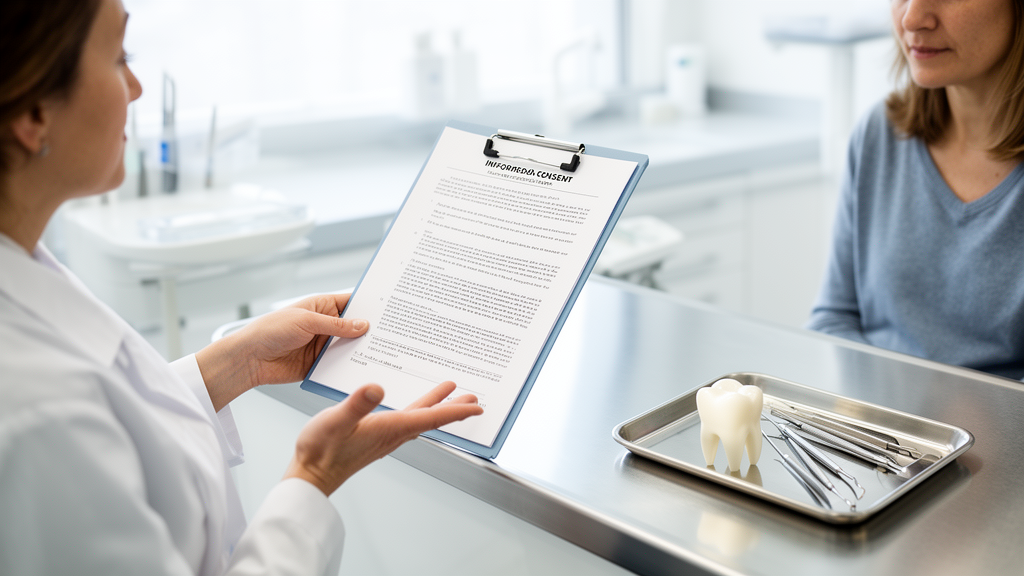
A citation-prioritised audit of experimental dental research reveals that fewer than thirty percent of influential studies using extracted human primary teeth reported obtaining any form of informed consent. In vitro research frequently relies on extracted primary teeth, yet the ethical justifications and circumstances governing consent waivers for their secondary use have rarely undergone systematic scrutiny. To address this oversight, researchers conducted an integrated bioethical assessment combining literature reviews, an empirical reporting audit, and normative analysis to formulate a structured decision-making framework for research ethics committees and investigators.
The research team noted that the specific circumstances under which informed consent might be ethically waived for secondary research with these specimens have received limited systematic examination. To clarify these issues, the investigation aimed to examine ethical, legal, and governance considerations, evaluate ethical reporting across influential experimental studies, and construct an actionable decision-making framework intended to operate alongside relevant jurisdictional legal requirements.
The study methodology comprised three integrated components designed to evaluate both theoretical governance and empirical research practices. First, the authors performed a scoping review across PubMed and Scopus to map the bioethical and legal literature concerning the research or educational use of extracted human teeth. Second, they executed a citation-prioritised audit evaluating ethical reporting across the thirty most-cited eligible in vitro studies published from 2016 onwards that utilised extracted human primary teeth. Third, the investigators interpreted their findings through a normative ethical analysis grounded in major international declarations, legal standards, and ethical principles.
The audit protocol tracked several key reporting variables across each experimental record, including institutional review board or research ethics committee approval, informed consent documentation, sample provenance, sample coding or anonymisation, storage parameters, and secondary research use. To ground the normative evaluation, the investigators drew upon the 2024 World Medical Association Declaration of Helsinki, the Declaration of Taipei, the 2016 CIOMS Guidelines, and relevant Spanish legislation, alongside core principles of autonomy, child protection, human dignity, privacy, justice, and governance.
The initial scoping review demonstrated an acute scarcity of focused bioethical analysis, identifying only three publications addressing ethical or legal aspects of extracted tooth use, none of which specifically examined consent waivers for anonymised primary teeth. In the empirical audit phase, twenty-seven of the thirty retrieved experimental records met the full eligibility criteria. The authors successfully retrieved and evaluated the full text for twenty-four of these twenty-seven studies, representing 88.9 percent of the sample, while the remaining three eligible records were appraised using their available abstracts.
Ethical reporting among the evaluated experimental papers proved remarkably uneven across all measured parameters. Formal committee oversight was documented in twenty-one of the twenty-seven eligible studies, establishing that 77.8 percent reported institutional review board or research ethics committee approval. However, only eight studies, or 29.6 percent, reported obtaining any form of informed consent from donors or guardians. Specifically, five studies reported written consent, one reported oral consent, and two reported informed consent without specifying whether it was written or verbal.
Beyond the low prevalence of reported consent, the audit identified complete absences in procedural disclosure across the accessible experimental literature. Across all examined material, ethical reporting remained heterogeneous, and not a single study described a formal sample anonymisation procedure or articulated an explicit ethical justification for waiving informed consent. These omissions highlight that contemporary experimental publications predominantly rely on brief mentions of committee approval while omitting the underlying governance procedures applied to human biological materials.
The authors concluded that ethical reporting in experimental investigations using extracted primary teeth remains largely restricted to basic statements of committee approval. In their normative analysis, they emphasised that biological samples, residual biological material, and healthcare waste represent distinct functional categories. A designation as healthcare waste determines solely how a physical specimen is discarded, not whether it may be retained and utilised for scientific research. Furthermore, the team concluded that neither anonymisation nor disposal status is independently sufficient to justify waiving informed consent.
To resolve these ethical shortcomings, the researchers proposed a novel decision framework specifically structured to guide ethics committee deliberations regarding consent waivers for research on extracted human primary teeth. The framework introduces a hybrid model in which a consent waiver may be considered only when coupled with a retained duty of transparent information and a respected right for donors or guardians to object. The authors also documented an empirical case wherein a competent research ethics committee granted an informed consent waiver under these specific transparency conditions.
Subject of Research: Ethical governance and informed consent waivers in research using extracted human primary teeth
Article Title: Informed consent waivers in research using extracted human primary teeth: evidence, ethics, and a decision framework
Article References: Novella-Prieto, F. B., Aura-Tormos, J. I., Boo-Gordillo, P., Salas Vicente, F., Guinot-Barona, C., García-Miralles, E., Borrell-García, C., & Marqués-Martínez, L. (2026). Informed consent waivers in research using extracted human primary teeth: evidence, ethics, and a decision framework. BMC Medical Ethics. https://doi.org/10.1186/s12910-026-01671-5
Image Credits: AI Generated
DOI: 10.1186/s12910-026-01671-5
Keywords: dental research, extracted primary teeth, informed consent, consent waivers, research ethics, bioethics, research ethics committees, institutional review boards, in vitro studies, ethical reporting, Declaration of Helsinki, Declaration of Taipei, CIOMS guidelines, healthcare waste, residual biological material, biological samples, research governance, transparent information, right to object, pediatric dentistry
News Source: Courtney Benton. (November 16, 2026). Few Dental Studies Report Informed Consent When Using Extracted Primary Teeth. Scienmag.