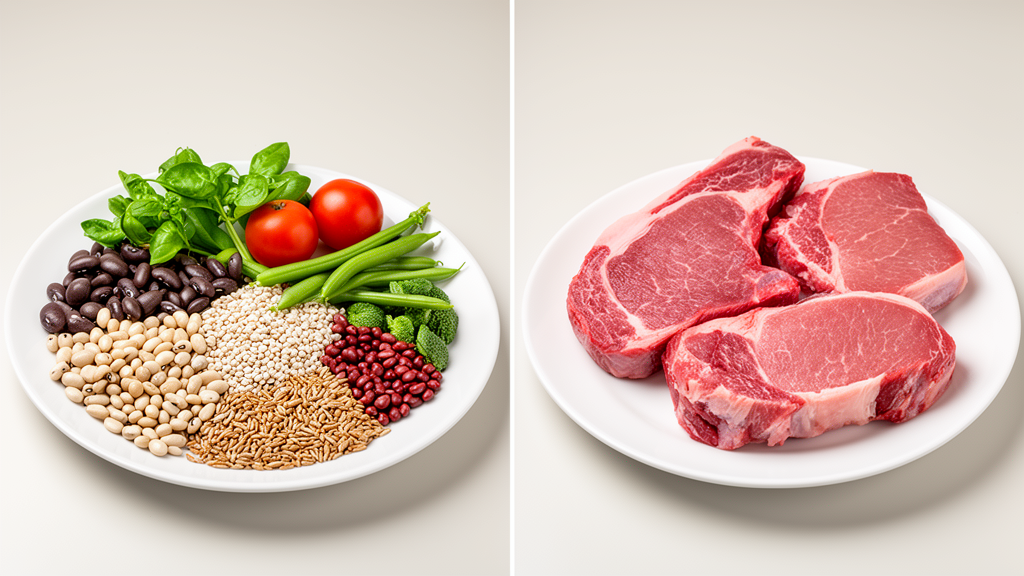
A two-arm randomized controlled trial examining healthy adult omnivores has revealed that adopting an eight-week isocaloric vegan diet substantially alters urinary mycotoxin excretion compared to a meat-rich diet. The investigation, conducted in Germany and published in npj Science of Food, monitored biomarkers of dietary exposure to toxic secondary metabolites produced by filamentous fungi. Following the eight-week intervention, participants consuming an entirely plant-based diet exhibited significantly higher creatinine-adjusted urinary concentrations of deoxynivalenol, ochratoxin A, and zearalenone. Conversely, participants assigned to the meat-rich dietary group displayed significantly elevated concentrations of T-2 toxin. These measured differences provide rare experimental evidence regarding how short-term dietary transitions modulate exposure to common agricultural toxins, underscoring critical food safety considerations across distinct dietary patterns.
Mycotoxins represent a structurally diverse group of chemical contaminants produced by fungi that colonize agricultural commodities, with over one thousand distinct compounds identified to date. Global estimates suggest that up to eighty percent of food crops contain detectable mycotoxin levels, posing extensive exposure risks for human consumers. Toxicological research has established that human exposure to these fungal metabolites can induce detrimental physiological consequences, including nephrotoxicity, hepatotoxicity, carcinogenicity, systemic immunosuppression, and endocrine disruption via estrogenic receptor interference. Understanding the dietary determinants of mycotoxin ingestion is therefore a fundamental concern for international public health agencies and regulatory surveillance bodies.
Prior investigations evaluating mycotoxin burdens among vegetarians and vegans have relied almost entirely on cross-sectional observational designs, producing conflicting conclusions that were difficult to interpret without experimental control. While several previous cohorts in the United Kingdom and Germany suggested elevated urinary deoxynivalenol or serum ochratoxin A levels in individuals following plant-based diets, a recent study from Iceland observed the opposite pattern, documenting lower ochratoxin A concentrations in vegans relative to omnivores. To overcome these systemic limitations, the Freiburg research team analyzed urinary samples collected during a prospective, randomized dietary intervention specifically designed to compare an isocaloric vegan diet directly against an omnivorous, meat-rich diet under structured monitoring.
The study protocol enrolled sixty-three healthy men and women aged eighteen to sixty years with body mass index measurements between twenty-one and thirty kilograms per square meter. Individuals presenting with chronic illnesses, clinically relevant food allergies, pregnancy, elevated alcohol consumption, or daily nicotine use were excluded, alongside individuals already following plant-based diets. Before group randomization, all participants completed a mandatory one-week run-in phase consuming a standardized mixed diet formulated according to German Nutrition Society guidelines, which included regular dairy, two weekly fish servings, abundant fruits and vegetables, and a weekly meat limit of three hundred grams. Following this run-in baseline, participants were randomized either to an eight-week vegan diet devoid of animal-derived foods or to a meat-rich diet requiring at least one hundred and fifty grams of meat daily.
Urinary biomarkers were quantified from morning spot urine samples collected upon the conclusion of the initial run-in period and immediately after completing the eight-week intervention. Analytical measurements were conducted by IMD Institut für Medizinische Diagnostik Berlin-Potsdam using a modified SAFIA competitive multiplex immunoassay platform. This analytical approach utilizes unique fluorescent color-coded microparticles conjugated with specific mycotoxins that compete with urinary analytes for primary monoclonal antibodies. Flow cytometry detects particle identity and corresponding secondary fluorescence to quantify six target mycotoxins: aflatoxin, fumonisin, deoxynivalenol, ochratoxin A, T-2 toxin, and zearalenone. The lower limits of quantification were established at 0.21 micrograms per liter for aflatoxin, 3.55 for fumonisin, 2.79 for deoxynivalenol, 0.11 for ochratoxin A, 1.46 for T-2 toxin, and 0.52 for zearalenone.
Statistical evaluation of the creatinine-adjusted urine samples demonstrated striking divergences between the two cohorts after eight weeks of dietary modification. In the vegan group, median creatinine-adjusted deoxynivalenol reached 7.15 micrograms per gram of creatinine with an interquartile range of 8.10, compared to 2.85 micrograms per gram with an interquartile range of 6.04 in the meat-rich group, yielding a statistically significant difference of p equals 0.004. Furthermore, median ochratoxin A concentrations were more than twice as high among vegan participants at 0.45 micrograms per gram compared to 0.20 micrograms per gram in meat consumers, with p equals 0.003. Median zearalenone concentrations similarly diverged, measuring 1.34 micrograms per gram in the vegan arm versus 0.49 micrograms per gram in the meat arm, demonstrating statistical significance at p equals 0.001.
In marked contrast to the other quantified fungal metabolites, T-2 toxin followed an inverse pattern across the intervention arms. At the eight-week mark, median creatinine-adjusted urinary concentrations of T-2 toxin were significantly higher in the meat-rich group at 5.15 micrograms per gram, with an interquartile range of 5.81, whereas the vegan cohort recorded a median of 3.44 micrograms per gram, with an interquartile range of 3.67, achieving a p value of 0.047. However, the repeated measures model for T-2 toxin exhibited an overall interaction p value of 0.091, indicating that while non-parametric testing demonstrated a between-group difference, the generalized trajectory across time was less definitive.
Dietary intake during the trial was captured using precision weighed food diaries recorded on three separate days during the run-in week and three days during the final intervention week. Nutritional data parsed across twenty-one distinct food categories indicated that while grain intake remained equivalent between cohorts, vegan participants consumed significantly greater quantities of vegetables, legumes, fruits, nuts, and vegetable oils. Correlation analyses using Spearman rank-order coefficients and non-linear restricted cubic spline regressions identified positive associations linking total vegetable intake to higher creatinine-adjusted urinary excretion of both deoxynivalenol and ochratoxin A. Additionally, zearalenone excretion demonstrated a positive correlation with whole grain consumption, while legume consumption correlated positively with deoxynivalenol excretion, and fish intake was associated with T-2 toxin levels in the omnivorous participants.
The biological plausibility of these findings reflects established agricultural contamination pathways, as deoxynivalenol and zearalenone frequently occur in wheat, maize, and related cereal products, while ochratoxin A widely contaminates plant-derived foods, including dried fruits, wine, coffee, and vegetables.
The study authors emphasize several critical methodological considerations and limitations when contextualizing these results. The trial measured excretion in morning spot urine rather than twenty-four-hour collections or serum, which introduces potential variability related to urinary dilution and daily excretion kinetics. Furthermore, creatinine excretion can vary inherently between vegans and omnivores due to the absence of exogenous dietary creatine sources in meat-free diets and variations in lean muscle mass, although eight weeks is unlikely to produce substantial physiological shifts in fat-free mass. Most importantly, the authors stress that the reference limits provided by analytical laboratories represent statistical population baselines rather than clinical toxicity thresholds. The documented shifts reflect dietary exposure differences rather than clinical pathology, and the researchers expressly state that these findings should not discourage plant-rich diets, which confer established cardiovascular and metabolic benefits, but should instead motivate more stringent agricultural mycotoxin mitigation strategies worldwide.
Subject of Research: Urinary mycotoxin excretion patterns following randomized eight-week vegan versus meat-rich dietary interventions
Article Title: Mycotoxin exposure following an eight-week vegan or meat-rich dietary intervention: a randomized-controlled trial
Article References: Kanonier, P. S., Kowarschik, S., Huber, R., & Storz, M. A. (2026). Mycotoxin exposure following an eight-week vegan or meat-rich dietary intervention: a randomized-controlled trial. npj Science of Food, 10(1), Article 284. https://doi.org/10.1038/s41538-026-01152-4
Image Credits: AI Generated
DOI: 10.1038/s41538-026-01152-4
Keywords: mycotoxins, deoxynivalenol, ochratoxin A, zearalenone, T-2 toxin, vegan diet, meat-rich diet, randomized controlled trial, food safety, urinary biomarkers, fungal metabolites, creatinine adjustment, dietary intervention, plant-based nutrition, food toxicology, dietary exposure
News Source: Daisy Hatcher. (November 16, 2026). Randomized Trial Finds Altered Mycotoxin Exposure Between Vegan and Meat Diets. Scienmag.