• HOME
  • NEWS
  • EXPLORE
    • CAREER
      • Companies
      • Jobs
    • EVENTS
    • iGEM
      • News
      • Team
    • PHOTOS
    • VIDEO
    • WIKI
  • BLOG
  • COMMUNITY
    • FACEBOOK
    • INSTAGRAM
    • TWITTER
Sunday, November 15, 2026
BIOENGINEER.ORG
No Result
View All Result
  • Login
  • HOME
  • NEWS
  • EXPLORE
    • CAREER
      • Companies
      • Jobs
        • Lecturer
        • PhD Studentship
        • Postdoc
        • Research Assistant
    • EVENTS
    • iGEM
      • News
      • Team
    • PHOTOS
    • VIDEO
    • WIKI
  • BLOG
  • COMMUNITY
    • FACEBOOK
    • INSTAGRAM
    • TWITTER
No Result
View All Result
Bioengineer.org
No Result
View All Result
Home NEWS Science News Health

Climate-Sensitive Framework Addresses Time-Varying Fall Risk in Ageing Populations

by
November 14, 2026
in Health
Reading Time: 2 mins read
0
Climate-Sensitive Framework Addresses Time-Varying Fall Risk in Ageing Populations

Climate-Sensitive Framework Addresses Time-Varying Fall Risk in Ageing Populations

Share on FacebookShare on TwitterShare on LinkedinShare on RedditShare on Telegram

In a perspective published in Frontiers in Public Health, researchers argue that a meaningful component of fall risk among older adults is time-varying, emerging from the convergence of environmental hazards and individual susceptibility. Falls represent a leading cause of injury, disability, and mortality worldwide, contributing to an estimated 684,000 fall deaths annually, with the greatest fatal burden observed among adults older than 60 years.

Current multifactorial fall prevention strategies evaluate and stratify risk primarily at the level of the individual and the clinical encounter. Under this established paradigm, environmental hazards are treated predominantly as static features of the home, leaving population-level prevention unable to determine when, where, and for whom fall risks acutely escalate.

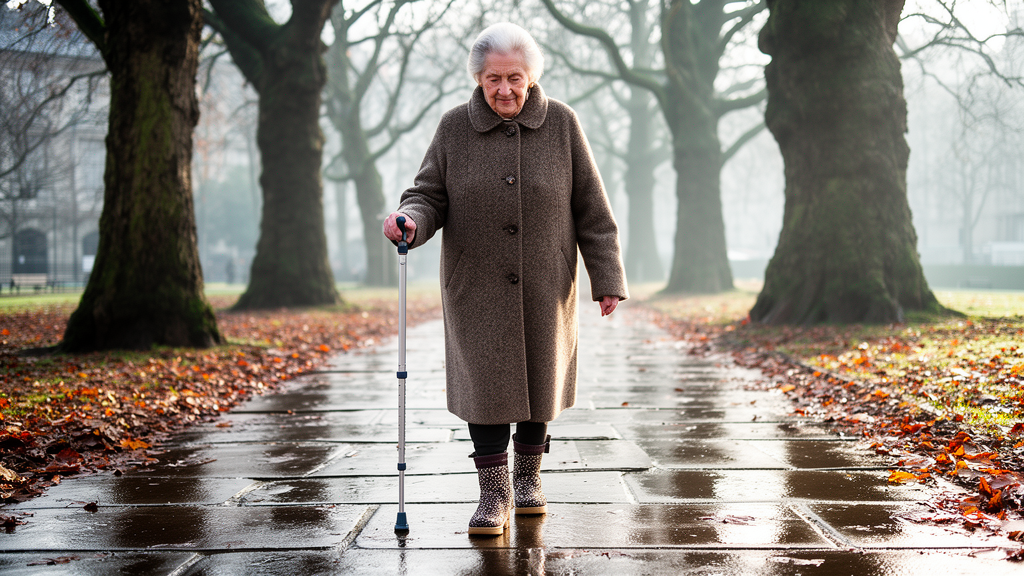
The framework posits that dynamic risk arises when an acute environmental hazard—specifically ice, heavy rainfall, flooding, heat, or cold—coincides with a specific vulnerability phenotype in an exposed individual at that moment.

In addition, the framework identifies key effect modifiers that influence risk, including heat-sensitising medicines, frailty, patterns of outdoor mobility, drainage and surface quality, and residential setting.

The authors outline a concrete agenda establishing which meteorological indicators should be linked to specific fall outcomes.

To determine whether a climate-informed strategy adds measurable value beyond conventional prevention, the agenda suggests evaluating outcomes using interrupted time-series or stepped-wedge designs. The authors conclude that rather than replacing multifactorial clinical assessments, the framework introduces a temporal dimension enabling anticipatory, targeted, and evaluable public health action as populations age and extreme weather events become more frequent.

Subject of Research: Climate-sensitive fall risk and prevention framework in ageing populations

Article Title: Climate-sensitive fall risk in ageing populations: a public health perspective

Article References: Samaher, M. A., & Ugwu, O. P.-C. (2026). Climate-sensitive fall risk in ageing populations: a public health perspective. Frontiers in Public Health, 14, Article 1871828. https://doi.org/10.3389/fpubh.2026.1871828

Image Credits: AI Generated

DOI: 10.3389/fpubh.2026.1871828

Keywords: ageing populations, climate variability, fall risk, fall prevention, injury prevention, older adults, seasonal risk, early warning systems, acute environmental hazards, exposure-vulnerability coincidence, heat-sensitising medicines, frailty, outdoor mobility, surface quality, lagged exposure-response curves, alert thresholds, interrupted time-series, stepped-wedge designs

News Source: Beatrice Stafford. (November 14, 2026). Climate-Sensitive Framework Addresses Time-Varying Fall Risk in Ageing Populations. Scienmag.


Tags: acute environmental hazardsageing populationsalert thresholdsclimate variabilityearly warning systemsexposure-vulnerability coincidencefall preventionfall riskFrailtyheat-sensitising medicinesInjury preventioninterrupted time-serieslagged exposure-response curvesolder adultsoutdoor mobilityseasonal riskstepped-wedge designssurface quality
Share12Tweet7Share2ShareShareShare1

Related Posts

Online Consultations Grew to Nearly Ten Percent of Hospital Outpatient Care

Online Consultations Grew to Nearly Ten Percent of Hospital Outpatient Care

November 15, 2026
Acquired Angioedema Series Finds Universal Link to Underlying Hematologic Disorders

Acquired Angioedema Series Finds Universal Link to Underlying Hematologic Disorders

November 15, 2026

Healthcare Simulation Educators Hold Four Divergent Conceptions of Human Factors

November 15, 2026

Diagnostic delays and activity impairment affect patients with rare progressive kidney disorders

November 15, 2026

POPULAR NEWS

  • Diagnostic delays and activity impairment affect patients with rare progressive kidney disorders

    Diagnostic delays and activity impairment affect patients with rare progressive kidney disorders

    29 shares
    Share 12 Tweet 7
  • German Providers Value Transgender Fertility Care but Cite Broad Access Barriers

    29 shares
    Share 12 Tweet 7
  • Elevated Serum REG1B and REG3G Correlate With Atherosclerosis Diagnosis and Disease Severity

    29 shares
    Share 12 Tweet 7
  • Cancer-Associated SETD2 Mutations Destabilize Catalytic Core and Impair Epigenetic Deposition

    29 shares
    Share 12 Tweet 7

About

We bring you the latest biotechnology news from best research centers and universities around the world. Check our website.

Follow us

Recent News

Validation Safety Gate Rejects Incompatible Cross Building Wi-Fi Localization Models

Online Consultations Grew to Nearly Ten Percent of Hospital Outpatient Care

Acquired Angioedema Series Finds Universal Link to Underlying Hematologic Disorders

Subscribe to Blog via Email

Enter your email address to subscribe to this blog and receive notifications of new posts by email.

Join 87 other subscribers
  • Contact Us

Bioengineer.org © Copyright 2023 All Rights Reserved.

Welcome Back!

Login to your account below

Forgotten Password?

Retrieve your password

Please enter your username or email address to reset your password.

Log In
No Result
View All Result
  • Homepages
    • Home Page 1
    • Home Page 2
  • News
  • National
  • Business
  • Health
  • Lifestyle
  • Science

Bioengineer.org © Copyright 2023 All Rights Reserved.