• HOME
  • NEWS
  • EXPLORE
    • CAREER
      • Companies
      • Jobs
    • EVENTS
    • iGEM
      • News
      • Team
    • PHOTOS
    • VIDEO
    • WIKI
  • BLOG
  • COMMUNITY
    • FACEBOOK
    • INSTAGRAM
    • TWITTER
Sunday, November 15, 2026
BIOENGINEER.ORG
No Result
View All Result
  • Login
  • HOME
  • NEWS
  • EXPLORE
    • CAREER
      • Companies
      • Jobs
        • Lecturer
        • PhD Studentship
        • Postdoc
        • Research Assistant
    • EVENTS
    • iGEM
      • News
      • Team
    • PHOTOS
    • VIDEO
    • WIKI
  • BLOG
  • COMMUNITY
    • FACEBOOK
    • INSTAGRAM
    • TWITTER
No Result
View All Result
Bioengineer.org
No Result
View All Result
Home NEWS Science News Health

MIND Diet Does Not Independently Predict Premenstrual Syndrome Severity

by
November 14, 2026
in Health
Reading Time: 2 mins read
0
MIND Diet Does Not Independently Predict Premenstrual Syndrome Severity

MIND Diet Does Not Independently Predict Premenstrual Syndrome Severity

Share on FacebookShare on TwitterShare on LinkedinShare on RedditShare on Telegram

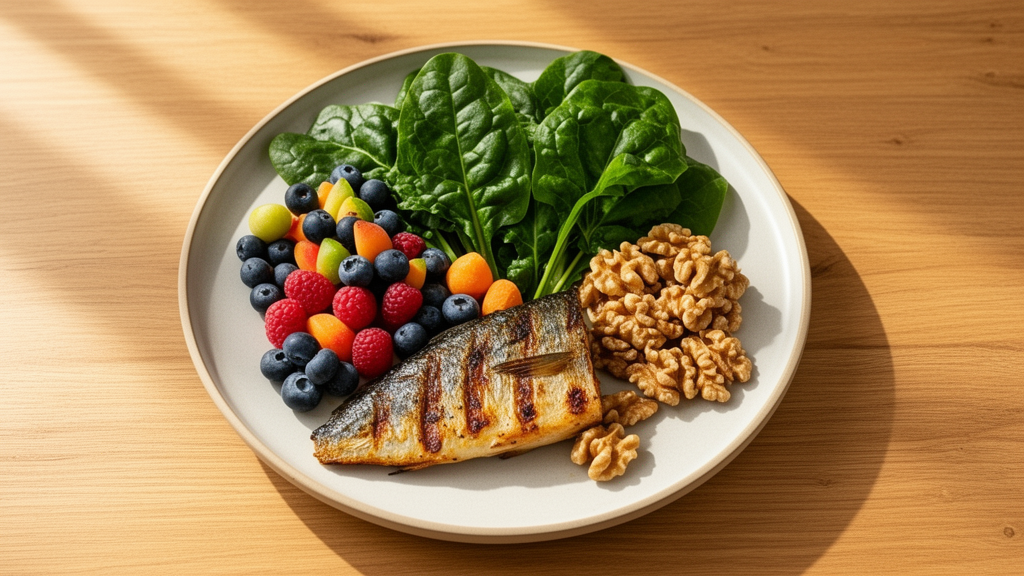
Adherence to the Mediterranean-DASH Intervention for Neurodegenerative Delay (MIND) diet showed a weak inverse association with premenstrual syndrome (PMS) severity but failed to serve as an independent predictor in a cross-sectional study of adult women. The investigation, carried out by researchers at Acibadem Mehmet Ali Aydinlar University, the University of Health Sciences, Erciyes Universitesi, and Marmara Universitesi in Türkiye, evaluated the relationship between dietary adherence patterns and the severity of premenstrual symptoms.

The descriptive, cross-sectional investigation enrolled 405 adult women who volunteered for the study. To gather empirical data, investigators administered sociodemographic questionnaires that documented participants’ general menstrual cycle characteristics, habitual dietary patterns, and specific nutritional changes occurring during the premenstrual window. Symptom severity was quantified using the Premenstrual Syndrome Scale (PMSS), while dietary alignment was measured using the MIND Diet Adherence Scale.

Premenstrual syndrome was identified in 46.7 percent of the surveyed women. When the researchers compared participants with PMS to those without the condition, significant differences emerged across demographic and behavioral factors. Women diagnosed with PMS had a significantly lower mean age, reported longer menstrual cycle durations, and showed higher rates of cigarette smoking and alcohol consumption, with each of these comparisons reaching statistical significance at p < 0.05.

The study also identified distinct dietary shifts during the premenstrual period among affected participants. Women with PMS reported significantly more frequent increases in their consumption of refined grains, fried foods, sweets and sugary foods, coffee, packaged foods, and sugary beverages compared to women without PMS (p < 0.05).

In bivariate statistical evaluations, the researchers observed a weak negative correlation between MIND diet adherence scores and total PMSS scores (r = −0.131; p = 0.008). However, this relationship did not hold when adjusting for other variables in a hierarchical regression model. In the multivariable regression analysis, the MIND diet adherence score was not an independent predictor of premenstrual symptom severity (β = −0.070; p = 0.146).

Age emerged as the only statistically significant predictor in the hierarchical regression model, with increasing age associated with lower PMS severity scores (β = −0.320; p < 0.001). The authors noted that the increased intake of processed products, sugary foods, and coffee among women with PMS indicates a role for targeted nutritional counseling during this period, while emphasizing that prospective longitudinal studies are required to clarify the direction of these observed associations.

Subject of Research: Relationship between MIND diet adherence and premenstrual syndrome severity in adult women

Article Title: MIND diet adherence and premenstrual syndrome severity among adult women: a cross-sectional study

Article References: Sarıyer, E. T., Baş, M., Çolak Çetinkaya, H., & Yüksel, M. (2026). MIND diet adherence and premenstrual syndrome severity among adult women: a cross-sectional study. Frontiers in Nutrition, 13, Article 1990224. https://doi.org/10.3389/fnut.2026.1990224

Image Credits: AI Generated

DOI: 10.3389/fnut.2026.1990224

Keywords: MIND diet, premenstrual syndrome, PMSS, MIND Diet Adherence Scale, premenstrual symptoms, menstrual cycle duration, women's health, nutritional epidemiology, hierarchical regression, age predictor, cross-sectional study, refined grains, fried foods, sweets and sugary foods, coffee consumption, packaged foods, sugary beverages, alcohol consumption

News Source: Daisy Hatcher. (November 14, 2026). MIND Diet Does Not Independently Predict Premenstrual Syndrome Severity. Scienmag.


Tags: age predictoralcohol consumptioncoffee consumptionCross-sectional Studyfried foodshierarchical regressionmenstrual cycle durationMIND dietMIND Diet Adherence ScaleNutritional epidemiologypackaged foodsPMSSpremenstrual symptomspremenstrual syndromerefined grainssugary beveragessweets and sugary foodswomen's health
Share12Tweet7Share2ShareShareShare1

Related Posts

Urine FujiLAM II Test Shows High Specificity but Limited Tuberculosis Sensitivity in Vietnam

Urine FujiLAM II Test Shows High Specificity but Limited Tuberculosis Sensitivity in Vietnam

November 15, 2026
Prescribed GLP-1 Use Reported by Half of Binge Eating Disorder Patients

Prescribed GLP-1 Use Reported by Half of Binge Eating Disorder Patients

November 15, 2026

African Biomedical Symposium Advances Next-Generation Research

November 15, 2026

MicroRNA-337-5p Levels Differentiate Diabetic Retinopathy Severity and Protect Retinal Cells via WNK1

November 15, 2026

POPULAR NEWS

  • Ginsenoside Rg1 Reduces Fatty Liver Damage by Curbing Ferroptosis in Lab Models

    Ginsenoside Rg1 Reduces Fatty Liver Damage by Curbing Ferroptosis in Lab Models

    29 shares
    Share 12 Tweet 7
  • Supramolecular Eutectic Solvents Boost Propolis Flavonoid Recovery and Molecular Stability

    29 shares
    Share 12 Tweet 7
  • Increasing Weak Interlayers Reduces Rock Compressive Strength and Increases Fracture Density

    29 shares
    Share 12 Tweet 7
  • Somali Nurses Show Moderate Emergency Competence Amid Low Healthcare Facility Readiness

    29 shares
    Share 12 Tweet 7

About

We bring you the latest biotechnology news from best research centers and universities around the world. Check our website.

Follow us

Recent News

Self-Supervised Vision Model Estimates Live Pig Weight Within Three Kilograms

Custom YOLO26 Architecture Improves Grapevine Disease Detection on Embedded Devices

Survey Synthesizes Remote Sensing and Edge Computing Pathways for Rice Monitoring

Subscribe to Blog via Email

Enter your email address to subscribe to this blog and receive notifications of new posts by email.

Join 87 other subscribers
  • Contact Us

Bioengineer.org © Copyright 2023 All Rights Reserved.

Welcome Back!

Login to your account below

Forgotten Password?

Retrieve your password

Please enter your username or email address to reset your password.

Log In
No Result
View All Result
  • Homepages
    • Home Page 1
    • Home Page 2
  • News
  • National
  • Business
  • Health
  • Lifestyle
  • Science

Bioengineer.org © Copyright 2023 All Rights Reserved.