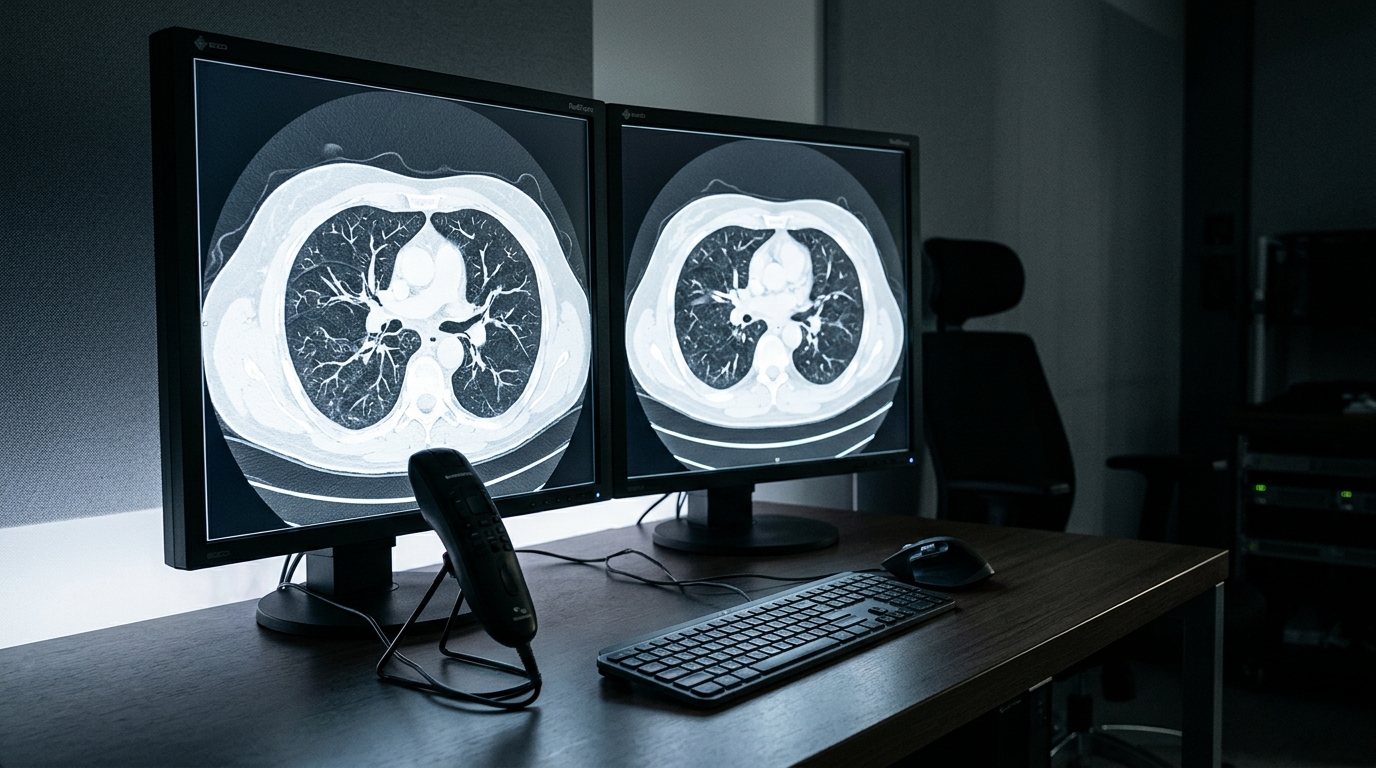
A newly developed deep learning model termed Mix-inResNet has demonstrated an internal test-set classification accuracy of 94.41 percent in categorizing pulmonary infections from computed tomography scans, according to an internal evaluation published in BMC Medical Imaging. The convolutional neural network architecture was engineered to support the automated preclassification of pulmonary infection categories using image data derived from microbiologically confirmed clinical cases. However, the study authors emphasize that Mix-inResNet remains an exploratory research model that does not directly identify microorganisms from chest imaging, has not established clinical utility, and is not ready for routine clinical deployment.
The investigation addressed longstanding operational hurdles associated with standard pathogen identification in respiratory care. Currently, clinical pathogen diagnosis relies predominantly on conventional microbial culture and high-throughput sequencing techniques, such as metagenomic next-generation sequencing, both of which entail notable constraints regarding turnaround time and financial expense. To explore whether artificial intelligence could assist in preliminary triage, the research team designed Mix-inResNet to evaluate chest computed tomography images and preclassify pulmonary conditions into distinct diagnostic categories prior to or alongside comprehensive microbiological confirmation.
The model was trained and evaluated using an image dataset collected from a cohort of 273 patients, spanning four distinct pulmonary infection categories as well as separate normal computed tomography controls. To ensure diagnostic fidelity in the training and evaluation pipeline, infection category labels were rigorously established through conventional culture and metagenomic next-generation sequencing. From these 273 patients, investigators extracted an image-level dataset consisting of 2,858 original computed tomography slice images, which formed the basis for developing the network and conducting internal test set benchmarks.
In internal test set evaluations across computed tomography slices, Mix-inResNet achieved an overall accuracy of 94.41 percent, with a Wilson 95 percent confidence interval ranging from 91.11 percent to 96.53 percent. The architecture recorded an overall precision of 94.61 percent, an F1 score of 94.22 percent, and an inter-rater agreement Gwet’s kappa statistic of 93.09 percent. When evaluating individual disease categories, the network yielded sensitivities of 88.14 percent for bacterial pneumonia, 92.11 percent for fungal pneumonia, 91.94 percent for viral pneumonia, 98.00 percent for tuberculous pneumonia, and 100 percent for normal chest computed tomography scans.
Corresponding category-specific specificities across the internal slice dataset remained elevated, reaching 98.68 percent for bacterial pneumonia, 100.00 percent for fungal pneumonia, 97.77 percent for viral pneumonia, 97.46 percent for tuberculous pneumonia, and 99.04 percent for normal controls. When tested at the patient level, the model correctly classified all 27 of the 27 patients included in the test cohort, yielding an observed accuracy of 100 percent with a Wilson 95 percent confidence interval spanning 87.54 percent to 100.00 percent. Nevertheless, the authors explicitly highlighted that because this patient-level metric rests upon a sample of only 27 individuals, it cannot support patient-level generalization.
The authors also performed descriptive comparisons against established computer vision architectures, including ResNet101, Inception V3, and VGG16, as well as against practicing clinicians and imaging specialists within the internal test partition. While Mix-inResNet demonstrated higher point estimates across several performance metrics and area under the receiver operating characteristic curve values, the researchers underscored that these internal descriptive comparisons do not establish general superiority over alternative models, nor do they demonstrate superiority, non-inferiority, or equivalence relative to clinical readers. The expanded reader comparison was formally classified as a pilot feasibility exercise.
Model interpretability and component contributions were assessed using gradient-weighted class activation mapping, or Grad-CAM, and ablation experiments. Grad-CAM visual heatmaps were generated to visualize the specific image regions within the computed tomography slices that contributed to model predictions. In an exploratory validation-set ablation testing retrained variants, the full model demonstrated a validation accuracy of 93.71 percent. However, because the validation partition had also been used during the hyperparameter tuning phase of development, the individual contributions of specific architectural modules could not be regarded as confirmed.
A critical finding emerged from a real-slice replacement sensitivity analysis designed to probe the robustness of the slice selection methodology. When 75 percent of the selected infection slice images were replaced with previously unselected slices from the same cases, the model accuracy dropped sharply from 94.41 percent down to 56.99 percent, accompanied by marked calibration worsening. This steep performance drop revealed substantial spectrum bias that was successfully quantified during the study but remained unmitigated in the pipeline.
In light of these findings, the investigators concluded that while Mix-inResNet demonstrates promising internal diagnostic accuracy for preclassifying pulmonary infection categories, the reported metrics are likely optimistic. Because spectrum bias remains unmitigated, patient-level evaluation was restricted to 27 test individuals, and computed tomography cannot replace definitive microbiological testing, clinical utility has not been proven. The research team stated that extensive prospective multicenter clinical trials will be essential before any clinical application or diagnostic workflow integration can be considered.
Subject of Research: Deep learning for CT-based preclassification of pulmonary infections
Article Title: Application of deep learning to automated diagnosis of computed tomography images of pulmonary infections
Article References: Meng, B., Lei, C., Chi, Q., Hu, Z., Liu, H., Mao, C., Ai, G., & Fang, Y. (2026). Application of deep learning to automated diagnosis of computed tomography images of pulmonary infections. BMC Medical Imaging. https://doi.org/10.1186/s12880-026-03044-1
Image Credits: AI Generated
DOI: 10.1186/s12880-026-03044-1
Keywords: computed tomography, pulmonary infections, Mix-inResNet, convolutional neural network, deep learning, metagenomic next-generation sequencing, conventional culture, bacterial pneumonia, fungal pneumonia, viral pneumonia, tuberculous pneumonia, spectrum bias, Grad-CAM, diagnostic imaging, internal test accuracy, Gwet's kappa, sensitivity analysis
News Source: Blake Davidson. (November 14, 2026). Deep Learning Model Classifies Pulmonary Infections on CT Images in Exploratory Study. Scienmag.