A study published in Chemical and Biological Technologies in Agriculture demonstrates that optimizing culture conditions for the bacterium Lactiplantibacillus plantarum significantly enhances its nitrate reductase activity, directly boosting the yield of biosynthesized silver nanoparticles for antimicrobial food preservation.
In an initial screening of six lactic acid bacteria strains, Lactiplantibacillus plantarum displayed the highest baseline nitrate reductase activity at 27.53 U/mL.
Using response surface methodology, the investigators evaluated the culture medium to determine the most effective growth environment. The mathematical optimization identified the optimal culture parameters as 0.85% glucose, 2.28% potassium nitrate (KNO3), and a pH level of 4.85.
Under these specific conditions, the bacterial nitrate reductase activity rose from 33.53 U/mL to 39.13 U/mL, marking a 16.7% increase. Paralleling this enzymatic gain, the total yield of silver nanoparticles increased by 16.69%, confirming a direct quantitative correlation between the enhanced enzyme activity and nanoparticle output.
Structural and optical characterization revealed that the biosynthesized silver nanoparticles were spherical, featuring an average diameter of 98.2 ± 4.8 nanometers and a characteristic absorption peak at 430 nanometers. When evaluated in laboratory assays, the particles exhibited significant antibacterial activity against Escherichia coli.
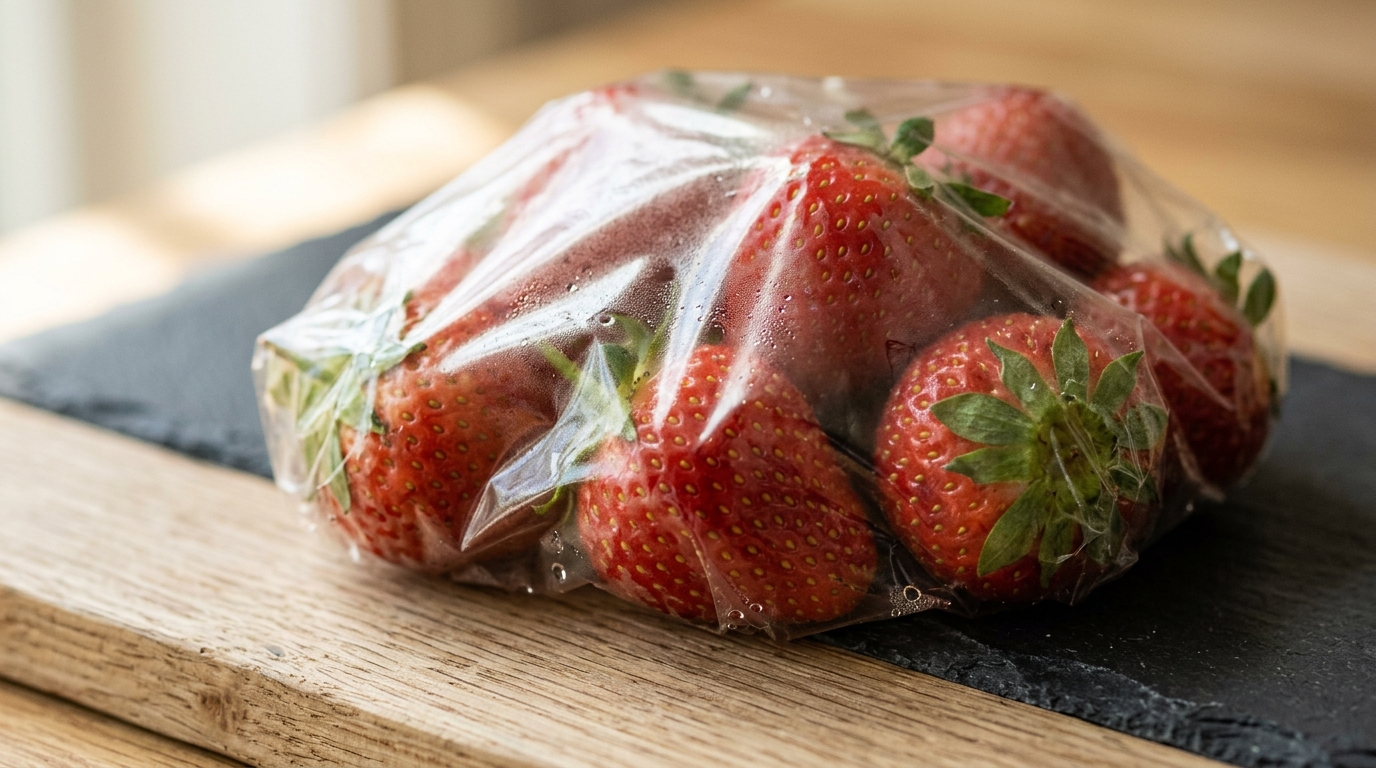
To evaluate practical performance, the synthesized silver nanoparticles were incorporated into polyethylene (PE) and polylactic acid (PLA) cling films used to store chilled chicken breasts over a 7-day period. Compared to conventional commercial packaging, the nanoparticle-treated PE and PLA films reduced total bacterial counts by 41.9% and 42.5%, respectively, with the PLA composite showing slightly superior antimicrobial preservation.
While the efficiency of biosynthesizing silver nanoparticles depends critically on nitrate reductase activity, systematic strategies to enhance this key enzymatic activity had remained underexplored. Furthermore, prior research had not quantitatively evaluated how targeted enzymatic gains impact physical nanoparticle yields or real-world application performance. To resolve these gaps, the study systematically optimized the bacterial culture conditions, demonstrating how optimizing culture conditions directly drives enzymatic and nanoparticle output.
These findings demonstrate that systematic enhancement of nitrate reductase activity serves as an effective strategy to drive high-efficiency silver nanoparticle biosynthesis, and the resulting nanoparticles hold considerable promise for developing functional antimicrobial food packaging materials. The journal released the citable open-access article early as peer-reviewed, accepted research with a permanent DOI, noting that this version is subject to further edits before replacement by the final Version of Record.
Subject of Research: Biosynthesis of silver nanoparticles using Lactiplantibacillus plantarum for antimicrobial food packaging
Article Title: Optimization of nitrate reductase activity in Lactiplantibacillus plantarum for enhanced biosynthesis of silver nanoparticles and application in antimicrobial food packaging
Article References: Chen, J., Huang, Y., Mei, G., Guo, Y., Wang, Y., Guo, Y., & Tao, J. (2026). Optimization of nitrate reductase activity in Lactiplantibacillus plantarum for enhanced biosynthesis of silver nanoparticles and application in antimicrobial food packaging. Chemical and Biological Technologies in Agriculture. https://doi.org/10.1186/s40538-026-01145-1
Image Credits: AI Generated
DOI: 10.1186/s40538-026-01145-1
Keywords: Lactiplantibacillus plantarum, nitrate reductase, silver nanoparticles, biosynthesis, food packaging, antimicrobial packaging, Escherichia coli, chicken breast preservation, polylactic acid, polyethylene, response surface methodology, lactic acid bacteria, bacterial count reduction, glucose concentration, potassium nitrate, culture optimization
News Source: Gregory Coleman. (November 14, 2026). Optimizing Bacterial Nitrate Reductase Boosts Silver Nanoparticle Synthesis for Food Packaging. Scienmag.