• HOME
  • NEWS
  • EXPLORE
    • CAREER
      • Companies
      • Jobs
    • EVENTS
    • iGEM
      • News
      • Team
    • PHOTOS
    • VIDEO
    • WIKI
  • BLOG
  • COMMUNITY
    • FACEBOOK
    • INSTAGRAM
    • TWITTER
Sunday, November 15, 2026
BIOENGINEER.ORG
No Result
View All Result
  • Login
  • HOME
  • NEWS
  • EXPLORE
    • CAREER
      • Companies
      • Jobs
        • Lecturer
        • PhD Studentship
        • Postdoc
        • Research Assistant
    • EVENTS
    • iGEM
      • News
      • Team
    • PHOTOS
    • VIDEO
    • WIKI
  • BLOG
  • COMMUNITY
    • FACEBOOK
    • INSTAGRAM
    • TWITTER
No Result
View All Result
Bioengineer.org
No Result
View All Result
Home NEWS Science News Biology

Review links inflammatory pathways to cardiovascular disease

by
November 14, 2026
in Biology
Reading Time: 2 mins read
0
Review links inflammatory pathways to cardiovascular disease

Review links inflammatory pathways to cardiovascular disease

Share on FacebookShare on TwitterShare on LinkedinShare on RedditShare on Telegram

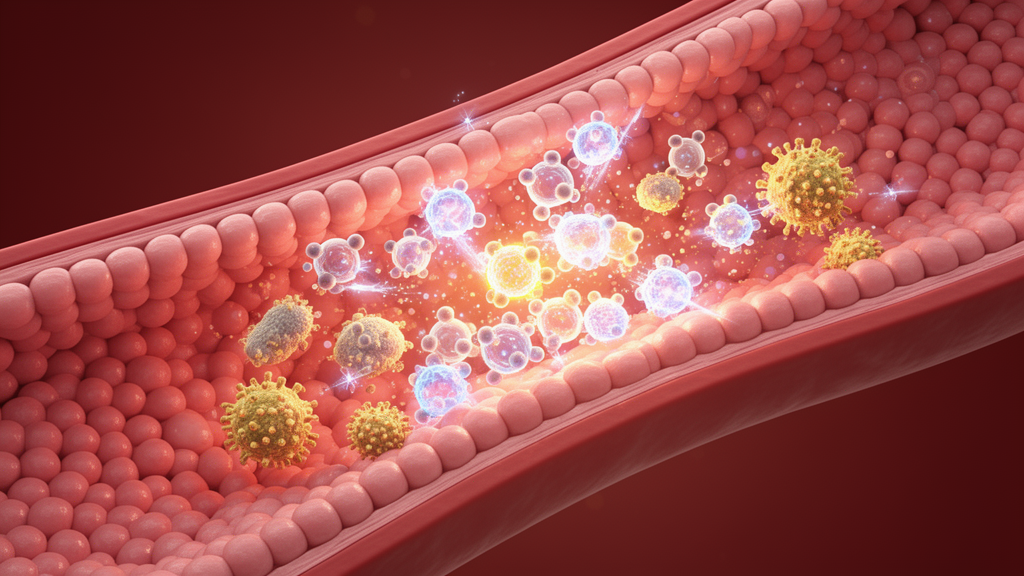
A recent review published in Frontiers in Cell and Developmental Biology examines how dysregulated inflammatory signaling networks drive cardiovascular diseases. The study highlights that these pathways do not operate in isolation but interact through synergistic, antagonistic, and feedback mechanisms. This complex interplay explains why conventional therapies targeting single pathways have often shown limited efficacy. The authors argue that compensatory activation and context-dependent signaling plasticity undermine the success of isolated interventions. Instead, the review proposes that disrupting pathological crosstalk interactions offers a more rational therapeutic strategy.

The review focuses on three principal functional modules within the inflammatory network. The first is the NF-κB–NLRP3–cGAS-STING axis, which amplifies sterile inflammation through sequential priming, inflammasome activation, and cytosolic DNA sensing. The second module is the JAK–STAT–NF-κB axis, which sustains chronic inflammation through cytokine-driven feedback loops. This axis also contributes to the senescence-associated secretory phenotype and fibrotic remodeling. The third module is the Wnt/β-catenin–TGF-β axis, which balances tissue repair and fibrosis in a context- and time-dependent manner.

Additional pathways, including PI3K/Akt, MAPK, and Notch, are discussed for their modulatory roles within this framework. Their interactions are described across the acute, subacute, and chronic stages of cardiovascular inflammation.

The study further analyzes how mesenchymal stem cells and their extracellular vesicles modulate multiple nodes of this inflammatory network. The review also assesses pharmacological strategies, including dual-target small molecules, STING inhibitors, and epigenetic therapies. The review also evaluates combined stem cell–drug regimens. The authors suggest that the convergence of stem cell biology, extracellular vesicle engineering, and multi-faceted pharmacology could lead to more precise therapeutic options.

Advanced technologies such as single-cell multi-omics, spatial transcriptomics, and AI-based modeling are highlighted as tools for identifying time-window crosstalk nodes. However, the review acknowledges significant barriers to translation, including cellular heterogeneity, therapeutic safety windows, and compensatory events.

Ultimately, the review proposes that a network-based approach in combination with stem cell therapy and pharmacology represents the best opportunity for precision management of inflammatory cardiovascular diseases. This strategy is guided by advanced spatiotemporal and multi-omics technologies.

Subject of Research: Inflammatory signaling pathways and therapeutic strategies in cardiovascular disease

Article Title: Synergy and antagonism of inflammatory signaling pathways in cardiovascular disease: from molecular crosstalk to stem cell-based and pharmacological therapeutic strategies

Article References: Hao, Y., Zhu, Y., Diao, D., Xie, W., Fu, Z., Li, Y., & Sun, H. (2026). Synergy and antagonism of inflammatory signaling pathways in cardiovascular disease: from molecular crosstalk to stem cell-based and pharmacological therapeutic strategies. Frontiers in Cell and Developmental Biology, 14, Article 1977084. https://doi.org/10.3389/fcell.2026.1977084

Image Credits: AI Generated

DOI: 10.3389/fcell.2026.1977084

Keywords: cardiovascular disease, inflammatory signaling, NF-κB pathway, NLRP3 inflammasome, cGAS-STING axis, JAK-STAT signaling, Wnt/β-catenin, TGF-β pathway, mesenchymal stem cells, extracellular vesicles, pharmacological strategies, dual-target molecules, epigenetic therapies, spatial transcriptomics, single-cell multi-omics, AI-based modeling, fibrotic remodeling, sterile inflammation, cytokine feedback, precision medicine

News Source: Frances Kline. (November 14, 2026). Review links inflammatory pathways to cardiovascular disease. Scienmag.

Tags: AI-based modelingCardiovascular diseasecGAS-STING axiscytokine feedbackdual-target moleculesEpigenetic therapiesextracellular vesiclesfibrotic remodelinginflammatory signalingJAK-STAT signalingmesenchymal stem cellsNF-κB pathwayNLRP3 inflammasomepharmacological strategiesPrecision MedicineSingle-cell multi-omicsSpatial transcriptomicssterile inflammationTGF-β pathwayWnt/β-catenin
Share12Tweet7Share2ShareShareShare1

Related Posts

Solitary Ascidian Styela plicata Exhibits Diurnal Behavioral and Neural Rhythms

Solitary Ascidian Styela plicata Exhibits Diurnal Behavioral and Neural Rhythms

November 15, 2026
Galectin-3 Restricts Dengue Virus Infection Through Envelope Binding and Immune Signaling

Galectin-3 Restricts Dengue Virus Infection Through Envelope Binding and Immune Signaling

November 15, 2026

Host Epigenetic Controls and Immune Responses Regulate Human Adenovirus Latency

November 15, 2026

Comprehensive Review Details Ovarian Theca Cell Development and Critical Endocrine Functions

November 15, 2026

POPULAR NEWS

  • Distinct Genomic Landscapes Distinguish Survival Outcomes in Systemic Anaplastic Large Cell Lymphomas

    Distinct Genomic Landscapes Distinguish Survival Outcomes in Systemic Anaplastic Large Cell Lymphomas

    29 shares
    Share 12 Tweet 7
  • Blood Cancer Antibody–Drug Conjugates Require Balanced Target Biology and Linker–Payload Pharmacology

    29 shares
    Share 12 Tweet 7
  • Telomeric C-Circles Emerge as Functional and Actionable Biomarkers in ALT-Driven Cancers

    29 shares
    Share 12 Tweet 7
  • Review Outlines How Neural and Endocrine Circuits Govern CD8 T Cell Fate

    29 shares
    Share 12 Tweet 7

About

We bring you the latest biotechnology news from best research centers and universities around the world. Check our website.

Follow us

Recent News

Severe Delusion-Dominant Psychosis Marks Atypical Parkinson’s Disease Case Report

Repeated Heat Waves Linked to Childhood Adversity and Distress in Nepal

Distinct Genomic Landscapes Distinguish Survival Outcomes in Systemic Anaplastic Large Cell Lymphomas

Subscribe to Blog via Email

Enter your email address to subscribe to this blog and receive notifications of new posts by email.

Join 88 other subscribers
  • Contact Us

Bioengineer.org © Copyright 2023 All Rights Reserved.

Welcome Back!

Login to your account below

Forgotten Password?

Retrieve your password

Please enter your username or email address to reset your password.

Log In
No Result
View All Result
  • Homepages
    • Home Page 1
    • Home Page 2
  • News
  • National
  • Business
  • Health
  • Lifestyle
  • Science

Bioengineer.org © Copyright 2023 All Rights Reserved.