This finding offers a potential biological solution to a major bottleneck in the production of bioplastics and other industrial chemicals from renewable biomass.
The central challenge addressed by the study is the presence of furfural and 5-hydroxymethylfurfural, or HMF, in lignocellulosic hydrolysates. These compounds are generated during the harsh pretreatment processes required to break down plant cell walls into fermentable sugars. While the pretreatment is necessary to access the sugars, the resulting inhibitors severely hinder microbial growth and reduce the efficiency of fermentation. The research team aimed to create a strain of L. plantarum that could tolerate these specific inhibitors, thereby improving the overall yield of lactic acid, a key precursor for polylactic acid plastics.
To achieve this, the scientists employed adaptive laboratory evolution, a method that uses directed natural selection to improve microbial fitness under specific stress conditions. They began with a wild-type strain of L. plantarum JGR2 and subjected it to serial transfers in media containing increasing concentrations of furfural and HMF. The process started with inhibitor levels that caused approximately 33% growth inhibition and was maintained for 10 weeks. During this period, the inhibitor concentrations were increased by 1.5-fold every three weeks, ultimately reaching 8 g/L for furfural and 7 g/L for HMF. This gradual exposure allowed the bacterial populations to adapt and develop higher tolerance levels over time.
By the end of the 10-week period, the adapted populations showed significantly improved growth compared to the original wild-type strain. In the presence of 8 g/L furfural, the adapted cultures achieved growth rates of 38% to 45%, whereas the wild-type and passage control strains showed a maximum of only 10% growth. Similarly, in the presence of 7 g/L HMF, the adapted populations grew to 78% to 80%, while the control strains remained at 10% or less. The researchers also observed cross-tolerance, where strains adapted to furfural showed increased resistance to HMF, and vice versa, suggesting that the mechanisms of tolerance for these two similar compounds overlap.
To understand the genetic basis of this adaptation, the team performed whole-genome resequencing of the evolved isolates. They identified hundreds of mutations, with missense mutations being the most common. Notably, several high-impact non-conservative mutations were found in genes encoding proteins involved in DNA repair, such as RecF, and in cell envelope components. These genetic changes suggest that the bacteria underwent significant physiological reprogramming to cope with the stress. The presence of mutations in cell surface proteins further indicates that changes in the cell envelope may play a crucial role in protecting the bacteria from the toxic effects of furans.
Transcriptomic analysis revealed that adaptation led to more extensive changes in gene expression than acute exposure to the inhibitors. The adapted strains showed a reduced requirement for transcriptional adjustment when challenged with furfural, implying that they had developed a more stable baseline response. A key finding was the upregulation of the gene dhaT, which encodes a 1,3-propanediol dehydrogenase with furfural reductase activity. This enzyme converts toxic furfural into furfuryl alcohol, a less harmful compound. The researchers confirmed this mechanism through biochemical assays, showing that the adapted isolates produced significantly higher levels of furfuryl alcohol compared to the wild-type strain, which showed no detectable production.
Membrane fatty acid analysis provided further insight into the adaptation mechanisms. The furfural-adapted isolates exhibited an increased ratio of unsaturated to saturated fatty acids, which enhances membrane fluidity and may help the bacteria maintain cell integrity under stress. In contrast, the HMF-adapted isolates showed an increase in cyclopropane fatty acids, a modification known to improve stress tolerance in lactic acid bacteria. These changes in membrane composition suggest that the bacteria altered their physical structure to better withstand the toxic environment, a phenomenon often referred to as homeoviscous adaptation.
The practical impact of these adaptations was evaluated by testing the evolved strains in rice straw hydrolysate, a real-world feedstock for lactic acid production. The adapted isolates demonstrated higher growth rates and produced significantly more lactic acid than the wild-type strain. Specifically, the furfural-adapted isolates produced 3.3 times more lactic acid, while the HMF-adapted isolates produced three times more, compared to the wild-type. Although the absolute levels of lactic acid achieved in this study are not yet at industrially relevant scales, the substantial increase in yield demonstrates the potential of adaptive laboratory evolution to improve bioproduction from lignocellulosic biomass.
The study highlights the importance of integrating multi-omics approaches to understand the complex mechanisms of microbial adaptation. By combining genomic, transcriptomic, and physiological data, the researchers were able to propose a comprehensive model of how L. plantarum responds to lignocellulosic inhibitors. The findings suggest that adaptation involves a combination of genetic mutations, transcriptomic shifts, and physical changes to the cell membrane and surface. This multi-faceted response allows the bacteria to not only survive but to thrive in environments that would otherwise be inhospitable.
Despite the promising results, the study acknowledges several limitations. The absolute lactic acid titers achieved are still below the levels required for industrial application, and further optimization of the bioprocess is needed. Additionally, while the study provides strong evidence for the role of specific mutations and gene expression changes in tolerance, targeted reverse engineering experiments are required to confirm the causal roles of these genetic candidates. The researchers also note that the adapted strains may need to be tested against other pretreatment byproducts, such as phenolic compounds, to fully assess their potential for industrial use.
Future research will focus on optimizing the bioprocess for lactic acid production and evaluating the cross-tolerance of the evolved strains against a broader range of inhibitors. The development of microbial strains with enhanced tolerance to lignocellulosic inhibitors is a critical step toward the sustainable production of bioplastics and other value-added chemicals from renewable resources. This study provides a proof of concept for the use of adaptive laboratory evolution in improving the performance of lactic acid bacteria in complex industrial environments.
The work underscores the power of directed evolution as a tool for industrial biotechnology. The findings from this study not only advance our understanding of microbial stress responses but also offer a practical pathway for the development of more efficient and sustainable bioprocesses.
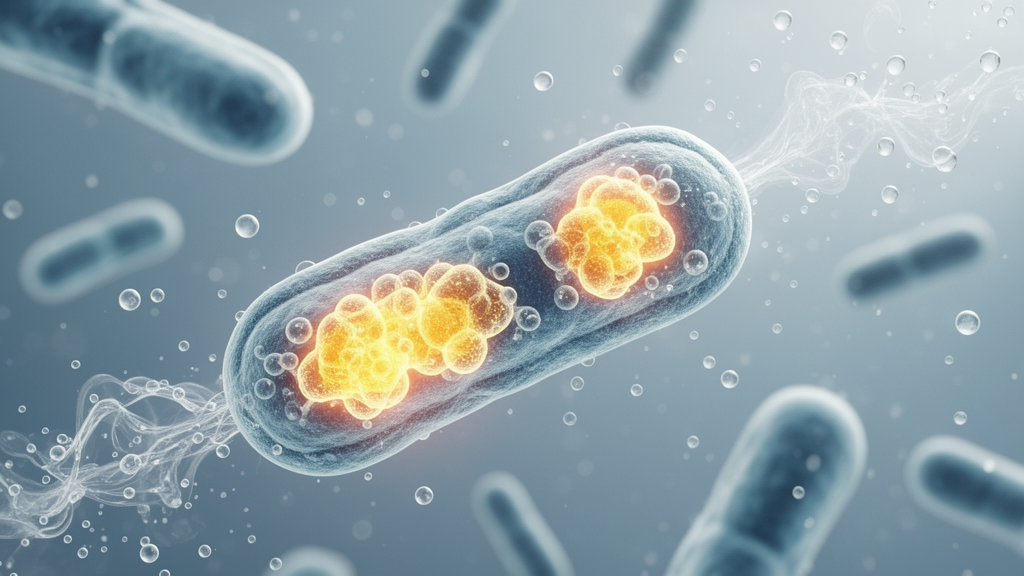
Microscopic examinations provided direct structural evidence of how evolutionary adaptation shielded the bacteria from chemical trauma. Under field emission scanning electron microscopy, unexposed wild-type and evolved cells displayed a standard rod-shaped structure measuring 2 to 3 micrometers in length and 700 to 900 nanometers in width. When challenged with high concentrations of inhibitors, unadapted wild-type cells suffered severe physical deformities, turning curved, flattened, pitted, and noticeably elongated, while passage control cells exhibited surface irregularities and pronounced swelling. In contrast, the furfural-adapted cells displayed only mild curvature and far less distortion, and the 5-hydroxymethylfurfural-adapted cells remained largely unaltered, matching the physical resilience observed in their cell envelope profiles.
Beyond general stress responses, transcriptomic profiling revealed targeted reorganizations across cellular transport and energetic pathways. The furfural-adapted isolate constitutively upregulated the phosphate-transporting pstABCD operon, pointing to enhanced phosphate uptake as an active mechanism for coping with reactive carbonyl stress. Simultaneously, the adapted bacteria suppressed non-essential, energy-demanding transport processes, including the choS and choQ transporters responsible for glycine betaine, carnitine, and choline uptake, conserving cellular ATP. Central metabolism also shifted, marked by the upregulation of glycolytic enzymes such as glyceraldehyde 3-phosphate dehydrogenase and phosphoglycerate kinase, alongside acetate kinase and pyruvate oxidase, while phosphotransferase sugar catabolic clusters and pentose phosphate pathway genes were broadly downregulated.
At the sequence level, Grantham score analysis highlighted several high-impact substitutions that likely stabilized critical enzymatic machinery. The highest scoring alterations involved tyrosine-to-cysteine replacements, an exchange with a score of 194 that facilitates the formation of stabilizing disulfide bonds. These mutations occurred within the DNA recombination and repair protein RecF, the flavin prenyltransferase UbiX, an oligo-1,6-glucosidase, and an uncharacterized protein. Furthermore, multiple furfural-adapted isolates acquired a specific K719E substitution in the RNA polymerase beta subunit, RpoB. This alteration in the transcriptional apparatus coincided with the broad suppression of a large genomic cluster spanning from lp_3489 to lp_3583, illustrating how a single regulatory mutation can drive sweeping adjustments in gene expression.
The experimental validation in rice straw hydrolysate demonstrated functional improvements under realistic processing conditions. The sourced agricultural hydrolysate initially contained 3.6 percent glucose, 1.8 percent xylose, 0.23 percent arabinose, and negligible furan levels, requiring supplementation with yeast extract, 3 grams per liter of furfural, and 2.5 grams per liter of 5-hydroxymethylfurfural to simulate severe pretreatment toxicity. Under these demanding conditions, unadapted wild-type bacteria generated 4.62 micrograms per milliliter of lactic acid, while the unadapted passage control produced 2.64 micrograms per milliliter. The evolved isolates overcame this severe suppression, achieving significantly elevated colony-forming counts and tripling lactic acid yields relative to the wild-type baseline.
Subject of Research: Adaptive laboratory evolution of Lactiplantibacillus plantarum for enhanced furan tolerance and lactic acid production
Article Title: Adaptive laboratory evolution of Lactiplantibacillus plantarum enhances furan tolerance and lactic acid production in lignocellulosic hydrolysate
Article References: Sharma, S., Surve, S. V., Fernandes, J. M., Mahale, V., Vijayvargiya, M., & Kulkarni, R. (2026). Adaptive laboratory evolution of Lactiplantibacillus plantarum enhances furan tolerance and lactic acid production in lignocellulosic hydrolysate. Bioresources and Bioprocessing, 13(1), Article 108. https://doi.org/10.1186/s40643-026-01106-4
Image Credits: AI Generated
DOI: 10.1186/s40643-026-01106-4
Keywords: adaptive laboratory evolution, Lactiplantibacillus plantarum, furfural tolerance, 5-hydroxymethylfurfural, lactic acid production, lignocellulosic hydrolysate, rice straw hydrolysate, furfural reductase, dhaT gene, membrane fatty acids, transcriptomic analysis, whole-genome resequencing, bioplastic precursors, microbial fermentation, industrial biotechnology, cell envelope adaptation, cross-tolerance, homeoviscous adaptation, lignocellulosic inhibitors, bioprocess optimization
News Source: Gregory Coleman. (November 14, 2026). Evolved bacteria convert toxic furfural to alcohol, boosting lactic acid yield. Scienmag.