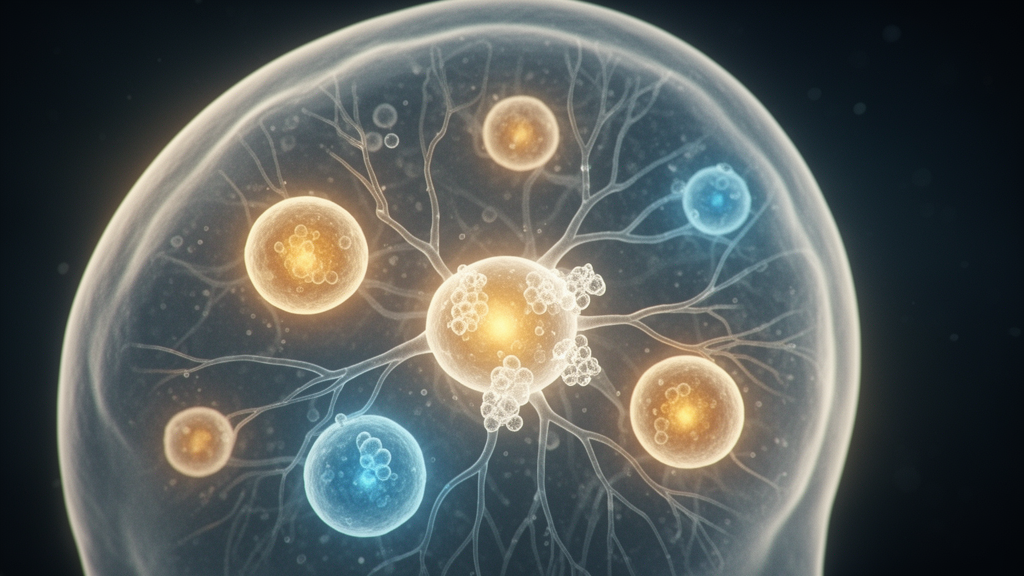
During mammalian corticogenesis, the generation of functional brain architecture requires a delicate equilibrium between the expansion of neural stem cells and their orderly exit into differentiation and directional migration. By examining embryonic mouse models and cultured cortical precursors, the authors revealed that BBX directly restrains the transcription of cyclin-dependent kinase inhibitor 1A, or p21, driven by tumor suppressor p53. Rather than utilizing its canonical high mobility group box domain for direct site-specific chromatin anchorage, BBX interacts physically with p53 to limit p53 recruitment to the distal response element of the p21 promoter, thereby shielding developing neural cells from premature cell-cycle exit and aberrant cellular senescence.
The mammalian neocortex originates from progenitor populations arrayed within the ventricular zone along the embryonic ventricular surface. These primary neural stem cells, marked characteristically by the transcription factor SOX2, must undergo precise rounds of self-renewing and progenitor-generating divisions before committing daughter cells toward distinct neuronal fates. Newly born projection neurons subsequently abandon the proliferative germinal matrix and travel outward through intermediate territory to establish defined cortical layers. While extracellular cues and classic transcriptional networks are known to govern this sequence, the authors hypothesized that uncharacterized germinal zone factors maintain progenitor status during peak neurogenesis. Spatial expression surveys confirmed that Bbx transcripts are enriched across the embryonic mouse ventricular and subventricular zones at embryonic day 14.5, positioning the nuclear factor precisely within actively dividing neurogenic microenvironments.
To assess how BBX directly affects neural stem cell behavior, investigators conducted isolated primary neurosphere assays utilizing neural stem cells harvested from embryonic day 14.5 murine cortices. Lentiviral delivery driving approximately fivefold BBX protein overexpression produced substantial expansions in primary neurosphere quantities, elevated the frequency of larger colonies, and sustained secondary and tertiary sphere propagation across serial replating. These self-renewal phenotypes correlated with marked elevations in endogenous SOX2 protein and enhanced metabolic cell proliferation indices quantified through XTT assays. Conversely, targeted gene silencing utilizing short hairpin RNAs directed against Bbx resulted in more than fifty percent reductions in endogenous BBX message and protein, which triggered severe drops in neurosphere yield, reduced colony dimensions, and suppressed both SOX2 and Cyclin D1 expression levels without altering cleaved caspase-3 abundance.
Structural dissection of the 888-amino-acid BBX protein revealed surprising mechanistic details regarding its functional domains. BBX features an amino-terminal high mobility group box domain spanning residues 80 to 148, an architecture frequently associated with chromatin engagement and DNA structure modulation. When investigators engineered a deletion construct lacking this region, cellular fractionation showed an expected, marked drop of the mutant protein within insoluble chromatin-associated nuclear fractions. However, despite impaired intrinsic chromatin association, the high mobility group deletion construct stimulated primary neurosphere genesis and sustained SOX2 protein expression to levels virtually indistinguishable from full-length wild-type BBX. These observations indicated that the classical DNA-binding motif is surprisingly dispensable for BBX-dependent progenitor maintenance, suggesting instead that the factor acts primarily through protein-protein coordination rather than classical standalone DNA binding.
The researchers subsequently verified the physiological necessity of BBX within the intact embryonic cerebral cortex via in utero electroporation. Plasmids delivering BBX expression cassettes or gene-silencing hairpins along with fluorescent green reporters were microinjected into embryonic lateral ventricles at day 13.5 or 14.5 and tracked through developmental stages 15.5, 17.5, and 18.5. Overexpressing BBX caused cells to accumulate heavily within ventricular and subventricular zones while curtailing their upward transition into the cortical plate, an effect accompanied by significant proportional increases in SOX2-positive, PAX6-positive, and intermediate TBR2-positive progenitor populations alongside reductions in SATB2-positive upper-layer neurons. While BBX knockdown likewise impeded cellular transit into the cortical plate, marker profiling demonstrated a fundamentally divergent biological mechanism: depleted cells exhibited severe drops in SOX2 signal intensity, reduced frequencies of SOX2-positive and PAX6-positive cells, and marked losses in Cyclin D1 expression.
Beyond disrupting the maintenance of progenitor marker identity, in vivo BBX depletion severely compromised the developmental trajectory and morphology of newborn cortical neurons. In embryos analyzed at developmental stage 18.5 following electroporation at day 13.5, BBX-deficient cells failed to reach the superficial cortical layers, instead stalling aberrantly within the intermediate zone to form abnormal, dense multi-cellular clusters. High-magnification immunofluorescence demonstrated that migrating neurons within the upper cortical plate had shortened leading processes that failed to contact the pial surface properly. In the lower cortical plate, BBX-silenced neurons displayed irregular multipolar shapes rather than typical bipolar morphologies, as confirmed by quantitative circularity indices.
To uncover the molecular cascades operating downstream of BBX deficiency, the authors conducted genome-wide RNA sequencing on primary embryonic neural stem cells transduced with knockdown vectors, identifying 1,356 differentially expressed transcripts comprised of 661 upregulated and 695 downregulated genes. Functional enrichment classifications demonstrated widespread suppression of positive cell-cycle regulators alongside significant upregulation of pathways controlling stimulus responses, DNA damage signaling, and cellular senescence. Strikingly, cyclin-dependent kinase inhibitor 1A, or p21, emerged as the sole cell-cycle inhibitory locus exhibiting robust transcriptional induction upon BBX silencing. In contrast, alternative cyclin-dependent kinase inhibitors like Cdkn2a displayed downregulated patterns. Cross-referencing these expression profiles with public chromatin immunoprecipitation sequencing maps revealed that BBX selectively occupies the p21 promoter locus during proliferative cellular conditions, but loses this association in differentiated cell states.
Subsequent biochemical and luciferase reporter investigations delineated how BBX governs p21 transcription. Co-immunoprecipitation in embryonic cortical tissue demonstrated physical complex formation between endogenous BBX and tumor suppressor p53, an interaction that was preserved by the high mobility group deletion construct but abolished in a truncated variant spanning residues 334 to 668. Chromatin immunoprecipitation assays demonstrated that wild-type BBX and the high mobility group deletion construct bind equivalently to the p21 promoter near a defined distal p53 response element. Luciferase assays in cultured cells verified that BBX directly suppresses p53-dependent transactivation of the p21 promoter, whereas mutating two crucial core sequence motifs within the distal response element abrogated this regulation. Furthermore, chromatin immunoprecipitation showed that BBX overexpression drastically diminished p53 occupancy across the p21 promoter, whereas BBX depletion triggered enhanced p53 recruitment, thereby unleashing high p21 expression.
Consistent with aberrant p21 induction, BBX depletion drove cortical progenitors toward premature proliferative arrest and progressive cellular senescence. In vivo cell-cycle exit assays utilizing single-pulse EdU injections coupled with Ki67 immunostaining revealed that BBX knockdown substantially increased the fraction of postmitotic, non-cycling cells within developing cortical tissue. In vitro, more than forty percent of BBX-deficient stem cells exhibited high senescence-associated beta-galactosidase activity, marked protein accumulation of phosphorylated histone gamma-H2AX, and pronounced elevations in senescence-associated secretory phenotype transcripts, including Il-6, Ccl2, Cxcl1, and Serpine1. Immunofluorescence across intact embryonic cortical tissue confirmed elevated gamma-H2AX accumulation both within the stalled intermediate zone cell clusters and in scattered cortical plate cells, illustrating that BBX loss evokes a pronounced, non-apoptotic senescence response.
Direct rescue manipulations established that p21 upregulation represents the principal functional driver of the pathological phenotypes provoked by BBX deficiency. Co-depleting p21 in BBX-knockdown neural stem cells restored SOX2 protein expression in vitro and completely normalized laminar distribution patterns within the embryonic cortex in vivo. Importantly, co-electroporation with either a p21-targeting hairpin or a dominant-negative p53 construct eliminated the abnormal neuronal clustering within the intermediate zone while restoring neurite elongation and unipolar or bipolar morphology. Furthermore, co-depletion of retinoblastoma protein, recognized as a canonical mediator of p21-dependent cellular senescence, substantially resolved intermediate zone aggregation and restored normal cell polarity. Together, these genetic and biochemical findings indicate that BBX acts as a pivotal transcriptional regulator that preserves mammalian corticogenesis by restraining the p53-p21-retinoblastoma signaling axis, preventing premature cell-cycle arrest and senescence during brain assembly.
Subject of Research: Role of the nuclear protein BBX in mammalian corticogenesis via p53 and p21 pathway regulation
Article Title: BBX maintains mammalian brain development by repressing p53-mediated p21 expression
Article References: Yoon, Y., Kim, G. Y., Lim, W. Y., Hwang, S., Lee, S., Yoon, D., Pleasure, S. J., & Yoon, K. (2026). BBX maintains mammalian brain development by repressing p53-mediated p21 expression. EMBO Reports, 27(21), 6223-6250. https://doi.org/10.1038/s44319-026-00949-4
Image Credits: AI Generated
DOI: 10.1038/s44319-026-00949-4
Keywords: bobby sox homolog, BBX, corticogenesis, neural stem cells, p53, p21, Cdkn1a, retinoblastoma protein, cellular senescence, neuronal migration, mouse brain development, in utero electroporation, cell cycle exit, SOX2, intermediate zone, cortical plate
News Source: Cassandra Pierce. (November 14, 2026). Protein BBX Regulates Developing Cortical Cells by Restraining p53-Mediated p21 Activation. Scienmag.