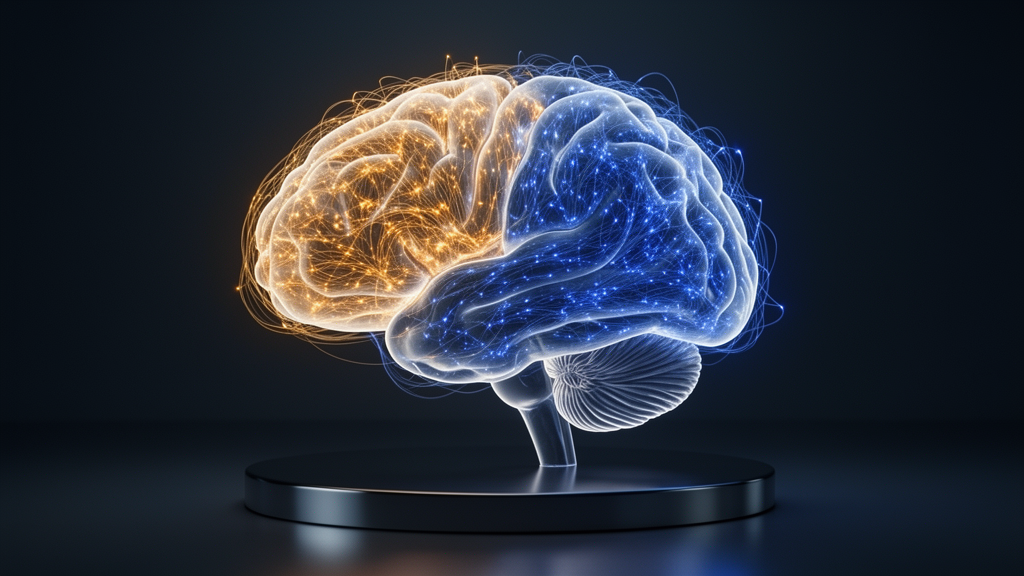
Resting-state functional connectivity reveals distinct, dimension-specific neurofunctional profiles across major clinical features of depression, according to an expert narrative review published in Translational Psychiatry. The authors report that examining resting-state functional connectivity alongside dimensional models of psychopathology provides an avenue to characterize the neural substrates underlying specific clinical dimensions, including anhedonia, rumination, insomnia, and suicide.
The review notes that major depressive disorder is traditionally diagnosed using symptom criteria systems that allow for up to 227 distinct symptom combinations to meet the same diagnostic criteria. This conventional nosological framework contributes to substantial clinical heterogeneity, which the authors identify as a factor that has limited prior efforts to establish reliable neurobiological biomarkers.
In evaluating anhedonia, the review highlights consistent resting-state functional connectivity alterations that differentiate specific subcomponents. Consummatory anhedonia is consistently associated with lower connectivity between the ventral striatum and the prefrontal cortex, whereas anticipatory anhedonia involves functional connectivity alterations between the ventral striatum and multiple brain regions.
The synthesis of findings on rumination similarly distinguishes between its subtypes and their associated neural networks. Brooding, characterized as the maladaptive component of rumination, shows higher connectivity within nodes of the default mode network, whereas reflective rumination recruits executive and salience networks.
For insomnia, resting-state functional neuroimaging investigations demonstrate disrupted connectivity centered within key hubs of the default mode network. These observed disruptions point to specific network-level abnormalities associated with sleep disturbance in depressive pathology.
Examinations of suicide demonstrate both shared and distinct functional connectivity abnormalities across suicidal ideation and suicide attempts. The review notes that these resting-state alterations specifically involve the orbitofrontal cortex, the anterior cingulate cortex, and the insula.
The authors conclude that these consistent findings highlight the limitations of classic diagnostic definitions in major depressive disorder. To advance personalized and targeted interventions, the review advocates for a paradigm shift toward brain-based dimensional frameworks aligned with the National Institute of Mental Health’s Research Domain Criteria principles.
The current diagnostic framework for major depressive disorder relies on symptom-based criteria, an approach that allows for hundreds of different symptom combinations to qualify for the same diagnosis. This substantial clinical heterogeneity complicates the search for reliable neurobiological biomarkers, as individuals with the same clinical diagnosis may exhibit vastly different underlying neurofunctional profiles. By relying heavily on reported symptoms, the traditional nosological framework may inadvertently mask distinct biological processes that are critical for guiding personalized treatment strategies and understanding the pathophysiology of the condition.
The study frames this challenge through the lens of the Research Domain Criteria, a framework championed by the National Institute of Mental Health. This paradigm prioritizes identifying neural circuits and behavioral systems rather than strictly adhering to traditional, broader diagnostic labels. By applying these dimensional principles, the narrative review seeks to transition psychiatry toward a more objective, brain-based understanding of psychopathology. Rather than searching for a single, uniform biomarker for the entire depressive spectrum, the research supports the identification of dimension-specific profiles—such as the distinct connectivity patterns identified for different subtypes of anhedonia—that reflect specific, observable disruptions in brain network function.
Published in Translational Psychiatry, this expert review offers a synthesized look at resting-state functional connectivity as a tool to map these complex dimensions. The analysis emphasizes that resting-state data, which captures intrinsic brain connectivity in the absence of external task-based demands, holds particular promise for identifying stable biomarkers. By integrating existing evidence, the authors provide a conceptual map for future research efforts. This work, shared in advance of the final version of record, is citable and represents an ongoing effort to translate complex connectivity findings into actionable, personalized clinical signatures. Ultimately, these findings suggest that future research should prioritize cross-validating these neurofunctional profiles across diverse clinical populations to better establish their diagnostic and therapeutic utility in real-world psychiatric settings.
Subject of Research: Resting-state functional connectivity biomarkers in major depressive disorder
Article Title: Resting-state functional neuroimaging biomarkers in depression: toward a dimensional approach for personalized diagnosis and treatment
Article References: Porta-Casteràs, D., De la Peña-Arteaga, V., de Diego-Adeliño, J., Miranda-Olivos, R., Cano, M., & Cardoner, N. (2026). Resting-state functional neuroimaging biomarkers in depression: toward a dimensional approach for personalized diagnosis and treatment. Translational Psychiatry. https://doi.org/10.1038/s41398-026-04427-2
Image Credits: AI Generated
DOI: 10.1038/s41398-026-04427-2
Keywords: major depressive disorder, resting-state functional connectivity, anhedonia, consummatory anhedonia, anticipatory anhedonia, ventral striatum, prefrontal cortex, rumination, brooding, reflective rumination, default mode network, salience network, insomnia, suicidal ideation, suicide attempts, orbitofrontal cortex, anterior cingulate cortex, insula
News Source: Glenn Wilkins. (November 16, 2026). Resting Brain Connectivity Patterns Reveal Distinct Profiles Across Core Depression Dimensions. Scienmag.