A standardized educational intervention significantly increased immediate basic life support knowledge and self-perceived competence among primary care healthcare personnel, according to a pretest–posttest intervention study. Sudden cardiac arrest is a leading cause of death, and primary care personnel may be the first healthcare providers to respond. The study aimed to evaluate the immediate effects of basic life support training on knowledge and self-perceived competence among primary care personnel.
The investigation was carried out as a single-group pretest–posttest study conducted between 1 November 2022 and 1 November 2023 across 54 family health centers located in Denizli, Türkiye. A total of 361 primary care personnel participated in the educational program. Before undergoing instruction, the cohort exhibited varying degrees of familiarity with emergency protocols, with 82.8% of the participating personnel reporting that they had received prior basic life support instruction, while only 21.5% actively reported following established resuscitation guidelines in their routine practice.
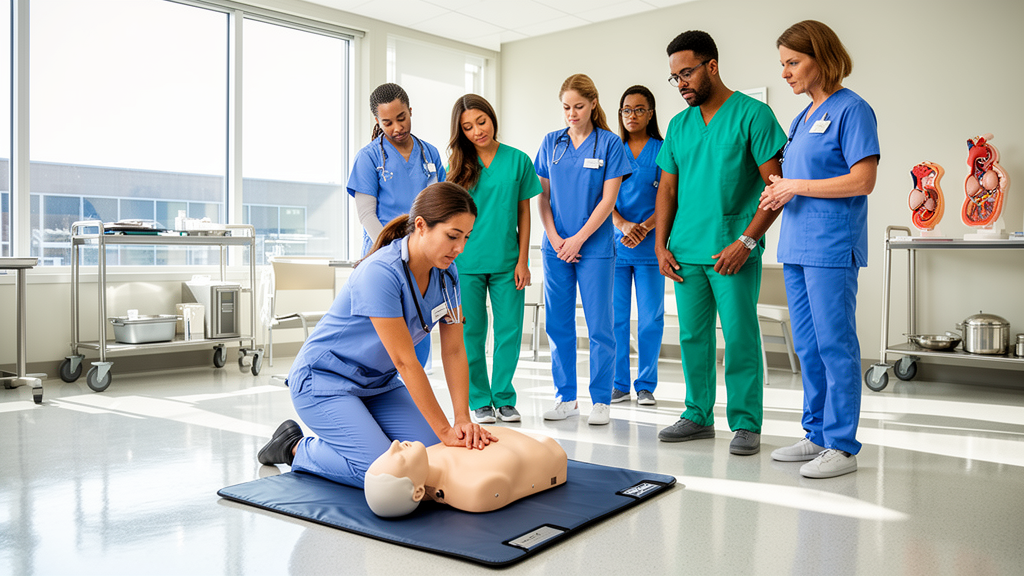
The educational intervention consisted of a standardized theoretical and practical training session lasting approximately 45 minutes. The session was based on the 2021 European Resuscitation Council guidelines.
To evaluate participant progress, researchers administered an investigator-developed questionnaire immediately before and immediately after the training session. The assessment instrument comprised 13 objective knowledge questions, yielding a total possible score range of 0 to 13 points, alongside a dedicated single item measuring self-perceived competence on a 5-point scale. Paired comparisons between pre-training and post-training measurements were evaluated statistically using the non-parametric Wilcoxon signed-rank test.
The evaluation revealed significant improvements in overall knowledge acquisition across the entire participant cohort following the 45-minute course. The median knowledge score increased from a baseline of 9.0 points, with an interquartile range of 7.0 to 11.0, to a post-intervention median of 12.0 points, with an interquartile range of 11.0 to 13.0. This change demonstrated a statistically significant improvement (p < 0.001) accompanied by a strong effect size (r = 0.76). Analysis via the Hodges–Lehmann estimator determined a paired median score increase of 3.00 points, with a 95% confidence interval spanning 3.00 to 3.50 points.
Baseline knowledge also differed substantially depending on whether workers had encountered resuscitation instruction in the past. Participants who reported prior basic life support instruction achieved significantly higher pre-training knowledge scores than their colleagues without previous training backgrounds (p < 0.001).
In addition to cognitive test gains, participants reported marked shifts in their self-perceived procedural competence after completing the session. Prior to the educational program, only 14.4% of the cohort rated their competence as high on the 5-point assessment item. Following the session, the proportion of participants reporting high self-perceived competence expanded to 85.0%, representing a statistically significant subjective increase (p < 0.001) that paralleled the objective test-score improvements observed across the health centers.
Despite these immediate gains, the study authors highlighted several methodological limitations that caution against attributing all performance changes solely to the instructional intervention. The study design lacked an unexposed control group, introducing the possibility that repeated administration of the identical 13-item questionnaire produced a testing effect. Furthermore, the questionnaire itself was an unvalidated instrument, and the protocol did not assess long-term cognitive retention or measure hands-on psychomotor performance over time.
Subject of Research: Immediate impact of basic life support training on primary care personnel
Article Title: Impact of basic life support training on knowledge and self-perceived competence among primary care personnel: a pre–post intervention study
Article References: Okta, M., Emre, N., Özşahin, A., Edirne, T., Okta, F., & Yorgancı, M. (2026). Impact of basic life support training on knowledge and self-perceived competence among primary care personnel: a pre–post intervention study. BMC Medical Education. https://doi.org/10.1186/s12909-026-10771-0
Image Credits: AI Generated
DOI: 10.1186/s12909-026-10771-0
Keywords: basic life support, primary care personnel, cardiopulmonary resuscitation, medical education, family health centers, resuscitation guidelines, European Resuscitation Council, Denizli, Turkey, pretest posttest study, clinical competence, sudden cardiac arrest, healthcare training, emergency response, Wilcoxon signed-rank test, Hodges-Lehmann estimate
News Source: Courtney Benton. (November 14, 2026). Basic Life Support Training Linked to Higher Knowledge Scores Among Primary Care Personnel. Scienmag.