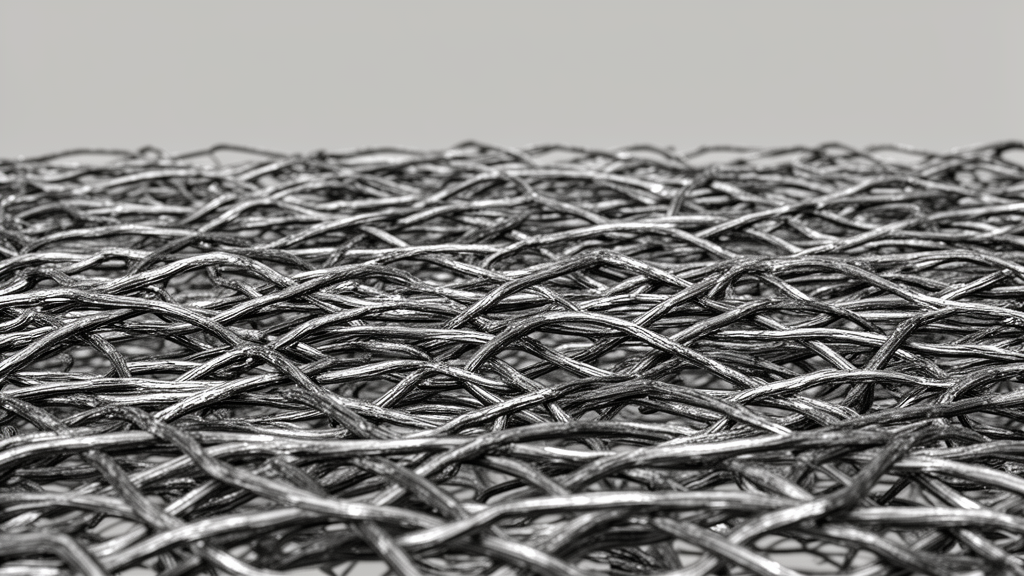
A comprehensive scientific review in Discover Polymers highlights how agricultural, forestry, and marine biomass residues offer sustainable alternatives to conventional electromagnetic interference shielding materials. The rapid expansion of wireless communications, including fifth-generation and sixth-generation networks, alongside consumer electronics, automotive radars, and medical devices, has significantly intensified electromagnetic pollution. This uncontrolled radiation disrupts sensitive circuitry, curtails equipment lifespans, and introduces potential health risks. Historically, mitigating electromagnetic interference has relied on dense metallic sheets or synthetic carbon nanomaterials such as carbon nanotubes and graphene. Although metals provide excellent electrical conductivity, their high mass density, corrosion susceptibility, and rigid profiles restrict their applicability in modern flexible electronics. Synthetic carbon nanoparticles alleviate weight burdens but introduce high production costs and occupational inhalation hazards. Consequently, researchers Bharath Venkatagiri, Sujatha Basa Reddy, Sreeranjani K, and Ninaada M. S. evaluated global data indicating that massive underutilized waste streams, encompassing 140 billion tonnes of agricultural byproducts and 181.5 billion tonnes of lignocellulosic forestry residues produced annually, can be repurposed into high-performance, lightweight electromagnetic shields.
Characterizing shielding effectiveness requires evaluating a material’s capacity to attenuate incident electromagnetic waves across specified operational frequencies. According to Schelkunoff’s theoretical formulation, total shielding effectiveness represents the cumulative sum of surface reflection, internal absorption, and multiple boundary reflections. However, when absorption exceeds ten decibels, multiple reflections become negligible, reducing the total effectiveness to absorption and reflection. To achieve viable suppression, raw biomass undergoes structured physical and chemical processing. Initial pre-treatment employs mechanical grinding, sifting, and chemical washing with acids or solvents to eliminate impurities and isolate structural cellulose or lignin fibers. When conductive carbonaceous networks are desired, the pre-treated biomass undergoes thermal pyrolysis, converting cellular architectures into porous carbon matrices. Extracted fibers frequently undergo surface modifications, such as acetylation, silane coupling, or plasma exposure, to optimize matrix compatibility. Finally, functional composites are consolidated via melt blending, compression molding, or solution casting, occasionally integrating conductive fillers to bolster electromagnetic attenuation mechanisms.
Fast-growing bamboo species and agricultural timber residues exhibit notable cellular porosity and mechanical resilience, making them prime candidates for structural shielding composites. Certain tropical bamboo species demonstrate rapid renewability, growing up to ninety-one centimeters daily. In experimental investigations, alternating copper and iron coatings applied to bamboo fibers within polylactic acid established an efficient multi-absorption-reflection-reabsorption mechanism. This alternating multilayer architecture delivered a shielding effectiveness of 45.02 decibels across three layers and reached 80.2 decibels across nine layers in the X-band spanning eight to twelve gigahertz. In complementary studies, giant bamboo carbonized at 1300 degrees Celsius attained an electrical conductivity of 44,000 Siemens per meter, conferring 23 decibels of attenuation when combined with cellulose nanofibers in a polyamide matrix. Furthermore, electroless plating of nickel-iron-phosphorus alloys onto bamboo fibers followed by hot pressing with polylactic acid achieved an electrical conductivity of 20.86 Siemens per centimeter and a 45-decibel X-band shielding effectiveness.
Cellulose nanofibers derived from native plant fibers offer exceptional tensile strength, nanoscale dimensions, and expansive surface areas, serving as effective mechanical scaffolds and dielectric modifiers. Copper-loaded bamboo laminates synthesized via chemical deposition with in-situ silver nucleation achieved electrical conductivities reaching 900,000 Siemens per meter, yielding 40 decibels of attenuation alone and 10.2 decibels within multifunctional wood-bamboo hybrid panels. Porous bamboo fiber composites reinforced with carbon nanotubes inside polylactic acid suppressed 47.7 decibels in the X-band. Conductive hydrogel networks constructed via in-situ chemical polymerization of polyaniline onto cellulose nanofiber aerogels and coated with polyvinyl alcohol gel demonstrated a total shielding effectiveness of 34.75 decibels. Similarly, combining multi-walled carbon nanotubes with a cellulose nanofiber matrix at a one-to-four mass ratio produced flexible films exhibiting an electrical conductivity of 1,100 Siemens per meter and a peak X-band shielding effectiveness of 55.8 decibels, confirming the viability of cellulose matrices for conducting networks.
Repurposing discarded fruit peels and post-harvest agricultural residues presents an ecologically advantageous strategy to valorize organic waste while generating capable shielding materials. Roughly 3,300 megatons of crop residues are produced globally each year from wheat, rice, barley, maize, soybean, and sugarcane. In one synthesis route, banana leaves were ground, dispersed in aqueous sucrose solutions, freeze-dried, and carbonized at 900 degrees Celsius into conductive carbon foams. Scaling sucrose concentrations elevated electrical conductivity to 8.7 Siemens per meter, driving total shielding effectiveness to 77.5 decibels in the X-band. Similarly, papaya peel bio-carbon produced through pyrolysis at 450 degrees Celsius for sixty minutes was combined with banana fibers in epoxy resin, yielding shielding values of 55.8 decibels in the X-band and 59.2 decibels in the Ku-band. Banana peel carbon combined with zinc oxide achieved a reflection loss of minus 44.18 decibels at 6.72 gigahertz, while banana stem and rice husk dust composites in epoxy demonstrated a 14.01 decibel reflection loss.
Pineapple waste fibers and discarded apple peels have also demonstrated substantial utility in fabricating thin films and rigid composite shielding panels. Ultrathin, flexible films fabricated from pineapple leaf nanofibers and MXene nanosheets through vacuum filtration achieved a shielding effectiveness of 18.3 decibels in the X-band at a thickness of twenty-six micrometers. In thick structural moldings, incorporating forty volume percent pineapple fiber and four percent bio-carbon derived from abaca bracts and pineapple fibers into rigid vinyl ester matrices generated shielding effectiveness values of 11.18 decibels at 8 gigahertz, 30.53 decibels at 12 gigahertz, 54.16 decibels at 16 gigahertz, and 65.51 decibels at 20 gigahertz. Furthermore, pyrolyzed apple peel bio-carbon blended with amine-functionalized cellulosic fibers in vinyl ester sheets attenuated 40 decibels in the J-band between ten and twenty gigahertz. Combining apple peel bio-carbon with Beta vulgaris cellulosic fibers in a 9:7:1 ratio yielded absorption losses of 3.7, 11.88, 28.81, and 34.82 decibels across the E, F, I, and J frequency bands.
Cotton textiles and discarded industrial cloth provide flexible, breathable substrates well-suited for personal protective clothing and smart wearable electronic devices. In experimental evaluations, cotton electroconductive papers loaded with carbon nanotubes and graphene nanoplatelets, impregnated with epoxy, and coated with magnetite nanoparticles recorded a shielding effectiveness of 33.1 decibels in the Ku-band. Impregnating cotton fabric with intumescent flame retardants prior to rapid carbonization at 900 degrees Celsius and in-situ polypyrrole growth produced multilayer composites suppressing 51.84 decibels in the X-band. Flexible cotton modified with polypyrrole nanotubes and polydimethylsiloxane achieved conductivities of 2715.8 Siemens per meter alongside an X-band shielding value of 28.2 decibels at 0.5 millimeters thickness. Fabric coated with zinc oxide nanorods and reduced graphene oxide-magnetic ferrite nanoparticles achieved approximately 55 decibels with 74.5 percent absorption efficiency. Most impressively, conductive cotton embedded with in-situ reduced silver nanoparticles attained outstanding shielding effectiveness values of 102.32 decibels in the X-band and 107.62 decibels in the K-band.
Forestry wood lumber, cereal straw, and rice husks possess cellular architectures that trap electromagnetic radiation through multiple internal reflections. Porous carbonized wood prepared with a forty percent compression ratio exhibited a shielding effectiveness of 71.69 decibels in the K-band, rising from 28.08 decibels in uncompressed wood. Poplar timber carbonized at 700 degrees Celsius and impregnated with nickel-magnetite-graphene nanoparticles over seven hours suppressed 84.25 decibels in the X-band, blocking 99.999996 percent of incident electromagnetic waves. Lightweight copper-carbonized wood sandwich composites synthesized via electroless deposition recorded 55.97 decibels of attenuation at a low density of 0.27 grams per cubic centimeter. Phosphorylated balsa carbon achieved a reflection loss of minus 59.8 decibels at an annealing temperature of 660 degrees Celsius. In agricultural residue trials, wheat straw carbon foams activated with potassium hydroxide delivered 37 decibels of attenuation at 12.1 gigahertz, while rice husk combined with exhausted activated charcoal from water filters yielded a 38.3 decibel reflection loss at 12 gigahertz.
Marine processing wastes, including crustacean exoskeletons and algal polysaccharides, yield functional biopolymers like chitin, chitosan, and sodium alginate for electromagnetic shielding. Global fisheries generate millions of tons of shell waste annually, including 2.3 megatons of inedible shrimp residue. Chitin isolation requires demineralization using hydrochloric acid or lactic acid bacteria, followed by deproteinization with sodium hydroxide or bacterial enzymes. Subsequent deacetylation produces chitosan, whose reactive amino and hydroxyl groups readily coordinate with conductive metallic and carbon additives. Freeform three-dimensional printing was used to produce chitosan, carbon fiber, and silk fibroin composites that attenuated approximately 31 decibels, blocking over 99.9 percent of incident X-band waves. Porous chitosan-carbon and cobalt aerogels achieved a minus 75.8 decibel absorption capacity at 8.53 gigahertz. Furthermore, chitin-aramid nanofiber aerogels impregnated with titanium carbide MXene delivered 75 decibels of X-band shielding, and sodium alginate-MXene textiles exhibited 54.4 decibels of attenuation alongside a tensile strength of 97.8 megapascals.
Novel bio-derived precursors such as castor oil, bacterial cellulose, chicken feathers, burlap waste, and beeswax have broadened the technical horizon of sustainable shielding architectures. Castor-oil-based waterborne polyurethane films incorporating silver nanowires achieved an electrical conductivity of 64.1 Siemens per meter and a shielding effectiveness of 58.1 decibels, retaining 81 percent effectiveness after forty days of ambient exposure. Bacterial cellulose films combined with MXene and liquid metal delivered 61.84 decibels of shielding, an electrical conductivity of 2867.9 Siemens per meter, and a thermal conductivity of 10.44 Watts per meter-Kelvin. Nickel-iron plated chicken feather fibers within epoxy resin suppressed 45 decibels at ten kilohertz, while graphitized burlap waste exhibited a conductivity of 375 Siemens per meter. Most notably, beeswax-modified magnolol epoxy resin integrated into copper foam achieved an exceptional peak shielding effectiveness of 110 decibels. Despite these promising results, the authors emphasize that substantial hurdles persist regarding industrial scalability, quality consistency across seasonal harvests, high manufacturing expenses, and environmental durability under elevated humidity or temperature fluctuations.
Subject of Research: Sustainable biomass-derived composites for electromagnetic interference shielding applications
Article Title: Emerging agricultural, forestry and marine biomass for sustainable electromagnetic interference shielding
Article References: Venkatagiri, B., Basa Reddy, S., K, S., & M. S, N. (2025). Emerging agricultural, forestry and marine biomass for sustainable electromagnetic interference shielding. Discover Polymers, 2(1), Article 10. https://doi.org/10.1007/s44347-025-00018-4
Image Credits: AI Generated
DOI: 10.1007/s44347-025-00018-4
Keywords: electromagnetic interference shielding, biomass valorization, shielding effectiveness, cellulose nanofibers, bamboo fiber composites, carbonized wood, chitosan composites, chitin aerogels, fruit peel biocarbon, conductive textiles, agricultural residues, marine biopolymers, sodium alginate, pyrolysis carbonization, dielectric polarization, electromagnetic pollution, multilayer shielding, bacterial cellulose
News Source: Bethany Barker. (November 13, 2026). Biomass Waste Yields High-Performance Sustainable Materials for Electromagnetic Interference Shielding. Scienmag.