• HOME
  • NEWS
  • EXPLORE
    • CAREER
      • Companies
      • Jobs
    • EVENTS
    • iGEM
      • News
      • Team
    • PHOTOS
    • VIDEO
    • WIKI
  • BLOG
  • COMMUNITY
    • FACEBOOK
    • INSTAGRAM
    • TWITTER
Saturday, November 14, 2026
BIOENGINEER.ORG
No Result
View All Result
  • Login
  • HOME
  • NEWS
  • EXPLORE
    • CAREER
      • Companies
      • Jobs
        • Lecturer
        • PhD Studentship
        • Postdoc
        • Research Assistant
    • EVENTS
    • iGEM
      • News
      • Team
    • PHOTOS
    • VIDEO
    • WIKI
  • BLOG
  • COMMUNITY
    • FACEBOOK
    • INSTAGRAM
    • TWITTER
No Result
View All Result
Bioengineer.org
No Result
View All Result
Home NEWS Science News Technology

Layered Copper Composite Overcomes Conventional Strength, Ductility, and Conductivity Limits

by
November 13, 2026
in Technology
Reading Time: 2 mins read
0
Layered Copper Composite Overcomes Conventional Strength, Ductility, and Conductivity Limits

Layered Copper Composite Overcomes Conventional Strength, Ductility, and Conductivity Limits

Share on FacebookShare on TwitterShare on LinkedinShare on RedditShare on Telegram

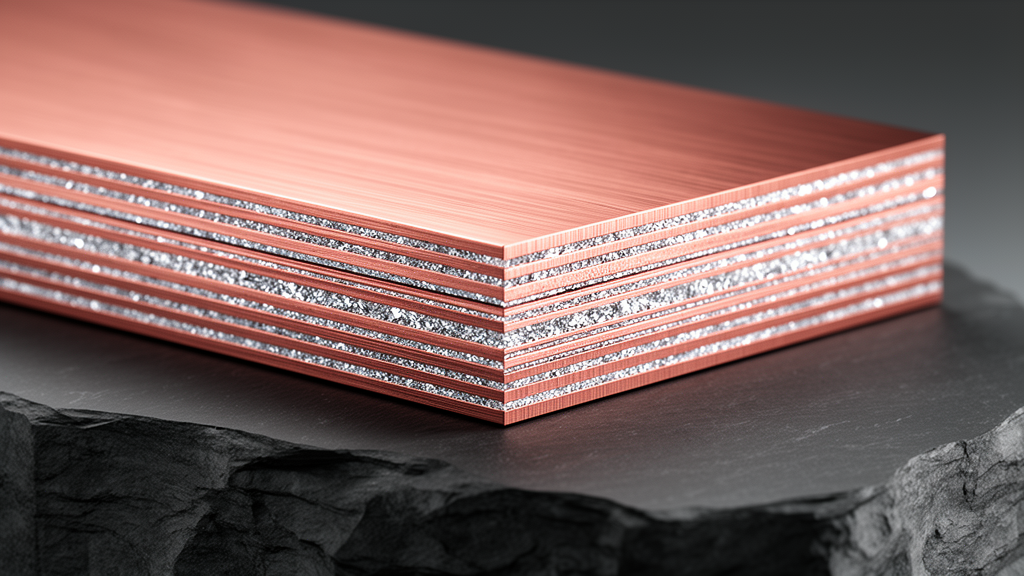
A lamellar heterogeneous Cu/Cu–Cr–Zr composite developed through advanced thermomechanical processing achieves a remarkable combination of mechanical strength, ductility, and electrical conductivity that exceeds the conventional property boundaries of traditional copper alloys. The composite architecture was produced through a sequence of metallurgical processing steps comprising diffusion bonding, solid-solution treatment, aging, rolling, and annealing. This systematic fabrication process yielded a defect-free metallurgical interface connecting the different metallic layers into an integrated structural material.

The resulting microstructure exhibits a distinctive alternating soft and hard architecture across the composite layers. Characterization shows that the pure copper constituents develop into nearly fully recrystallized soft layers, while the Cu–Cr–Zr alloy constituents form partially recrystallized hard layers. This contrasting structural arrangement across the defect-free metallurgical interface allows the laminated composite to combine the mechanical compliance of recrystallized copper with the structural resistance provided by the partially recrystallized alloy matrix.

In mechanical tensile and electrical conductivity testing, the fabricated heterogeneous composite recorded a tensile strength of 489 MPa alongside an elongation to failure of 19.6 percent. Concurrently, the material demonstrated an electrical conductivity of 83.7 percent of the International Annealed Copper Standard (IACS). This balance of properties is particularly significant because it lies beyond the well-known trade-off band that typically restricts conventional Cu–Cr–Zr alloys, in which increases in tensile strength normally compromise ductility or electrical transport efficiency.

The superior mechanical characteristics of the material are primarily attributed to hetero-deformation-induced (HDI) strengthening and the pronounced pile-up of geometrically necessary dislocations (GNDs) along the soft and hard interfaces. As deformation progresses, the strain incompatibility between the soft recrystallized copper layers and the harder alloy layers generates intense dislocation accumulation at the boundaries. This interface mechanism elevates the HDI stress to approximately 235 MPa, representing about 48 percent of the composite’s total tensile strength.

At the same time, the composite maintains high electrical conductivity through controlled precipitation behavior within the alloy layers. The concurrent growth of chromium-rich precipitates effectively removes solute chromium and zirconium atoms from the solid solution, thereby suppressing solute scattering of conducting electrons. Ultimately, this structural and chemical synergy demonstrates an effective metallurgical strategy for engineering copper-matrix composites that simultaneously satisfy demanding mechanical and functional conductivity requirements.

Subject of Research: Lamellar heterogeneous Cu/Cu–Cr–Zr composite microstructure and mechanical-electrical property synergy

Article Title: Lamellar heterogeneous Cu/Cu–Cr–Zr composite with enhanced strength–ductility–conductivity synergy

Article References: Chu, Z., Zhou, W., Liu, J., Wei, W., Wei, K., & Alexandrov, I. V. (2026). Lamellar heterogeneous Cu/Cu–Cr–Zr composite with enhanced strength–ductility–conductivity synergy. Journal of Materials Science. https://doi.org/10.1007/s10853-026-14077-w

Image Credits: AI Generated

DOI: 10.1007/s10853-026-14077-w

Keywords: Cu/Cu-Cr-Zr composite, lamellar microstructure, heterogeneous architecture, diffusion bonding, solid-solution treatment, aging, recrystallization, tensile strength, ductility, electrical conductivity, IACS, hetero-deformation-induced strengthening, geometrically necessary dislocations, Cr-rich precipitates, solute scattering, copper-matrix composites

News Source: Denise Maddox. (November 13, 2026). Layered Copper Composite Overcomes Conventional Strength, Ductility, and Conductivity Limits. Scienmag.


Tags: Agingcopper matrix compositesCr-rich precipitatesCu/Cu-Cr-Zr compositediffusion bondingductilityelectrical conductivitygeometrically necessary dislocationshetero-deformation-induced strengtheningheterogeneous architectureIACSlamellar microstructurerecrystallizationsolid-solution treatmentsolute scatteringtensile strength
Share12Tweet7Share2ShareShareShare1

Related Posts

Mapping COVID-19 Retweet Networks Reveals Structural Partisan Divides on Brazilian Social Media

Mapping COVID-19 Retweet Networks Reveals Structural Partisan Divides on Brazilian Social Media

November 14, 2026
Ensemble Feature Selection Achieves High Accuracy in Multiclass Thyroid Disease Classification

Ensemble Feature Selection Achieves High Accuracy in Multiclass Thyroid Disease Classification

November 14, 2026

Early Aortic Root Thrombus Resolves Conservatively in Two HeartMate 3 Cases

November 14, 2026

German Clean Power Reaches Record Output While Sector Coupling Faces Systemic Hurdles

November 14, 2026

POPULAR NEWS

  • Cleaved Fat Cadherin Intracellular Domain Enters the Nucleus to Regulate Gene Transcription

    Cleaved Fat Cadherin Intracellular Domain Enters the Nucleus to Regulate Gene Transcription

    29 shares
    Share 12 Tweet 7
  • Nigerian Nursing Students Show High Cancer Knowledge but Low Screening Uptake

    29 shares
    Share 12 Tweet 7
  • Ensemble Feature Selection Achieves High Accuracy in Multiclass Thyroid Disease Classification

    29 shares
    Share 12 Tweet 7
  • Central Adiposity Affects Children with Type 1 Diabetes Without Overweight or Obesity

    29 shares
    Share 12 Tweet 7

About

We bring you the latest biotechnology news from best research centers and universities around the world. Check our website.

Follow us

Recent News

Mapping COVID-19 Retweet Networks Reveals Structural Partisan Divides on Brazilian Social Media

TROP2-Targeted ADCs Improve Progression-Free Survival in First-Line Triple-Negative Breast Cancer

Cleaved Fat Cadherin Intracellular Domain Enters the Nucleus to Regulate Gene Transcription

Subscribe to Blog via Email

Enter your email address to subscribe to this blog and receive notifications of new posts by email.

Join 87 other subscribers
  • Contact Us

Bioengineer.org © Copyright 2023 All Rights Reserved.

Welcome Back!

Login to your account below

Forgotten Password?

Retrieve your password

Please enter your username or email address to reset your password.

Log In
No Result
View All Result
  • Homepages
    • Home Page 1
    • Home Page 2
  • News
  • National
  • Business
  • Health
  • Lifestyle
  • Science

Bioengineer.org © Copyright 2023 All Rights Reserved.