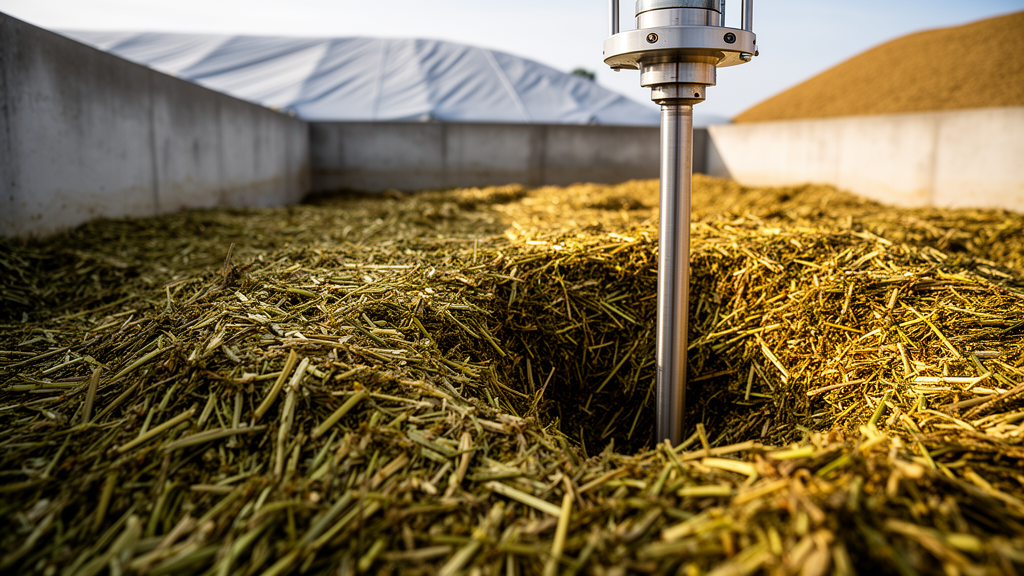
Prolonged anaerobic storage of alfalfa silage can maintain relatively stable fermentation acidity over several months without necessarily ensuring the equivalent preservation of all nutritional components, according to an investigation tracking silage fermentation over 180 days. Researchers monitored changes in fermentation characteristics, nutritional composition, microbial communities, and metabolite profiles to understand how microbial succession influences long-term alfalfa preservation.
The study evaluated fresh alfalfa alongside ensiled forage sampled at distinct intervals of 60, 120, and 180 days of anaerobic storage. To trace the biological and chemical progression of the forage over time, the team applied physicochemical measurements, microbial community sequencing, and metabolomic profiling across all designated sampling stages.
Compared with fresh alfalfa, all ensiled samples exhibited lower pH levels and reduced water-soluble carbohydrate concentrations, alongside higher concentrations of lactic acid. Meanwhile, crude protein and other nitrogen-containing components exhibited measurable changes across the storage timeline, accompanied by an increase in the NH₃-N/TN ratio between day 0 and day 180.
Microbial analysis identified clear shifts in bacterial community structure as ensiling progressed, transitioning from an early predominance of Weizmannia acidiproducens and Enterococcus mundtii at day 60 toward greater relative abundances of Rhabdanaerobium thermarum and Lactiplantibacillus plantarum at days 120 and 180. In contrast to these dynamic bacterial shifts, fungal alpha-diversity indices showed no significant differences among the sampled time points.
Metabolomic profiling further identified stage-specific variations in individual metabolites and metabolic pathways, particularly those associated with carbohydrate metabolism, amino acid metabolism, and redox regulation. Although both pH and lactic acid concentrations remained relatively stable between day 120 and day 180, nutritional and microbial alterations continued to occur, highlighting that persistent acidity alone does not prevent ongoing shifts in silage composition.
In their investigation, the authors aimed to elucidate the specific mechanisms through which microbial succession over distinct stages drives directed metabolomic transformations during the long-term ensiling process.
By comparing forage across the baseline fresh state and multiple post-harvest preservation periods, the scientists evaluated how biochemical shifts align with bacterial succession.
These late-stage microbial adjustments coincided with distinct shifts across nitrogen fractions and metabolic pathways, demonstrating that microbial activity continues even after organic acid concentrations stabilize. While lactic acid accumulation and reduced pH successfully established an acidic environment, the observed rise in the NH₃-N/TN ratio highlighted ongoing changes in nitrogenous compounds over the full 180-day storage timeframe.
Subject of Research: Microbial succession and metabolomic changes during long-term alfalfa ensiling
Article Title: Elucidating the mechanism by which stage-specific microbial succession drives directed metabolomic transformation to maintain long-term stable ensiling of alfalfa
Article References: Zhao, M., Bao, J., Sun, P., Sun, L., Liu, L., Liu, M., Ge, G., & Wang, Z. (2026). Elucidating the mechanism by which stage-specific microbial succession drives directed metabolomic transformation to maintain long-term stable ensiling of alfalfa. BMC Microbiology. https://doi.org/10.1186/s12866-026-05915-7
Image Credits: AI Generated
DOI: 10.1186/s12866-026-05915-7
Keywords: alfalfa silage, anaerobic storage, fermentation characteristics, microbial succession, Lactiplantibacillus plantarum, Rhabdanaerobium thermarum, Weizmannia acidiproducens, Enterococcus mundtii, metabolomics, lactic acid, silage pH, crude protein, water-soluble carbohydrates, nitrogen content, fungal diversity, amino acid metabolism
News Source: Daisy Hatcher. (November 13, 2026). Alfalfa Silage Acidity Remains Stable During Long Storage Despite Nutritional Changes. Scienmag.