SILVER SPRING, Md. – The Walter Reed Army Institute of Research (WRAIR) and collaborators at the Beth Israel Deaconess Medical Center and Harvard Medical School have completed a promising preclinical study of two Zika vaccine candidates that suggests that an effective human vaccine will be achievable. Findings from the study were published today in the journal Nature.
In the preclinical study, WRAIR and the Beth Israel Deaconess Medical Center tested two Zika virus vaccine candidates: a DNA vaccine developed at Harvard based on a Zika virus strain isolated in Brazil, and a purified inactivated virus vaccine developed at WRAIR based on a Zika virus strain isolated in Puerto Rico.
The study showed that single shots of either vaccine candidate protected mice against subsequent Zika challenge. Both candidates were found to be safe and elicited an antibody response to Zika virus that correlated with protection. Further work with the DNA vaccine demonstrated that protection was solely due to antibodies raised by vaccination.
WRAIR is moving forward with the purified inactivated virus (PIV) vaccine, called ZPIV, because it builds on "a type of vaccine that has been licensed before," said Col. Stephen Thomas, an infectious disease Army physician and a vaccinologist specializing in flaviviruses, and the WRAIR Zika program lead. "It's the same technology WRAIR has used to successfully develop other flavivirus vaccines." Researchers are trying to mitigate risk by avoiding unproven technologies that could cause a licensing delay, he noted.
Col. Nelson Michael, the WRAIR Zika program co-lead, said, "This critical first step has informed our ongoing work in non-human primates and gives us early confidence that development of a protective Zika virus vaccine for humans is feasible."
WRAIR scientists are moving rapidly to develop and test the ZPIV vaccine, and they plan to start human testing at their clinic in Silver Spring before the end of the year. Additional human trials are planned in the United States, supported by the National Institute of Allergy and Infectious Diseases (NIAID), through its Vaccine and Treatment Evaluation Units.
WRAIR has been researching flaviviruses, a family of viruses that includes Japanese encephalitis, dengue, West Nile and Zika viruses, for over half a century. "Our laboratory in Thailand has been conducting biosurveillance for Zika for the past three years, since we started to observe dengue-like illnesses in Thailand and the Philippines that were not dengue and did not test positive for other likely causes," said Thomas. "These efforts gave us a head-start for our vaccine development efforts."
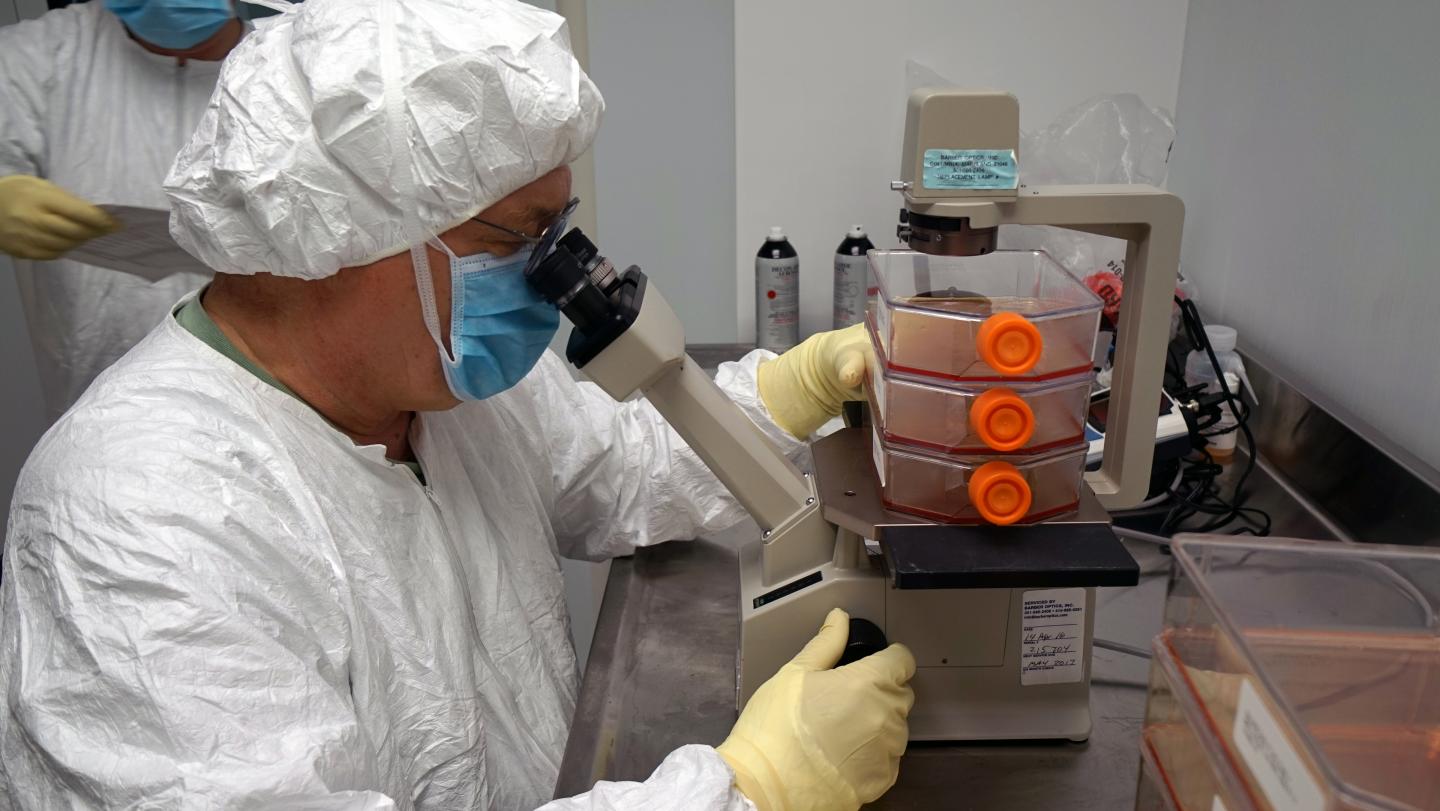
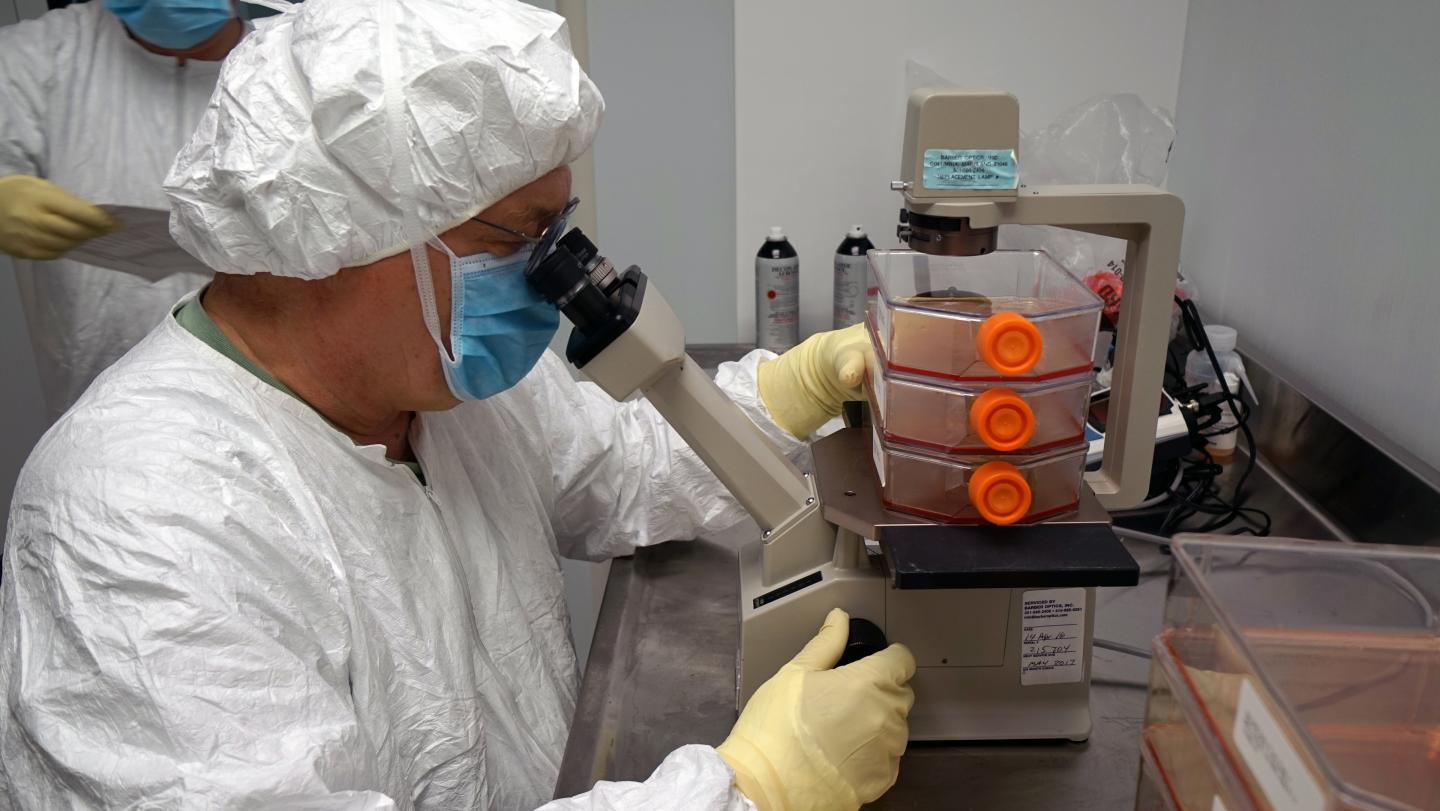
WRAIR also has in-house capabilities that have enabled them to quickly develop a vaccine candidate. The Pilot Bioproduction Facility headed by Dr. Kenneth H. Eckels, produced small batches of vaccine candidates that were used for the preclinical studies and is currently manufacturing a vaccine lot for use in initial human clinical studies.
Infectious diseases have long been a threat to U.S. Service Members, and the military has extensive expertise and capabilities to develop countermeasures. WRAIR is working on the vaccine in collaboration with other U.S. government agencies, including the NIAID, part of the National Institutes of Health, and the Biomedical Advanced Research and Development Authority, part of the Department of Health and Human Services. It is also exploring collaborations with pharmaceutical companies.
###
Support for this study was provided by the National Institutes of Health (AI095985, AI096040, AI00663 and AI124377), the Ragon Institute of MGH, MIT and Harvard, and the Sao Paulo Research Foundation.
About the Walter Reed Army Institute of Research
Headquartered in Silver Spring, Maryland, the Walter Reed Army Institute of Research (WRAIR) dates back to 1893 and is the largest, most diverse biomedical research laboratory in the Department of Defense. WRAIR provides unique research capabilities and innovative solutions to a range of Force Health and Readiness challenges currently facing U.S. Service Members, along with threats anticipated during future operations. With comprehensive research units in Africa, Asia, and the Caucasus region, WRAIR is comprised of two Centers of Excellence, the Center for Infectious Disease Research and the Center for Military Psychiatry and Neuroscience.
Media Contact
Debra Yourick
[email protected]
301-319-9471
@MHRPInfo
http://www.hivresearch.org/