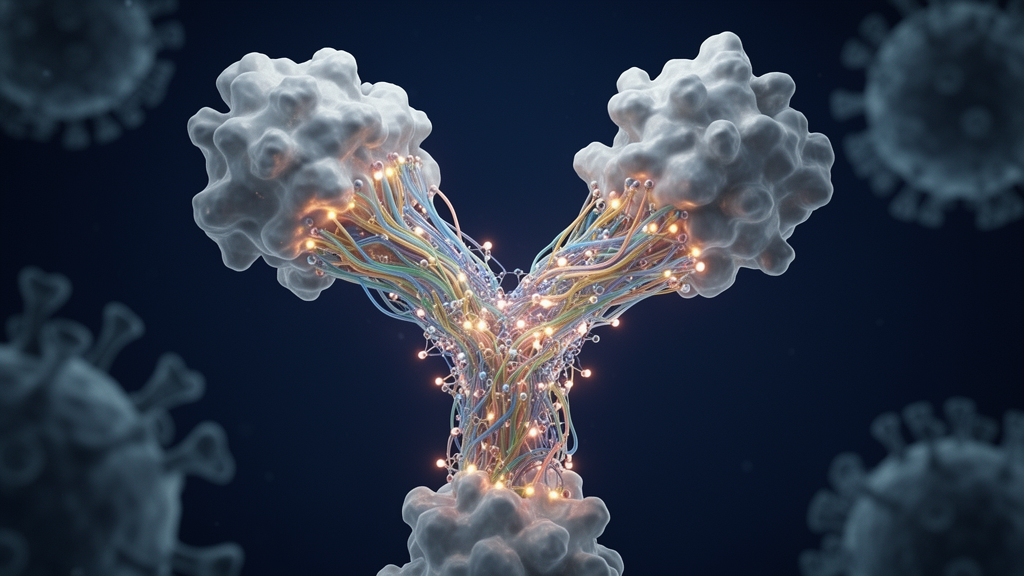
Researchers at the Indian Institute of Technology (BHU) Varanasi have developed a computational framework to redesign the monoclonal antibody Sotrovimab, aiming to restore its ability to recognize the SARS-CoV-2 Omicron BA.2 variant and a specific resistance mutation known as E340G. Published in Frontiers in Chemical Biology, the study represents a computational investigation rather than a clinical trial, utilizing integrated molecular modeling to identify antibody candidates with potentially enhanced binding affinity. The primary motivation for this work stems from the rapid evolution of SARS-CoV-2 variants, which have significantly compromised the efficacy of several existing monoclonal antibody therapies, including Sotrovimab, by disrupting the precise molecular recognition between the antibody and the viral spike protein.
Sotrovimab was originally designed to target a highly conserved epitope on the receptor-binding domain (RBD) of the SARS-CoV-2 spike protein. This specific binding site lies outside the receptor-binding motif and engages in critical interactions with the N343-linked glycan. Because this epitope is conserved across many variants, Sotrovimab initially demonstrated broader neutralizing activity compared to other antibodies. However, the emergence of the Omicron BA.2 sub-lineage introduced mutations that reduced Sotrovimab’s neutralizing potency, leading to its restricted clinical use and subsequent withdrawal in many regions due to diminished efficacy against circulating strains.
The study focused on two specific challenges: the Omicron BA.2 RBD and the E340G escape mutant. The E340G substitution is a treatment-emergent mutation observed in patients treated with Sotrovimab, which is strongly associated with increased viral escape and reduced therapeutic effectiveness. By targeting both the BA.2 background and the E340G mutation, the researchers aimed to create antibody candidates that could maintain binding affinity despite these resistance-associated changes. The team selected BA.2 as the background variant because it represents a significant stage in Omicron evolution with substantial changes in antibody recognition.
To address these challenges, the research team employed an integrated computational framework that combined structure-guided antibody engineering with artificial intelligence-assisted sequence design. The process began with the identification of destabilizing interface residues in the parental Sotrovimab structure using residue-level energetic profiling. This analysis revealed ten specific positions within the antibody that exhibited energetically unfavorable contributions to binding. These residues were then targeted for mutational redesign using a residue-scan approach in the Molecular Operating Environment (MOE) software, which systematically evaluated all possible amino acid substitutions to identify those that improved predicted binding affinity.
In parallel, the team utilized ProteinMPNN, an AI-driven sequence design framework, to generate alternative antibody sequences conditioned on the fixed backbone structure of Sotrovimab. This approach allowed for the efficient exploration of sequence space to identify variants with improved structural compatibility and binding properties. The top-ranked candidates from both the structure-guided and AI-based redesign strategies were selected for further evaluation. Two primary candidates emerged: Sotrovimab-design-1, derived from double-point mutational redesign, and Sotrovimab-design-2, generated through ProteinMPNN optimization.
The structural integrity of the redesigned antibodies was assessed using AlphaFold3 modeling and validated through standard stereochemical checks. The resulting models exhibited high confidence scores, indicating reliable global structural accuracy. To evaluate the dynamic behavior and binding energetics of these candidates, the researchers performed 500 nanosecond all-atom molecular dynamics (MD) simulations for five distinct complexes: the parental WT-RBD–WT-Sotrovimab complex, and the redesigned designs bound to both the wild-type BA.2 RBD and the E340G-mutant RBD. These simulations were conducted in a physiological environment, including solvation and ion incorporation, to mimic real-world binding conditions.
Analysis of the MD trajectories revealed that the redesigned candidates retained the characteristic immunoglobulin fold while exhibiting improved structural stability and compactness. Principal component analysis and free-energy landscape calculations indicated that the redesigned antibodies, particularly Sotrovimab-design-2, sampled more confined and energetically favorable conformational states compared to the parental antibody. This suggests enhanced dynamic compatibility with the target RBD. The RBD-E340G–Sotrovimab-design-1 complex displayed the highest conformational variability, whereas the design-2 complexes maintained more stable profiles, effectively mitigating the destabilization induced by the escape mutation.
Binding free-energy calculations using the MM/PBSA method provided quantitative estimates of the interaction strength between the antibody and the RBD. The parental WT-RBD–WT-Sotrovimab complex exhibited a binding free energy of −33.39 kcal/mol. In contrast, the redesigned variants displayed substantially more favorable binding energies. WT-RBD–Sotrovimab-design-1 had a binding free energy of −59.78 kcal/mol, while WT-RBD–Sotrovimab-design-2 reached −65.34 kcal/mol. Even in the presence of the E340G mutation, the redesigned antibodies maintained favorable predicted binding energetics, with values of −34.33 kcal/mol for design-1 and −58.08 kcal/mol for design-2. These results suggest that the redesign strategy improved the predicted binding energetics of the antibodies toward both the wild-type and mutant RBDs.
Residue-level energy decomposition and interaction network analyses further demonstrated improved energetic complementarity and intermolecular communication across the antibody–antigen interface. The redesigned antibodies formed enhanced hydrogen-bonding, hydrophobic, and van der Waals interactions with the RBD. Notably, the analyses highlighted increased engagement of the conserved N343-linked glycan, which potentially provides additional stabilization to the antibody-antigen complex. Sotrovimab-design-2 consistently exhibited the most favorable structural and energetic characteristics, with persistent hydrogen bonds and van der Waals contacts involving key residues such as Glu340, Asn343, and Lys356.
Despite these promising computational findings, the study emphasizes that experimental validation is required to confirm the binding affinity, specificity, expression, and neutralization activity of the redesigned antibodies. The authors note that the entropic contribution was not included in the binding free-energy calculations, meaning the reported values represent approximate energetic comparisons rather than complete thermodynamic profiles. Furthermore, the parental Sotrovimab–E340G RBD complex was not included in the simulations, limiting the direct assessment of the extent to which antibody redesign compensates for the E340G-associated effects.
The study concludes that integrating AI-guided sequence optimization with structure-based antibody engineering offers a viable pathway to improve antibody recognition of SARS-CoV-2 variants and resistance-associated mutations. This framework provides a computational foundation for developing mutation-resilient therapeutic antibodies against evolving viral pathogens. By combining multidimensional analyses of structural dynamics, energetic profiling, and glycan interactions, the research establishes a rational strategy for the subsequent experimental evaluation of these antibody variants, potentially guiding the development of next-generation therapies for future SARS-CoV-2 variants.
During the initial computational screening, the researchers identified specific residues along the antibody-antigen interface that contributed unfavorable energetics to binding. Using the INTAA interaction energy tool, the team determined that residue Ala24 produced the largest destabilizing penalty at 1.08 kilojoules per mole, followed by Ala97 at 0.81, Asp115 at 0.74, Asn116 at 0.70, and Phe114 at 0.61 kilojoules per mole. Mutational scanning of single residues revealed that position Ser31 served as a critical hotspot where substitutions markedly enhanced predicted affinity, led by Ser31Gly with an estimated binding affinity change of minus 72.11 kilocalories per mole, alongside favorable gains for Ser31Phe, Ser31Asn, Ser31Cys, and Ser31Tyr. In combinatorial double-mutant design, pairing D115N with Y116E produced the top predicted affinity improvement of minus 10.68 kilocalories per mole, surpassing other candidate pairs such as D115N/T118F and R98Q/Y101W to form the basis for Sotrovimab-design-1.
To construct Sotrovimab-design-2, the researchers applied ProteinMPNN across the ten destabilizing positions, evaluating 1,000 sequence designs with sequence recovery rates ranging between 0.36 and 0.55 and negative log-likelihood scores between 0.83 and 0.94. Structural models constructed with AlphaFold3 using the experimental BA.1 complex template confirmed high global stereochemical reliability, yielding predicted template modeling scores between 0.89 and 0.92, with over 91 percent of residues situated in favored Ramachandran regions and overall ERRAT quality factors exceeding 93 percent across all five complexes. Molecular dynamics simulations executed in GROMACS under the CHARMM36m force field accumulated 2.5 microseconds of total trajectory time across the five systems, with each complex equilibrated at 303.15 Kelvin and one bar of pressure in a neutralized aqueous environment containing potassium and chloride ions.
Trajectory analyses further highlighted quantitative differences in packing and stability across the engineered interfaces. Measurements of solvent-accessible surface area showed that WT-RBD bound to Sotrovimab-design-2 and its E340G counterpart achieved the lowest overall exposure at 205.27 and 205.71 square nanometers, compared to 222.16 square nanometers for the parental complex and 224.15 square nanometers for the mutant complex bound to design-1. Principal component covariance analysis demonstrated that Sotrovimab-design-2 dramatically constrained global collective motions, yielding trace values of 30.65 square nanometers for the wild-type and 24.49 square nanometers for the E340G mutant, whereas the mutant design-1 system showed pronounced structural flexibility with a trace value of 326.33 square nanometers.
Interfacial interaction profiling using Arpeggio demonstrated substantial expansion in non-covalent networks across both heavy and light chains following antibody redesign. Heavy-chain contacts expanded from 996 in the parental complex to 1,724 in wild-type design-1 and 1,577 in wild-type design-2, accompanied by an increase in direct hydrogen bonds from five to as many as 17. Dynamic cross-correlation matrix analysis indicated that while the parental complex exhibited limited interfacial coupling with a threshold of 0.462, the redesigned systems displayed broader cooperative communication networks. Secondary structure monitoring through DSSP confirmed that native folds remained intact, with total secondary structure content holding between 70.41 and 76.56 percent without unfolding across the 500-nanosecond simulations.
Subject of Research: Computational redesign of Sotrovimab for improved recognition of SARS-CoV-2 Omicron BA.2 and E340G mutant
Article Title: Structure-based and AI-guided redesign of Sotrovimab for enhanced recognition of SARS-CoV-2 BA.2 and the E340G escape mutant
Article References: Kumar, A., Yadav, A. J., & Padhi, A. K. (2026). Structure-based and AI-guided redesign of Sotrovimab for enhanced recognition of SARS-CoV-2 BA.2 and the E340G escape mutant. Frontiers in Chemical Biology, 5, Article 1981996. https://doi.org/10.3389/fchbi.2026.1981996
Image Credits: AI Generated
DOI: 10.3389/fchbi.2026.1981996
Keywords: Sotrovimab, SARS-CoV-2, Omicron BA.2, E340G mutation, Monoclonal antibodies, ProteinMPNN, Molecular dynamics, Antibody engineering, Receptor-binding domain, N343 glycan, Binding free energy, Viral escape, Computational biology, Immune evasion, Therapeutic antibodies, Structure-based design, AI protein design, Frontiers in Chemical Biology, Antigen recognition, Resistance mutation
News Source: Bethany Barker. (November 13, 2026). Computational Redesign Predicts Enhanced Sotrovimab Binding to Omicron BA.2. Scienmag.