Inflammatory licensing typically equips mesenchymal stem and stromal cells, known as MSCs, with potent immunosuppressive functions, yet the regulatory influence exerted by type 2 cytokines on this specialised behaviour has remained poorly understood. In a laboratory investigation published in Biology Direct, researchers revealed that interleukin-4 and interleukin-13 actively counteract the immunosuppressive activity normally stimulated by interferon-gamma and tumour necrosis factor-alpha. By exposing cells to these type 2 cytokines, the investigators mapped a distinct signaling pathway that selectively dampens the immunomodulatory potential of stromal cells.
Co-conditioning experiments demonstrated that interleukin-4 and interleukin-13 substantially reduced the capacity of MSCs to curb excessive immune reactions. In functional assays, treatment with these type 2 cytokines diminished the protection provided by MSCs against concanavalin A-induced acute liver injury in experimental models. Furthermore, the conditioned stromal cells exhibited a marked reduction in their capacity to suppress T-cell proliferation and were significantly less capable of curbing the inflammatory activation of macrophages.
At the biochemical and cellular level, these functional impairments correlated with a pronounced decrease in the expression of inducible nitric oxide synthase, an enzyme central to MSC-mediated immunomodulation, alongside reduced levels of immunoregulatory chemokines. The researchers also recorded a corresponding decline in nitrite accumulation in the cellular environment, confirming that the biochemical machinery required to arrest inflammatory immune cell activity had been substantially subdued by the cytokine co-conditioning.
The study determined that the transcription factor STAT6 serves as the primary mediator driving this regulatory shift. When the authors introduced a genetic deletion of Stat6, the disruptive effects triggered by interleukin-4 and interleukin-13 were markedly attenuated. Additionally, exposure to these type 2 cytokines curtailed the nuclear accumulation of STAT1 normally provoked by inflammatory cytokines, with this inhibitory action operating in a STAT6-associated manner to restrict downstream activation.
In vivo analyses highlighted that stromal STAT6 acts in a context-dependent manner across different disease states. Conditional genetic deletion of Stat6 in platelet-derived growth factor receptor alpha-expressing stromal cells worsened bleomycin-induced lung damage and accelerated early fibrotic tissue remodelling in test subjects. Together, these observations demonstrate that interleukin-4 and interleukin-13 signaling via STAT6 functions as a critical counter-regulatory mechanism that restricts MSC immunosuppressive licensing and dictates stromal tissue responses during active inflammation.
Subject of Research: Immunological reprogramming of mesenchymal stem cells by type 2 cytokines
Article Title: Type 2 cytokines reprogram MSCs through STAT6 to weaken their immunosuppressive potency
Article References: Li, Y., Cao, L., Wang, T., Wang, Y., Liu, Y., Bu, W., Shao, C., Li, P., Melino, G., Shi, Y., & Fang, J. (2026). Type 2 cytokines reprogram MSCs through STAT6 to weaken their immunosuppressive potency. Biology Direct. https://doi.org/10.1186/s13062-026-01069-8
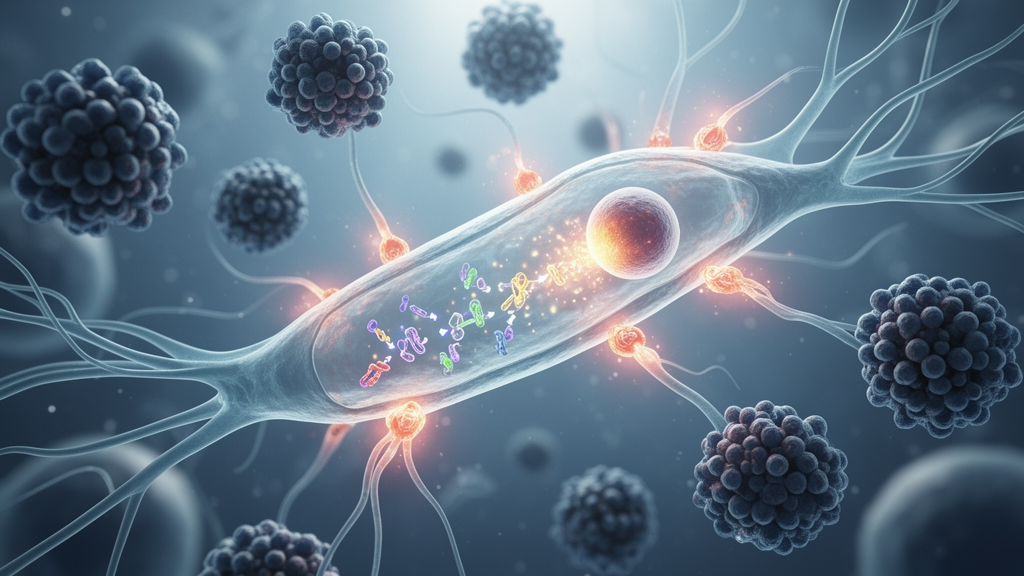
Image Credits: AI Generated
DOI: 10.1186/s13062-026-01069-8
Keywords: mesenchymal stem cells, type 2 cytokines, STAT6, interleukin-4, interleukin-13, immunosuppression, inflammatory licensing, inducible nitric oxide synthase, macrophage activation, T-cell proliferation, STAT1, acute liver injury, lung injury, fibrotic remodelling, PDGFRalpha stromal cells, Biology Direct
News Source: Drew Townsend. (November 13, 2026). Type 2 Cytokines Weaken Mesenchymal Stem Cell Immunosuppression Through STAT6 Signalling. Scienmag.