• HOME
  • NEWS
  • EXPLORE
    • CAREER
      • Companies
      • Jobs
    • EVENTS
    • iGEM
      • News
      • Team
    • PHOTOS
    • VIDEO
    • WIKI
  • BLOG
  • COMMUNITY
    • FACEBOOK
    • INSTAGRAM
    • TWITTER
Thursday, November 19, 2026
BIOENGINEER.ORG
No Result
View All Result
  • Login
  • HOME
  • NEWS
  • EXPLORE
    • CAREER
      • Companies
      • Jobs
        • Lecturer
        • PhD Studentship
        • Postdoc
        • Research Assistant
    • EVENTS
    • iGEM
      • News
      • Team
    • PHOTOS
    • VIDEO
    • WIKI
  • BLOG
  • COMMUNITY
    • FACEBOOK
    • INSTAGRAM
    • TWITTER
No Result
View All Result
Bioengineer.org
No Result
View All Result
Home NEWS Science News Biology

Type 2 Cytokines Weaken Mesenchymal Stem Cell Immunosuppression Through STAT6 Signalling

by
November 13, 2026
in Biology
Reading Time: 2 mins read
0
Type 2 Cytokines Weaken Mesenchymal Stem Cell Immunosuppression Through STAT6 Signalling

Type 2 Cytokines Weaken Mesenchymal Stem Cell Immunosuppression Through STAT6 Signalling

Share on FacebookShare on TwitterShare on LinkedinShare on RedditShare on Telegram

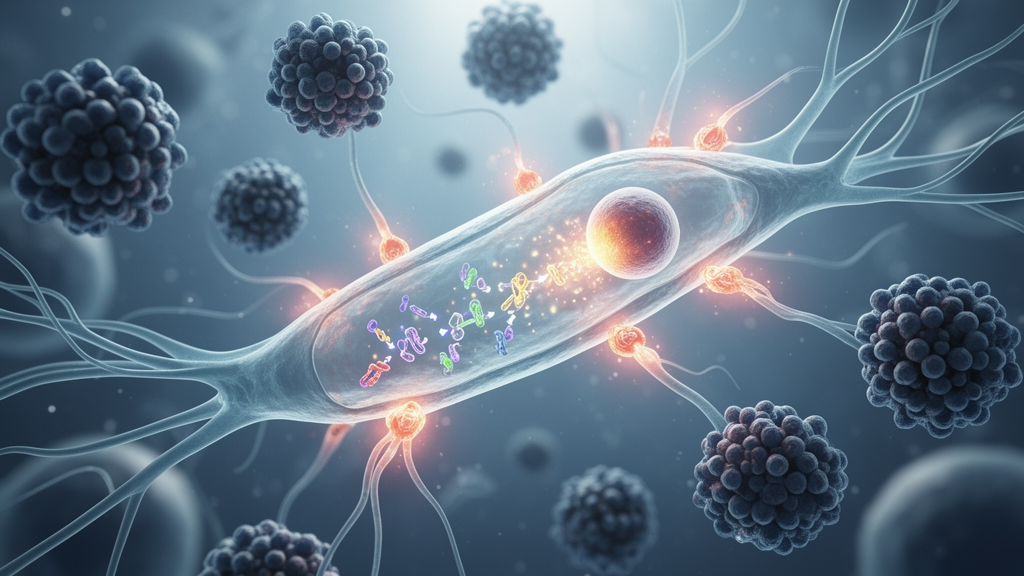
Inflammatory licensing typically equips mesenchymal stem and stromal cells, known as MSCs, with potent immunosuppressive functions, yet the regulatory influence exerted by type 2 cytokines on this specialised behaviour has remained poorly understood. In a laboratory investigation published in Biology Direct, researchers revealed that interleukin-4 and interleukin-13 actively counteract the immunosuppressive activity normally stimulated by interferon-gamma and tumour necrosis factor-alpha. By exposing cells to these type 2 cytokines, the investigators mapped a distinct signaling pathway that selectively dampens the immunomodulatory potential of stromal cells.

Co-conditioning experiments demonstrated that interleukin-4 and interleukin-13 substantially reduced the capacity of MSCs to curb excessive immune reactions. In functional assays, treatment with these type 2 cytokines diminished the protection provided by MSCs against concanavalin A-induced acute liver injury in experimental models. Furthermore, the conditioned stromal cells exhibited a marked reduction in their capacity to suppress T-cell proliferation and were significantly less capable of curbing the inflammatory activation of macrophages.

At the biochemical and cellular level, these functional impairments correlated with a pronounced decrease in the expression of inducible nitric oxide synthase, an enzyme central to MSC-mediated immunomodulation, alongside reduced levels of immunoregulatory chemokines. The researchers also recorded a corresponding decline in nitrite accumulation in the cellular environment, confirming that the biochemical machinery required to arrest inflammatory immune cell activity had been substantially subdued by the cytokine co-conditioning.

The study determined that the transcription factor STAT6 serves as the primary mediator driving this regulatory shift. When the authors introduced a genetic deletion of Stat6, the disruptive effects triggered by interleukin-4 and interleukin-13 were markedly attenuated. Additionally, exposure to these type 2 cytokines curtailed the nuclear accumulation of STAT1 normally provoked by inflammatory cytokines, with this inhibitory action operating in a STAT6-associated manner to restrict downstream activation.

In vivo analyses highlighted that stromal STAT6 acts in a context-dependent manner across different disease states. Conditional genetic deletion of Stat6 in platelet-derived growth factor receptor alpha-expressing stromal cells worsened bleomycin-induced lung damage and accelerated early fibrotic tissue remodelling in test subjects. Together, these observations demonstrate that interleukin-4 and interleukin-13 signaling via STAT6 functions as a critical counter-regulatory mechanism that restricts MSC immunosuppressive licensing and dictates stromal tissue responses during active inflammation.

Subject of Research: Immunological reprogramming of mesenchymal stem cells by type 2 cytokines

Article Title: Type 2 cytokines reprogram MSCs through STAT6 to weaken their immunosuppressive potency

Article References: Li, Y., Cao, L., Wang, T., Wang, Y., Liu, Y., Bu, W., Shao, C., Li, P., Melino, G., Shi, Y., & Fang, J. (2026). Type 2 cytokines reprogram MSCs through STAT6 to weaken their immunosuppressive potency. Biology Direct. https://doi.org/10.1186/s13062-026-01069-8

Image Credits: AI Generated

DOI: 10.1186/s13062-026-01069-8

Keywords: mesenchymal stem cells, type 2 cytokines, STAT6, interleukin-4, interleukin-13, immunosuppression, inflammatory licensing, inducible nitric oxide synthase, macrophage activation, T-cell proliferation, STAT1, acute liver injury, lung injury, fibrotic remodelling, PDGFRalpha stromal cells, Biology Direct

News Source: Drew Townsend. (November 13, 2026). Type 2 Cytokines Weaken Mesenchymal Stem Cell Immunosuppression Through STAT6 Signalling. Scienmag.

Tags: acute liver injuryBiology Directfibrotic remodellingimmunosuppressioninducible nitric oxide synthaseinflammatory licensinginterleukin-13interleukin-4lung injurymacrophage activationmesenchymal stem cellsPDGFRalpha stromal cellsSTAT1STAT6T cell proliferationtype 2 cytokines
Share12Tweet7Share2ShareShareShare1

Related Posts

Low HLA-A Expression and NK Cells Linked to Pediatric HIV Remission

Low HLA-A Expression and NK Cells Linked to Pediatric HIV Remission

November 19, 2026
Decades-Long Field Survey Unveils Plant Diversity Powering China's Traditional Zongzi Culture

Decades-Long Field Survey Unveils Plant Diversity Powering China’s Traditional Zongzi Culture

November 19, 2026

Engineered Escherichia coli Yields Eight Grams Per Liter of Fatty Alcohols

November 19, 2026

Targeting GPCR-Gαq Signaling Overcomes Trametinib Resistance in BRAF-Mutant Melanoma

November 19, 2026

POPULAR NEWS

  • Somatic Symptom Burden in Oral Health Clinic Patients Shifted Modestly Across Pandemic

    Somatic Symptom Burden in Oral Health Clinic Patients Shifted Modestly Across Pandemic

    29 shares
    Share 12 Tweet 7
  • Multicenter ICU Study Identifies Nurse Knowledge Gaps in Pneumonia Prevention

    29 shares
    Share 12 Tweet 7
  • Study Finds One-Third of Ethiopian Neuropsychiatric Patients Exhibit Harmful Alcohol Use

    29 shares
    Share 12 Tweet 7
  • Low-Dose Epidural Analgesia Modestly Lengthens Labor Stages in Low-Risk Women

    29 shares
    Share 12 Tweet 7

About

We bring you the latest biotechnology news from best research centers and universities around the world. Check our website.

Follow us

Recent News

Study Links Specific Dietary Patterns to Atherosclerotic Cardiovascular Disease in Upper Egypt

PCR Testing Shows Malaria Prevalence Rose in Remote Peruvian Amazon Communities

Low HLA-A Expression and NK Cells Linked to Pediatric HIV Remission

Subscribe to Blog via Email

Enter your email address to subscribe to this blog and receive notifications of new posts by email.

Join 89 other subscribers
  • Contact Us

Bioengineer.org © Copyright 2023 All Rights Reserved.

Welcome Back!

Login to your account below

Forgotten Password?

Retrieve your password

Please enter your username or email address to reset your password.

Log In
No Result
View All Result
  • Homepages
    • Home Page 1
    • Home Page 2
  • News
  • National
  • Business
  • Health
  • Lifestyle
  • Science

Bioengineer.org © Copyright 2023 All Rights Reserved.