Credit: Northwestern University
CHICAGO — Daily exposure to bright white light at midday significantly decreased symptoms of depression and increased functioning in people with bipolar disorder, a recent Northwestern Medicine study found.
Previous studies found morning bright light therapy reduced symptoms of depression in patients with Seasonal Affective Disorder (SAD.). But patients with bipolar disorder can experience side effects such as mania or mixed symptoms from this type of depression treatment. This study implemented a novel midday light therapy intervention in an effort to provide relief for bipolar depression and avoid those side effects.
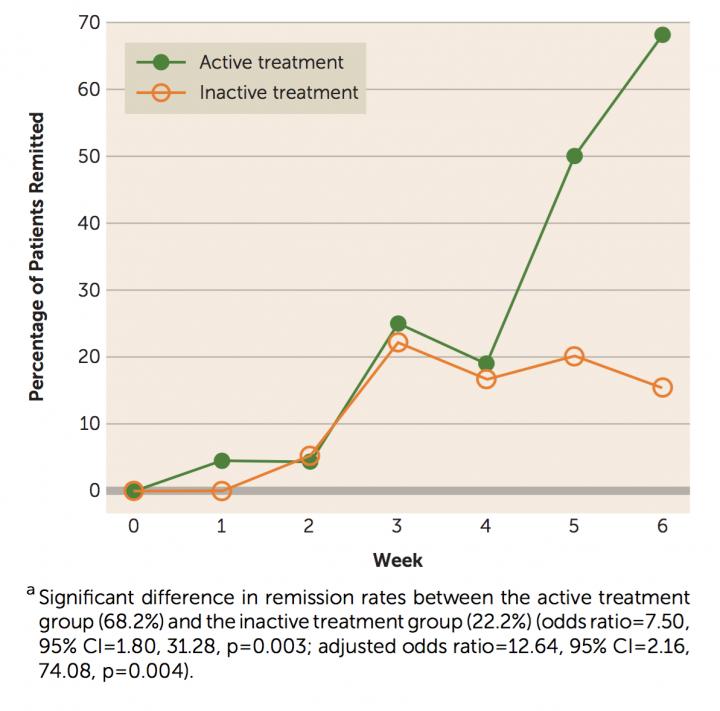
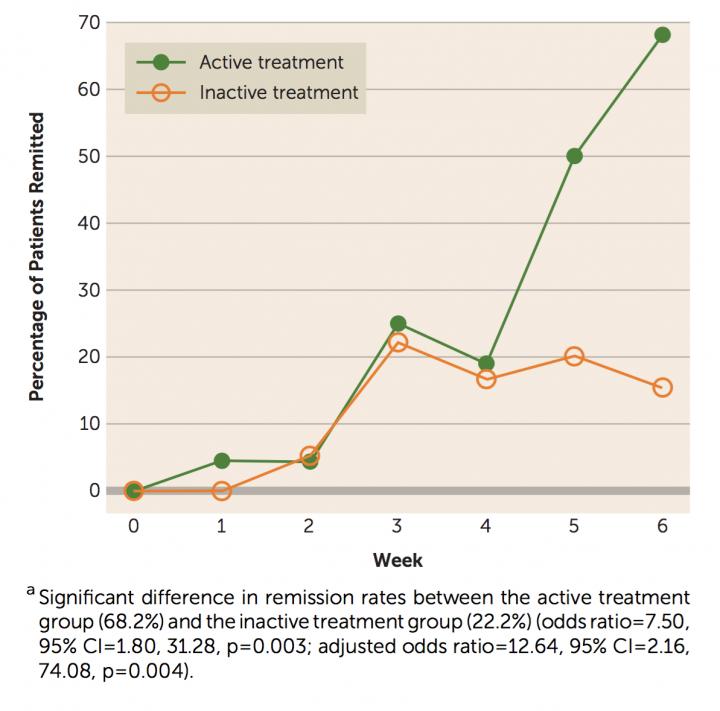
Compared to dim placebo light, study particpants assigned to bright white light between noon and 2:30 p.m. for six weeks experienced a significantly higher remission rate (minimal depression and return to normal functioning). More than 68 percent of patients who received midday bright light achieved a normal level of mood, compared to 22.2 percent of patients who received the placebo light.
The group receiving bright light therapy also had a much lower average depression score of 9.2 compared to 14.9 for the placebo group and significantly higher functioning, meaning they could go back to work or complete tasks around the house they hadn't been able to finish prior to treatment.
The study was published Oct. 3 in the American Journal of Psychiatry.
"Effective treatments for bipolar depression are very limited," said lead author Dr. Dorothy Sit, associate professor of psychiatry and behavioral sciences at Northwestern University Feinberg School of Medicine. "This gives us a new treatment option for bipolar patients that we know gets us a robust response within four to six weeks."
Patients also experienced minimal side effects from the therapy. No one experienced mania or hypomania, a condition that includes a period of elation, euphoria, irritability, agitation, rapid speech, racing thoughts, a lack of focus and risk-taking behaviors.
"As clinicians, we need to find treatments that avoid these side effects and allow for a nice, stable response. Treatment with bright light at midday can provide this," said Sit, also a Northwestern Medicine psychiatrist.
The study included 46 participants who had at least moderate depression, bipolar disorder and who were on a mood stabilizer. Patients were randomly assigned to either a 7,000 lux bright white light or a 50 lux placebo light. The light therapy patients were instructed to place the light box about one foot from their face for 15-minute sessions to start. Every week, they increased their exposure to the light therapy by 15-minute increments until they reached a dose of 60 minutes per day or experienced a significant change in their mood.
"By starting at a lower dose and slowly marching that dose up over time, we were able to adjust for tolerability and make the treatment suitable for most patients," Sit said.
Sit and her colleagues also observed a noticeable effect of bright light therapy by four weeks, which is similar to other studies that test light therapy for non-seasonal depression and depression during pregnancy.
Light therapy has conventionally been tested using morning light at awakening because previous research has suggested that morning light helps reset circadian rhythms and can be helpful in the treatment of SAD, Sit said. However, the mechanism of response is unclear in bipolar disorder. To understand the possible effects of midday bright light on circadian rhythms in patients with depression and bipolar disorder, Sit and colleagues are planning new studies to investigate.
###
The study was funded by the National Institute of Mental Health grant number K23 MH082114 of the National Institutes of Health. The study was conducted at the University of Pittsburgh Medical Center in Pittsburgh, Pennsylvania. Co-authors include Amy Yang and Jody D. Ciolino in the department of preventive medicine-biostatistics division at Feinberg, and senior author Dr. Katherine Wisner, the Norman and Helen Asher Professor of Psychiatry and Behavioral Sciences and Obstetrics and Gynecology at Feinberg.
Media Contact
Kristin Samuelson
[email protected]
847-491-4888
@northwesternu
http://www.northwestern.edu
Original Source
https://news.northwestern.edu/stories/2017/october/bright-light-therapy-at-midday-helped-patients-with-bipolar-disorder/ http://dx.doi.org/10.1176/appi.ajp.2017.16101200