Researchers at West China Hospital of Sichuan University have developed molecular filler-enhanced DNA nanomachines capable of simultaneously quantifying two lung cancer mutations in circulating tumor DNA without requiring enzymatic reactions, target labeling, or DNA amplification. Described in an experimental study published in Science Bulletin, the electrochemical sensing platform translates the recognition of specific cancer-associated genetic sequences into distinct electrical signals. By bypassing conventional nucleic acid amplification steps, the technique offers a streamlined workflow designed to detect scarce tumor-derived fragments within blood plasma.
Circulating tumor DNA analysis through liquid biopsy captures DNA fragments shed by tumor cells into the bloodstream, supplying real-time and non-invasive molecular information for early diagnosis, therapeutic monitoring, and individualized patient care. However, because tumor-derived genetic material is typically heavily diluted by larger quantities of noncancerous background DNA, reliable detection remains technically challenging. The newly engineered platform was created to complement existing liquid biopsy strategies by improving analytical performance while reducing workflow complexity.
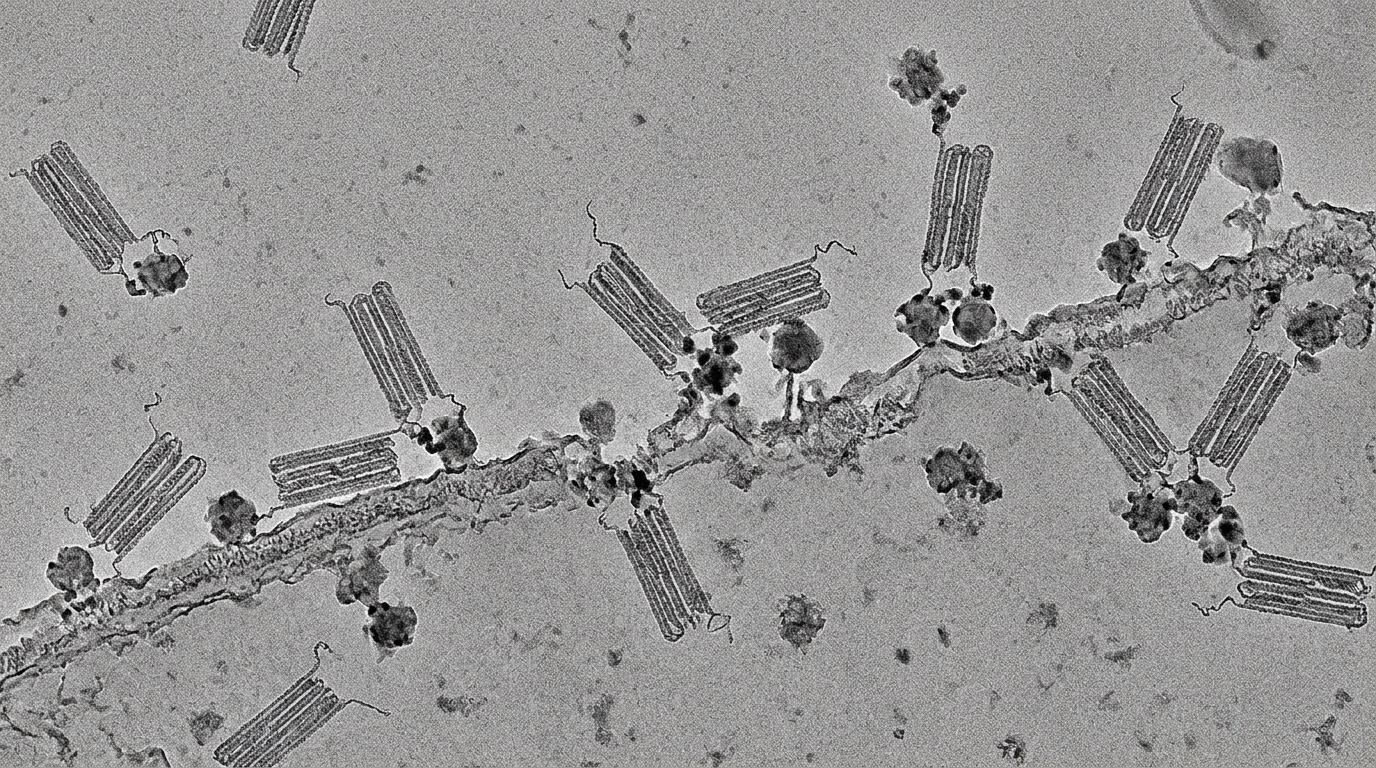
The sensing system relies on nanoscale structures composed of self-assembling DNA strands linked by silver (Ag+) or mercury (Hg2+) ions. These metal ions function as electrical reporters that generate distinguishable signal readouts. When a complementary DNA target binds to the nanomachine, the structure disassembles and releases the corresponding ions into solution, enabling quantitative electrical measurement of the target sequences.
To overcome nonspecific ion leakage and high background noise, the research team examined several molecular fillers with differing DNA-interaction characteristics. Incorporating methylene blue into the nanomachines stabilized the assembly and retained the reporter ions, yielding a 100-fold enhancement in analytical sensitivity and a 2.5-fold improvement in the signal-to-noise ratio compared with unfilled control systems. The optimized assays attained detection limits of 5.2 attomoles per liter for the EGFR L858R mutation and 6.0 attomoles per liter for the EGFR T790M mutation, requiring only plasma dilution and heating rather than standard nucleic acid extraction or enrichment prior to a 60-minute incubation period.
The investigators validated the platform using clinical plasma samples from 66 treatment-naive patients diagnosed with non-metastatic non-small cell lung cancer, evaluating performance against quantitative PCR as the reference standard. For both EGFR assays, the nanomachine platform achieved an area under the receiver operating characteristic curve of 0.96 in distinguishing qPCR-positive from qPCR-negative specimens.
When differentiating cancer patients from 30 healthy control individuals, assay performance aligned with the biological distribution and prevalence of the respective mutations. Signals corresponding to the EGFR L858R mutation demonstrated 54.5 percent sensitivity and 100 percent specificity. Conversely, the EGFR T790M assay showed limited discrimination against healthy controls, with an area under the curve of 0.52. The authors noted that this result reflects the low pre-treatment prevalence of T790M, which typically emerges as an acquired resistance mechanism following EGFR-targeted therapy.
To evaluate adaptability beyond lung cancer, the team reconfigured the DNA nanomachines to target the BRAF V600E mutation, a genetic alteration frequently associated with papillary thyroid cancer. In tests across 38 patient plasma samples, the adapted electrochemical platform achieved 94.7 percent agreement with ARMS-qPCR and demonstrated an area under the receiver operating characteristic curve of 0.97 for mutation identification.
Exploratory analyses also revealed observable differences in mutation-associated signals between metastatic and non-metastatic patient groups, pointing to future applications in tracking disease progression. The authors emphasized that further validation requires larger, longitudinal studies that account for clinical variables such as total tumor burden, stage of disease, and prior treatment history. Subsequent development will center on expanding the panel of detectable mutations, optimizing reporter ions for higher-order multiplexing, and coupling the chemistry with compact electrochemical devices for point-of-care clinical management.
During platform development, the researchers systematically investigated multiple molecular fillers with distinct DNA-binding characteristics to optimize the nanomachines. They examined how different filler candidates influenced molecular loading, assembly stability, and reporter retention within the DNA framework. Unfilled structures can suffer from nonspecific leakage of silver and mercury reporter ions, raising background electrical interference. By identifying methylene blue as an effective stabilizing agent that suppresses unintended ion loss, the team achieved the structural stability required to measure minute electrical signals when targets bind.
The clinical findings also highlight how testing context shapes the interpretation of liquid biopsy assays. Because the primary evaluation enrolled treatment-naive patients with non-metastatic tumors, the limited discrimination of the T790M assay reflected the baseline biology of non-small cell lung cancer, where this mutation rarely appears before therapy. Consequently, the investigators noted that confirming the platform’s utility for resistance monitoring will require larger cohorts receiving EGFR-targeted treatment. In those clinical settings, longitudinal tracking could further establish its capacity for detecting emergent drug resistance.
Advancing this homogeneous strategy toward wider adoption also requires addressing key clinical and technical factors. While initial analyses detected signal differences between metastatic and non-metastatic cases, verifying these findings requires larger longitudinal studies that account for tumor burden, disease stage, and treatment history. Technically, future work will center on expanding detectable cancer mutations, optimizing nanostructure designs, and refining multi-marker reporter systems for higher multiplexing with compact electrochemical devices.
Subject of Research: Electrochemical DNA nanomachines for amplification-free multiplex circulating tumor DNA detection
Article Title: Molecular filler-enhanced DNA nanomachines enable one-step multiplex ctDNA quantification for mutation analysis and metastasis-associated assessment
Article References: Molecular filler-enhanced DNA nanomachines enable one-step multiplex ctDNA quantification for mutation analysis and metastasis-associated assessment. Original publication (Bibliographic details unavailable.)
Image Credits: AI Generated
DOI: Not provided
Keywords: circulating tumor DNA, liquid biopsy, DNA nanomachines, electrochemical biosensors, EGFR L858R, EGFR T790M, non-small cell lung cancer, molecular fillers, methylene blue, BRAF V600E, papillary thyroid cancer, amplification-free detection, metal ion reporters, West China Hospital, Sichuan University, Science Bulletin, cancer biomarker quantification, multiplex mutation analysis
News Source: Nathaniel Bowman. (November 13, 2026). DNA Nanomachines Detect Lung Cancer Mutations Without Target Amplification. Scienmag.