Published in the journal Geothermal Energy, the study outlines a participatory monitoring approach where citizens use plug-and-play seismometers to actively contribute to seismic data collection. The authors argue that this combined socio-geophysical method could enhance transparency, provide non-experts with first-hand experiences, and foster informed decision-making regarding deep geothermal energy projects. The framework is grounded in the DeepStor research infrastructure project, a geothermal research initiative planned at a KIT campus in Germany to investigate heat storage in depleted oil reservoirs.
The central premise of the study is that induced seismicity remains a primary concern for citizens, significantly influencing the social acceptability of geothermal energy. While deep geothermal technologies offer substantial potential for the energy transition, they are often met with local skepticism and opposition. The authors note that subjective risk perception involves intuitive judgments and a complex interplay between emotions and rational thought, which often diverges from objective, data-based risk analyses conducted by experts. Less familiar technologies, such as deep geothermal, tend to be associated with higher levels of perceived risk, particularly when personal experience with the technology is lacking. This gap between expert assessment and public perception can lead to social amplification of risk, jeopardizing project implementation.
To illustrate the interplay between seismological observations and social responses, the authors describe an incident at the KIT Campus North where three accidental explosions occurred during laboratory experiments in November 2021. These explosions, unrelated to geothermal activities, generated ground vibrations comparable to seismic events. The largest explosion exceeded the preventive alert threshold defined for the DeepStor project by a factor of four. Despite the significant vibration levels, media coverage was limited and factual, indicating that the public did not perceive the event as dangerous. This reaction highlights the role of context, reference knowledge, and trust in shaping risk perception, as the source of the vibrations was well-understood and traceable.
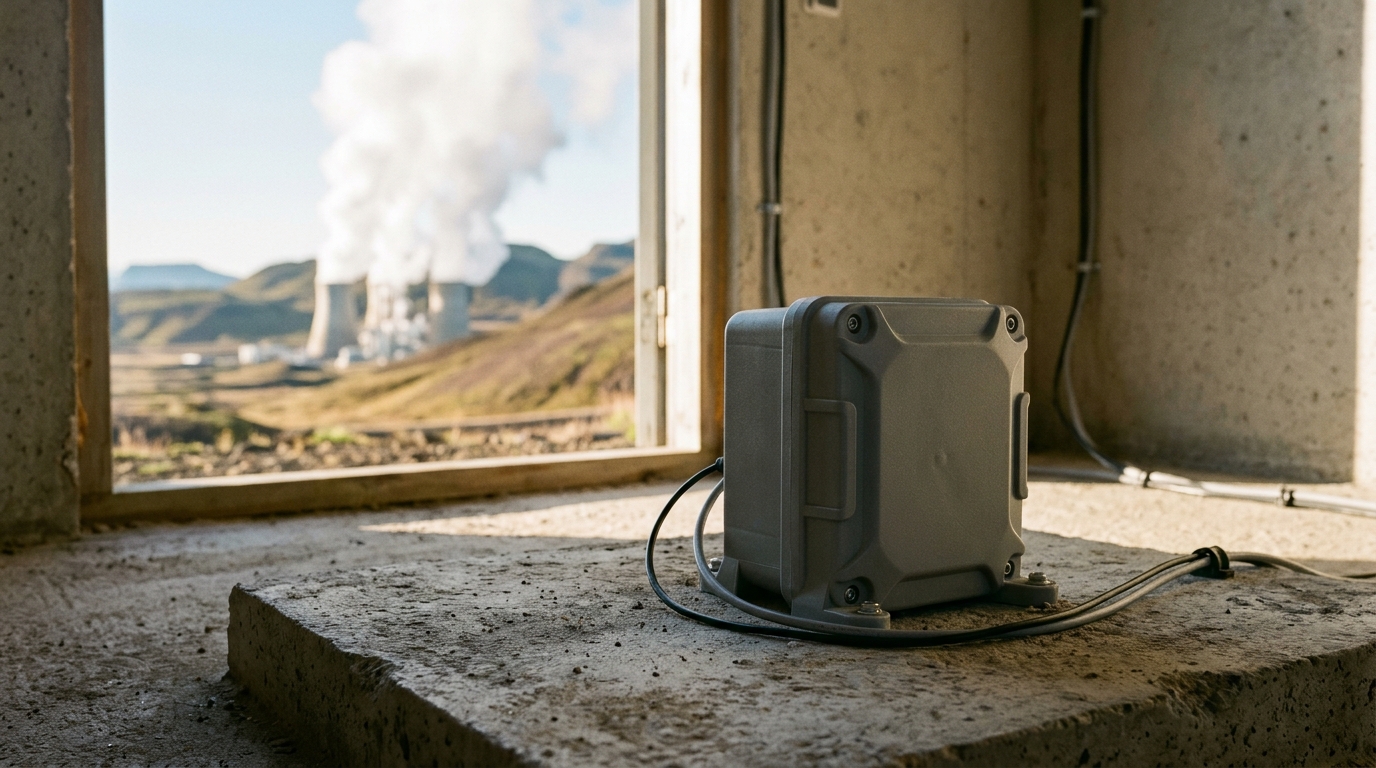
The proposed participatory monitoring framework utilizes low-cost, user-friendly seismometers, such as Raspberry Shake sensors, to densify the seismic network. These plug-and-play devices allow citizens to host sensors in private and public spaces, including homes and schools. By involving citizens beyond mere data collection, the project aims to move from contributory citizen science to collaborative or co-created research. Participants would engage in workshops, jointly interpret measurements, and contribute to the dissemination of results. This deeper engagement is intended to build trust between researchers and the community, providing citizens with reference knowledge and experience related to geothermal energy technologies and seismology.
The implementation of this approach is planned in two phases within the DeepStor project. Phase 1, which began during the preparation phase, involves distributing Raspberry Shake sensors to KIT employees to test technical requirements and participant recruitment. Phase 2 is planned to extend the network to surrounding communities within a 4 km radius of the drilling site. The goal is to create a dense network that enhances spatial resolution and system redundancy. The authors note that while the final monitoring system will rely on high-grade professional sensors, the citizen science network could serve as a valuable complementary asset, offering early-stage insights and improving the detection of small-magnitude seismic events.
From a technical perspective, the study evaluates the sensitivity of the Raspberry Shake network based on ambient seismic wavefield measurements. The analysis focused on the 5–40 Hz frequency range, which is critical for detecting small-magnitude seismic events at reservoir depths. The results indicate that the theoretical detection threshold at the DeepStor site reaches down to a moment magnitude of Mw = 0.7, despite the noisy recording environment on the campus. This demonstrates the potential of low-cost sensors to contribute to reliable seismic monitoring when integrated into a hybrid network with professional equipment. The increased measurement density improves the evidence base for research projects and supports more balanced risk management strategies.
The social scientific dimension of the framework draws on acceptance models for renewable energy technologies, including the theory of planned behavior and the norm activation model. These models suggest that acceptance is a complex, dynamic construct influenced by cognitive, affective, and contextual factors. The authors propose that participatory monitoring could impact risk perception and acceptability along three axes of citizen science: research itself, effects on participants, and civic participation. By engaging citizens in the research process, the project aims to enhance scientific literacy, increase the sense of technical self-efficacy, and promote a more nuanced understanding of seismic risks. This approach seeks to shift the focus from correcting public misconceptions to fostering a legitimate interpretation framework through dialogue and shared learning.
However, the authors acknowledge the limitations and challenges of this approach. They note that constant exposure to seismic data and background noise could potentially increase risk perception rather than lower it. Therefore, the project includes accompanying social scientific research to evaluate the effects of participation on knowledge, attitudes, and risk perception. The evaluation will use formative methods to adjust the project during implementation and assess its broader impacts on societal transformation and sustainability goals. The study emphasizes the importance of transparency and ensuring that citizens are not treated as mere objects of science but as active contributors to the research process.
The framework also addresses the need for dynamic risk governance frameworks that accommodate the complexity of geothermal projects. Traffic Light Systems (TLS) are currently used to manage seismic risks, using decision variables such as earthquake magnitude and peak ground velocity to trigger operational decisions. The authors suggest that participatory monitoring could complement these systems by providing a more robust and trustworthy evidence base. By involving stakeholders in the monitoring process, the project aims to improve the quality of risk management and enhance the social legitimacy of geothermal technologies. This collaborative approach could help bridge the gap between scientific risk analysis and public risk perception, leading to more sustainable energy transitions.
The study concludes that participatory seismic monitoring has the potential to empower laypeople to develop an informed perspective on seismic risks associated with geothermal projects. By gaining experience in evaluating ground vibration values and performing a control function, citizens may counteract the amplification of risk. The interdisciplinary linking of social scientific concepts with geophysical approaches supports the development of socially robust strategies in deep geothermal energy. The next step is to carry out citizen science demonstration projects based on this concept and evaluate them through social scientific research to determine their effectiveness in improving risk perception and technology acceptability.
This research contributes to the ongoing discourse on sustainable energy transition, risk management, and governance. It highlights the role of public participation in geothermal energy development and offers a practical framework for integrating citizen science into geophysical monitoring. The authors recommend that such participatory approaches be implemented at the research stage of pilot projects to strengthen the legitimacy and societal relevance of research activities. By merging the techno-scientific perspective with the subjective perspective of citizens, the framework aims to create more robust risk management strategies that do not merely view the public as a source of risk but as a partner in the energy transition.
Beyond general risk perception, the study details the specific technical thresholds governing ground motions under German standards. According to the DIN 4150-3 norm, a peak ground velocity of 3 mm/s in the 1 to 10 Hz range defines the threshold for damaging structural activity, corresponding to a moment magnitude of Mw = 2.1 under DeepStor reservoir conditions. Human perception begins much lower, at roughly 0.3 mm/s or Mw = 1.0. To protect sensitive campus research facilities, DeepStor established a harmlessness baseline of 0.05 mm/s and an operational preventive alert trigger at just 0.02 mm/s. The early monitoring network establishing background natural seismicity relied on a Nanometrics Trillium Compact Horizon seismometer alongside three short-period Mark L4C-3D sensors.
The collaborative structure planned for the project is organized across four distinct work packages that integrate citizen participation into technical workflows. In the first package, citizen scientists install and maintain Raspberry Shake units, document localized high-vibration disturbances, and relocate devices to examine variation in local site responses. In the second package, expert seismologists manage complex data processing and heterogeneous sensor integration, while joint workshops allow community members to assist in interpreting seismic records. The third package centers on co-designing mobile applications and online platforms for accessible data visualization, while the fourth conducts conceptual and methodological evaluations of learning outcomes, trust dynamics, and risk perception.
The authors also note that participatory monitoring models can extend beyond seismicity to track other subsurface and surface environmental variables in geothermal areas. These include tracking acoustic disturbances, monitoring groundwater levels and chemical quality, and measuring radon air concentrations, which naturally accumulate along fracture zones in crystalline rock formations. Furthermore, the researchers emphasize that similar sensor-sharing frameworks could be implemented through low-threshold educational formats such as science cafes and real-world laboratories. Such settings offer direct social interaction and shared learning opportunities, helping anchor geothermal energy projects within local community contexts.
Subject of Research: Participatory monitoring in geothermal projects: a combined socio-geophysical approach to seismicity, risk perception and acceptability
Article Title: Participatory monitoring in geothermal projects: a combined socio-geophysical approach to seismicity, risk perception and acceptability
Article References: Bremer, J., Azzola, J., Moczek, N., & Kohl, T. (2026). Participatory monitoring in geothermal projects: a combined socio-geophysical approach to seismicity, risk perception and acceptability. Geothermal Energy, 14(1), Article 3. https://doi.org/10.1186/s40517-026-00373-w
Image Credits: AI Generated
DOI: 10.1186/s40517-026-00373-w
Keywords: Participatory, monitoring, geothermal, projects, combined, socio-geophysical, approach, seismicity, risk, perception, acceptability, scientific research
News Source: Iris Watkins. (November 13, 2026). Citizen Seismology Framework Proposed for Geothermal Risk Management. Scienmag.