• HOME
  • NEWS
  • EXPLORE
    • CAREER
      • Companies
      • Jobs
    • EVENTS
    • iGEM
      • News
      • Team
    • PHOTOS
    • VIDEO
    • WIKI
  • BLOG
  • COMMUNITY
    • FACEBOOK
    • INSTAGRAM
    • TWITTER
Friday, November 20, 2026
BIOENGINEER.ORG
No Result
View All Result
  • Login
  • HOME
  • NEWS
  • EXPLORE
    • CAREER
      • Companies
      • Jobs
        • Lecturer
        • PhD Studentship
        • Postdoc
        • Research Assistant
    • EVENTS
    • iGEM
      • News
      • Team
    • PHOTOS
    • VIDEO
    • WIKI
  • BLOG
  • COMMUNITY
    • FACEBOOK
    • INSTAGRAM
    • TWITTER
No Result
View All Result
Bioengineer.org
No Result
View All Result
Home NEWS Science News Health

Social Video Anxiety Content Quality Reflects Uploader Background Rather Than Platform Alone

by
November 13, 2026
in Health
Reading Time: 2 mins read
0
Social Video Anxiety Content Quality Reflects Uploader Background Rather Than Platform Alone

Social Video Anxiety Content Quality Reflects Uploader Background Rather Than Platform Alone

Share on FacebookShare on TwitterShare on LinkedinShare on RedditShare on Telegram

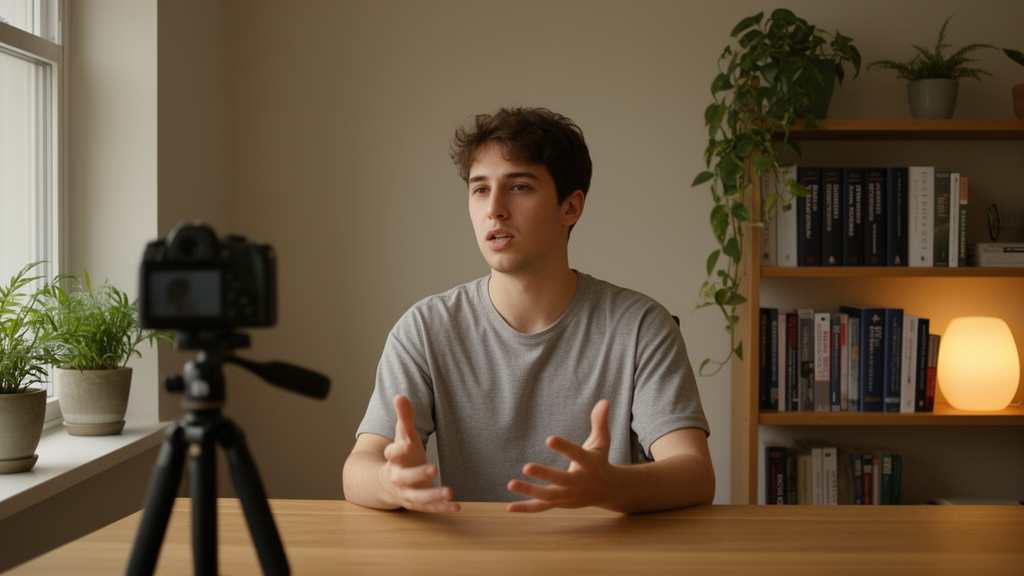
Researchers analyzed video characteristics, thematic coverage, uploader identities, and viewer engagement across TikTok and Bilibili, discovering that differences in information quality between platforms dissipated once creator categories were taken into account.

The study addressed ongoing uncertainties regarding the reliability of short-form mental health information on major video platforms. Investigators evaluated a total sample of 238 Chinese-language videos focusing on anxiety disorders. To assess information quality and credibility, the team applied standardized evaluative instruments including the Global Quality Score, the modified DISCERN tool, and the benchmark criteria established by the Journal of the American Medical Association.

Video characteristics varied substantially between the two examined platforms. Content hosted on Bilibili was significantly longer than clips found on TikTok, demonstrating a rank-biserial correlation of 0.811 with a 95 percent confidence interval ranging from 0.728 to 0.882. In contrast, TikTok clips generated higher levels of viewer interaction across standard engagement metrics.

Thematic content also diverged systematically between platforms. Educational material addressing the prevention of anxiety disorders appeared significantly more often on Bilibili than on TikTok, showing an odds ratio of 2.999 with a 95 percent confidence interval between 1.636 and 5.497 and an adjusted P value of 0.002. Statistical evaluations across platforms and uploaders incorporated appropriate nonparametric testing alongside Holm adjustment procedures.

Unadjusted comparisons initially suggested that TikTok hosted videos with higher modified DISCERN quality scores. However, investigators employed an adjusted ordinal logistic regression model with uploader-level cluster-robust standard errors to assess factors independently associated with these metrics. Following statistical adjustment for uploader type, the platform difference was no longer present, yielding an adjusted odds ratio of 1.19 with a 95 percent confidence interval of 0.53 to 2.68 and a P value of 0.672.

The regression model revealed that the professional identity of the creator served as a key factor associated with information standards. Videos produced by non-psychiatric physicians achieved significantly higher adjusted modified DISCERN scores than clips uploaded by individual users, with an adjusted odds ratio of 2.40, a 95 percent confidence interval of 1.02 to 5.65, and a P value of 0.046.

The analysis also determined that user engagement metrics were not consistently associated with information quality scores.

Methodologically, the evaluation accounted for potential clustering across content producers by incorporating uploader-level cluster-robust standard errors into the multivariable regression analysis.

Subject of Research: Information quality and creator characteristics of anxiety disorder videos on TikTok and Bilibili

Article Title: Content characteristics, information quality, and user engagement of anxiety disorder–related videos on TikTok and Bilibili: a cross-sectional comparative study

Article References: Li, T., Zuo, H., Chai, J., & Zhao, Y. (2026). Content characteristics, information quality, and user engagement of anxiety disorder–related videos on TikTok and Bilibili: a cross-sectional comparative study. BMC Psychiatry. https://doi.org/10.1186/s12888-026-08853-w

Image Credits: AI Generated

DOI: 10.1186/s12888-026-08853-w

Keywords: anxiety disorders, social media, TikTok, Bilibili, health communication, information quality, mDISCERN, Global Quality Score, JAMA benchmark criteria, digital health, mental health communication, cross-sectional study, physician uploaders, user engagement, ordinal logistic regression, health misinformation

News Source: Glenn Wilkins. (November 13, 2026). Social Video Anxiety Content Quality Reflects Uploader Background Rather Than Platform Alone. Scienmag.


Tags: Anxiety disordersBilibiliCross-sectional StudyDigital HealthGlobal Quality Scorehealth communicationhealth misinformationinformation qualityJAMA benchmark criteriamDISCERNmental health communicationordinal logistic regressionphysician uploaderssocial mediaTikTokuser engagement
Share12Tweet7Share2ShareShareShare1

Related Posts

Non-Invasive Brain Stimulation Targets Relieve Pain and Emotional Distress in Chronic Illness

Non-Invasive Brain Stimulation Targets Relieve Pain and Emotional Distress in Chronic Illness

November 20, 2026
Multilevel Barriers Hinder Rural Dog Rabies Vaccination in Kilosa District

Multilevel Barriers Hinder Rural Dog Rabies Vaccination in Kilosa District

November 20, 2026

GPR39 Receptor Activation Counters Metabolic Liver Disease in Preclinical Mouse Models

November 20, 2026

Novel Wheelchair Armrest Device Encourages Self-Directed Upper Limb Practice After Stroke

November 20, 2026

POPULAR NEWS

  • Transient Neonatal Diabetes Can Signal Rare HNF1B Whole-Gene Deletions

    Transient Neonatal Diabetes Can Signal Rare HNF1B Whole-Gene Deletions

    29 shares
    Share 12 Tweet 7
  • Vernacular Names Reveal Ethnobotanical Plant Exudate Knowledge in Brazil

    29 shares
    Share 12 Tweet 7
  • Nurses in 2023 Turkey Mission Faced Emotional Strains and Operational Hurdles

    29 shares
    Share 12 Tweet 7
  • Arabic Resilience and Relapse Scales Show High Reliability in Emirati Addiction Study

    29 shares
    Share 12 Tweet 7

About

We bring you the latest biotechnology news from best research centers and universities around the world. Check our website.

Follow us

Recent News

Non-Invasive Brain Stimulation Targets Relieve Pain and Emotional Distress in Chronic Illness

Multilevel Barriers Hinder Rural Dog Rabies Vaccination in Kilosa District

Trapping-Induced Social Disruption Temporarily Increases Spatial Caution in Wild Pigs

Subscribe to Blog via Email

Enter your email address to subscribe to this blog and receive notifications of new posts by email.

Join 89 other subscribers
  • Contact Us

Bioengineer.org © Copyright 2023 All Rights Reserved.

Welcome Back!

Login to your account below

Forgotten Password?

Retrieve your password

Please enter your username or email address to reset your password.

Log In
No Result
View All Result
  • Homepages
    • Home Page 1
    • Home Page 2
  • News
  • National
  • Business
  • Health
  • Lifestyle
  • Science

Bioengineer.org © Copyright 2023 All Rights Reserved.