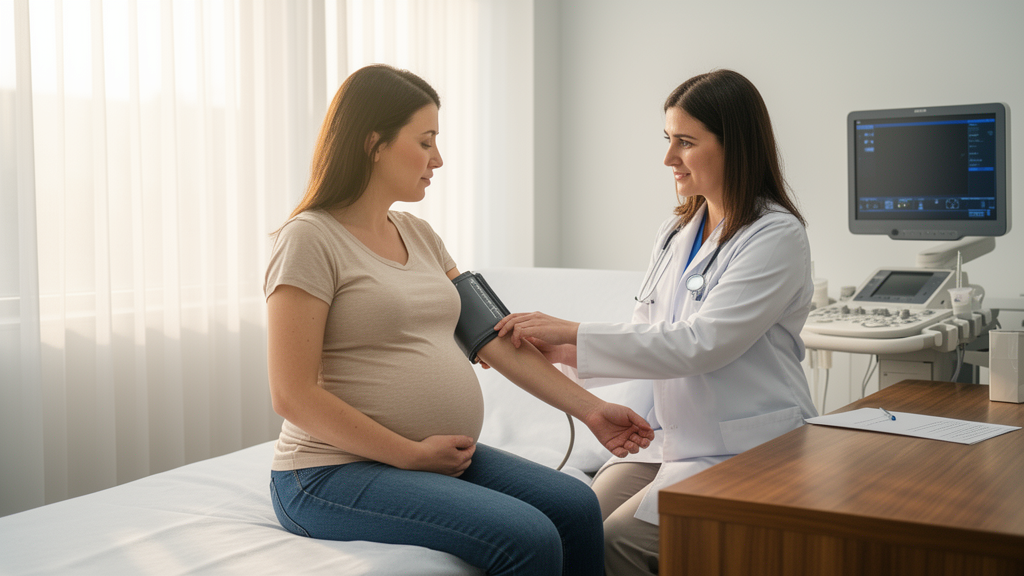
Women with familial hypercholesterolemia, an inherited condition causing lifelong high cholesterol, face a slightly higher risk of developing pre-eclampsia during pregnancy compared to women without the disorder, according to an observational study published in the European Journal of Preventive Cardiology. Familial hypercholesterolemia substantially increases the lifetime risk of cardiovascular heart disease and is estimated to affect approximately one in every 200 to 300 individuals, though the vast majority of cases remain undiagnosed. People diagnosed with hypercholesterolemia exhibit elevated concentrations of total cholesterol in their blood, with particular elevation of low-density lipoprotein, commonly known as LDL or bad cholesterol. While prior investigations have linked non-inherited elevations of blood cholesterol to alterations in reproductive health and maternal outcomes, establishing a clear link has been complicated by the difficulty of disentangling lipid abnormalities from lifestyle factors. By examining women with an inherited genetic condition rather than lifestyle-driven lipid elevations, the researchers sought to clarify how sustained, lifelong exposure to high cholesterol relates to maternal health during pregnancy.
The investigation evaluated reproductive histories across a cohort of more than 1,000 women, comparing 484 participants with confirmed familial hypercholesterolemia against 968 matched controls aged 40 and older across the Netherlands and Norway. To ensure robust comparison groups, researchers recruited participants between 2023 and 2025 and paired cases to controls in a one-to-two ratio matched specifically for age, body mass index, smoking habits, and ethnic background. Information concerning reproductive milestones, medical background, and maternal outcomes was subsequently collected through structured online surveys completed by participants. The primary observational disparity identified between the cohorts centered on pre-eclampsia, which appeared at a higher prevalence among participants diagnosed with familial hypercholesterolemia. Specifically, 11 percent of women managing the inherited cholesterol disorder reported a history of pre-eclampsia during pregnancy, compared to seven percent recorded among the matched controls in the comparison group.
Pre-eclampsia is a recognized pregnancy complication characterised by maternal high blood pressure alongside signs of organ damage, posing health challenges that can impact both mother and infant. The complication can lead to adverse gestational outcomes, including restricted fetal development, slower growth rates during pregnancy, and premature birth, with some instances escalating into serious and potentially life-threatening emergencies. Although clinical medicine currently offers no definitive cure for pre-eclampsia, established medical treatments and structured maternal care plans allow healthcare teams to manage active symptoms, reduce immediate physiological risks, and maintain the health of the baby as safely as possible. Despite the observed statistical elevation in prevalence, the investigators emphasized that the empirical findings do not indicate that every individual woman diagnosed with familial hypercholesterolemia will experience pre-eclampsia during pregnancy.
Study author Professor Jeanine Roeters van Lennep, from Erasmus MC, University Medical Center Rotterdam, explained that although pre-eclampsia occurred more frequently among women with familial hypercholesterolemia, the numerical variance observed between the cohorts remained relatively modest. She expressed optimism that affected patients would find reassurance in the fact that the research revealed no broader pattern of reproductive impairment. Aside from the recorded difference in pre-eclampsia prevalence, the research team detected no statistically significant variations regarding other reproductive health indicators or pregnancy outcomes across the surveyed groups. Women with the inherited cholesterol condition carried a comparable total number of pregnancies when evaluated against the control participants, suggesting that general reproductive function remained broadly similar across both groups.
Because the analysis relied on an observational survey design, the authors cautioned against interpreting the statistical correlation as evidence of direct biological causation. Study author Janneke Mulder, also from Erasmus MC, University Medical Center Rotterdam, explicitly stated that the observational nature of the dataset prevents drawing any firm conclusion that familial hypercholesterolemia or elevated circulating LDL cholesterol directly causes pre-eclampsia. Nonetheless, the research team noted that reproductive health counselling should be routinely incorporated into cardiovascular care pathways for women living with familial hypercholesterolemia, and potentially extended to women presenting with broader non-inherited hypercholesterolemia. Mulder advised that women with familial hypercholesterolemia who are actively planning a pregnancy should consult closely with their clinical healthcare team to thoroughly review cardiovascular risk factors, monitor baseline blood pressure, and determine appropriate management strategies for lipid-lowering pharmacological therapies before and during gestation.
The authors noted that women’s cardiovascular health and reproductive trajectories are inherently intertwined, observing that early age at menarche or premature menopause is associated with heightened lifetime cardiovascular disease risk, while blood cholesterol levels fluctuate naturally throughout the menstrual cycle and during gestation. Furthermore, adverse pregnancy outcomes have been tied to elevated long-term cardiovascular risks in later life. Study author Julie van Oortmerssen from Erasmus MC highlighted the need for larger prospective longitudinal studies to track individuals with varying degrees of lifelong LDL exposure and determine whether hypercholesterolemia coupled with pregnancy complications identifies individuals at elevated long-term cardiovascular risk who might benefit from intensive preventive interventions. The researchers noted that while most study participants with familial hypercholesterolemia were receiving lipid-lowering therapies, they generally initiated treatment during their 30s and 40s when such medications became accessible, leaving open the question of whether earlier or more intensive lipid-lowering therapy could reduce pre-eclampsia risk. Finally, the authors cited key limitations, noting that the cohort predominantly comprised individuals of European ancestry, which restricts the generalisability of the conclusions to broader global populations.
Subject of Research: Familial hypercholesterolemia and pre-eclampsia risk in pregnancy
Article Title: Condition causing lifelong high cholesterol linked to pregnancy complication
Article References: Condition causing lifelong high cholesterol linked to pregnancy complication. Original publication (Bibliographic details unavailable.)
Image Credits: AI Generated
DOI: Not provided
Keywords: familial hypercholesterolemia, pre-eclampsia, pregnancy complications, cholesterol, preventive cardiology, cardiovascular health, maternal health, LDL cholesterol, Condition, causing, lifelong, high
News Source: Harold Sullivan. (November 13, 2026). Inherited High Cholesterol Condition Linked to Modest Pre-Eclampsia Risk Elevation. Scienmag.