Credit: Johannes Wiedersich / TUM
A fundamental prerequisite for life on earth is the ability of living organisms to adapt to changing environmental conditions. Physicists at the Technical University of Munich (TUM) and the University of California San Diego (UCSD) have now determined that the regulation mechanisms used by bacteria to adapt to different environments are based on a global control process that can be described in a single equation.
Environmental conditions like temperature, light, availability of nutrients and many other parameters are constantly changing on earth. Every organism and even every cell thus has myriad mechanisms for adapting to these changes.
One of the best researched examples is Escherichia coli, a bacterium that also lives in the intestines of humans. The supply of nutrients varies from hour to hour. To survive, the bacterium must have the ability to adapt to the changing conditions.
In 1965, Jacques Monod received the Nobel Prize for his proof that bacteria adapt by producing different proteins. For example, they synthesize an enzyme for breaking down lactose when the readily available nutrients contain this milk sugar.
However, despite great interest and massive research efforts over more than half a century, the biochemical details of this complicated regulatory mechanism are still not fully explained and understood.
Kinetics of adaptation
The teams of Ulrich Gerland, Professor in the Physics Department of TU Munich and Professor Terence Hwa at UCSD thus concentrated their work on basic regulatory mechanisms rather than the molecular details of the reaction chains. They considered the question: How quickly can bacteria adapt to changes in their environment?
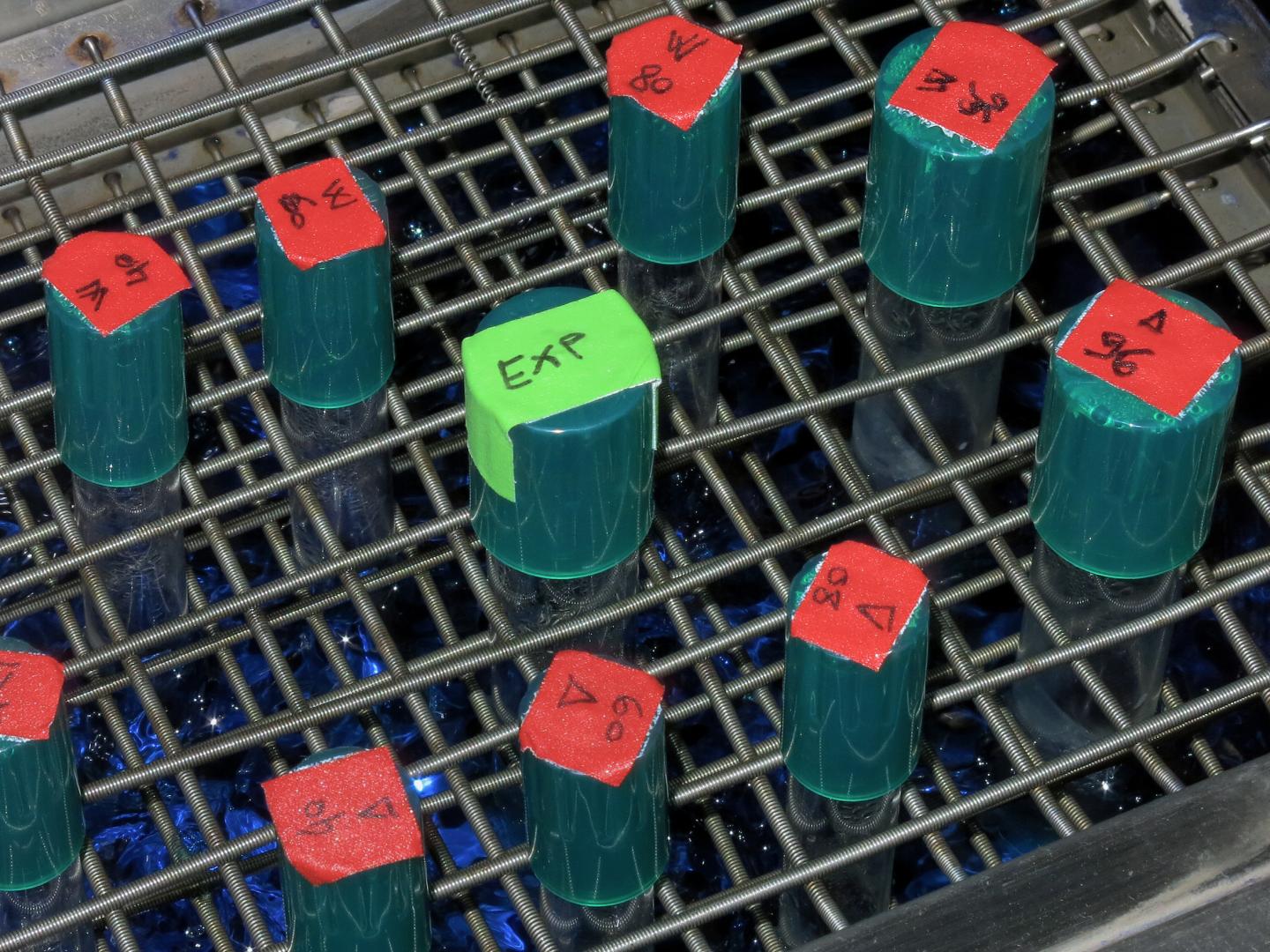
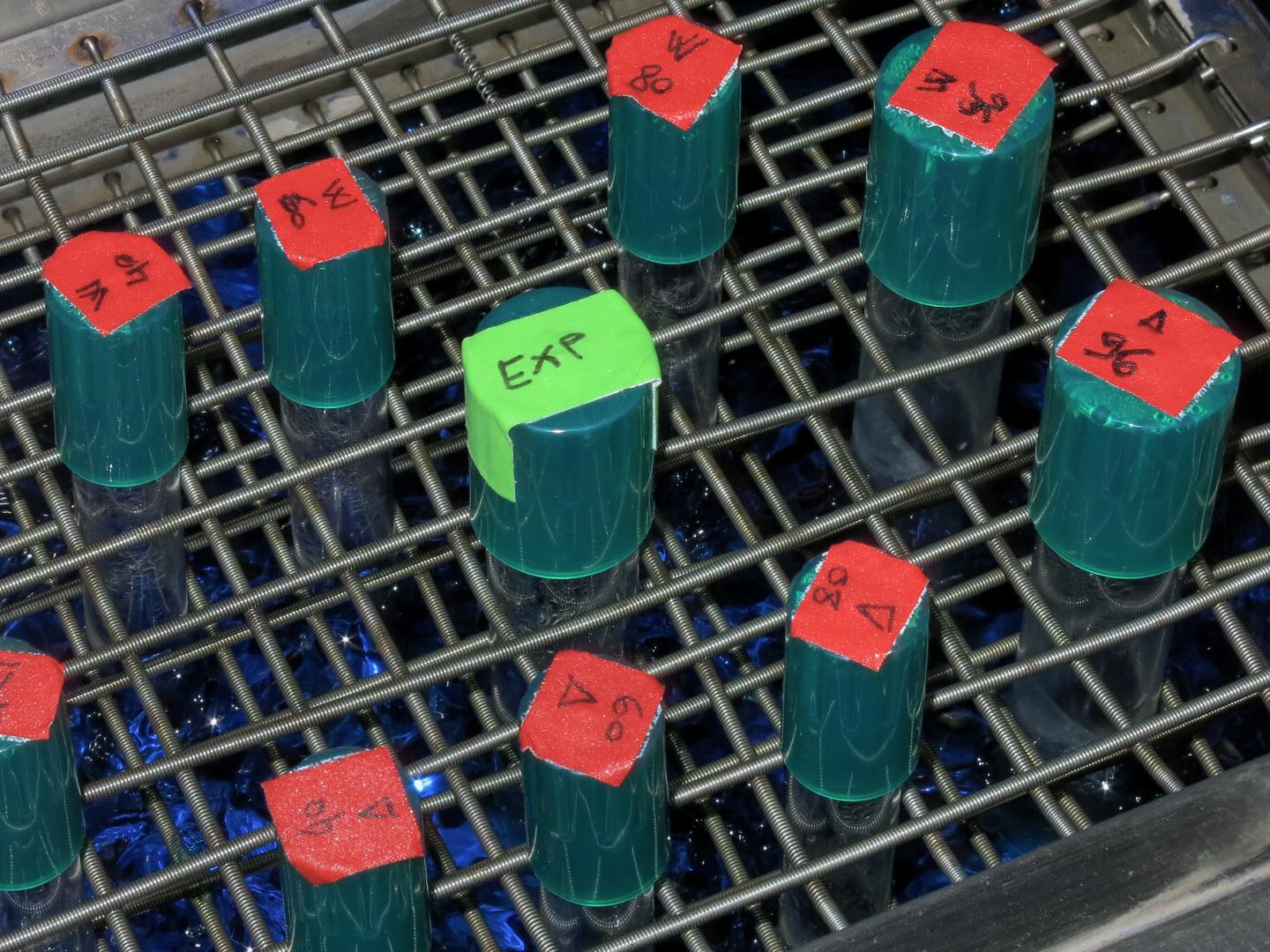
In the laboratory, they studied the growth of bacteria by first giving them only a limited supply of nutrients and then providing them with ample amounts – and vice versa. Because of the adaptation process, there was a delay in the rate of bacterial growth following the changes.
When they gave their bacteria one kind of nutriment first and others later, growth slowed temporarily, even though there was always an ample supply available. The explanation: The bacteria first had to adapt their digestive systems. To this end, the bacteria tweak the concentration of certain enzymes accordingly – and synthesizing these enzymes takes time.
The steady-state model
The physicists developed a model to better understand the adaptation mechanisms. The model utilizes only qualitative information about the biochemical details of the regulation mechanism in a top-down approach. It takes stock of material flows in the cell and allows equations representing the material transport to be established. Looking at the materials balance, the scientists succeeded in compiling the various regulation mechanisms into one global differential equation.
"Our steady-state model of the regulation mechanism correctly describes the temporal development of adaptation to changing nutrients, as well as increases, reductions and changes in the available nutrients, quantitatively and without adjustable parameters," says Ulrich Gerland, summarizing the results of the study.
"Apparently, the kinetics of growth adaptation do not depend on microscopic details of the individual biochemical reactions, but rather adhere to a global strategy for the redistribution of resources for protein synthesis," says Ulrich Gerland. It is thus conceivable that our theoretical model might be applicable to an array of similar kinetic processes.
###
The research was funded bat he National Institutes of Health (NIH), USA, the Simons Foundation, USA, the German Research Foundation (DFG) via the Excellence Cluster Nanosystems Initiative Munich, as well as the priority program SPP1617.
Publications:
Quantifying the benefit of a proteome reserve in fluctuating environments
Matteo Mori, Severin Schink, David W. Erickson, Ulrich Gerland, and Terence Hwa
Nature Communications, 8, 1225 (2017) – DOI: 10.1038/s41467-017-01242-8
A global resource allocation strategy governs growth transition kinetics of Escherichia coli
David W. Erickson, Severin J. Schink, Vadim Patsalo, James R. Williamson, Ulrich Gerland and Terence Hwa
Nature 551, 119-123 (2017) – DOI: 10.1038/nature24299
Media Contact
Andreas Battenberg
[email protected]
49-892-891-0510
@TU_Muenchen
http://www.tum.de
Original Source
https://www.tum.de/nc/en/about-tum/news/press-releases/detail/article/34371/ http://dx.doi.org/10.1038/nature24299