• HOME
  • NEWS
  • EXPLORE
    • CAREER
      • Companies
      • Jobs
    • EVENTS
    • iGEM
      • News
      • Team
    • PHOTOS
    • VIDEO
    • WIKI
  • BLOG
  • COMMUNITY
    • FACEBOOK
    • INSTAGRAM
    • TWITTER
Monday, November 16, 2026
BIOENGINEER.ORG
No Result
View All Result
  • Login
  • HOME
  • NEWS
  • EXPLORE
    • CAREER
      • Companies
      • Jobs
        • Lecturer
        • PhD Studentship
        • Postdoc
        • Research Assistant
    • EVENTS
    • iGEM
      • News
      • Team
    • PHOTOS
    • VIDEO
    • WIKI
  • BLOG
  • COMMUNITY
    • FACEBOOK
    • INSTAGRAM
    • TWITTER
No Result
View All Result
Bioengineer.org
No Result
View All Result
Home NEWS Science News Health

Mismatched Surface Topography Sustains Open Skin Microchannels for Protein Sampling

by
November 12, 2026
in Health
Reading Time: 2 mins read
0
Mismatched Surface Topography Sustains Open Skin Microchannels for Protein Sampling

Mismatched Surface Topography Sustains Open Skin Microchannels for Protein Sampling

Share on FacebookShare on TwitterShare on LinkedinShare on RedditShare on Telegram

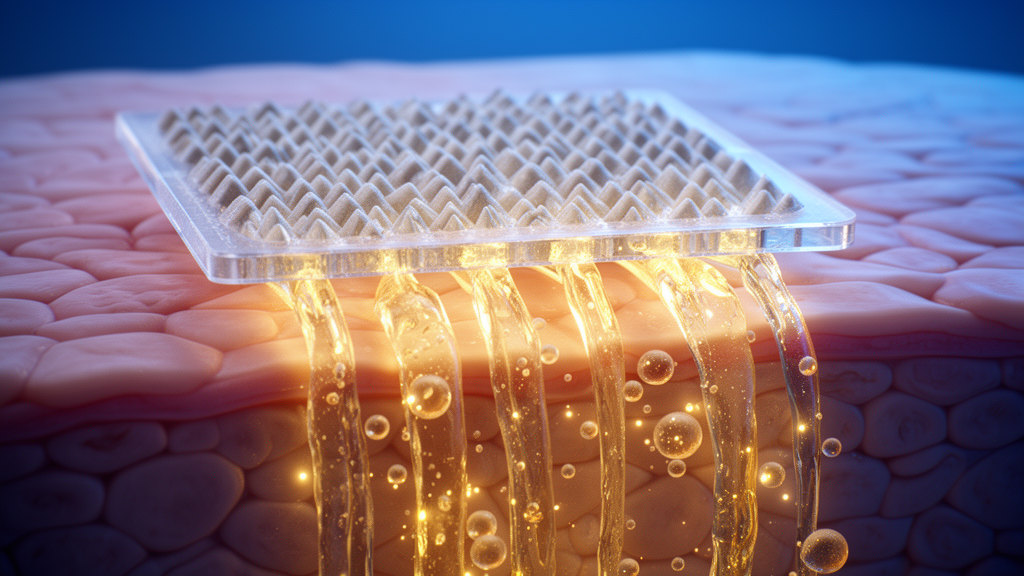
Engineers have resolved a persistent mechanical conflict in living soft tissue by using topographical mismatch to sustain open microchannels without triggering fibrotic encapsulation. The challenge of keeping microscale conduits patent within soft tissues has long been constrained by mechanical tradeoffs: implants rigid enough to prevent closure typically inflict inflammation, whereas compliant implants engineered to prevent tissue irritation are rapidly sealed within minutes by the natural viscoelastic recoil of surrounding tissue. By deliberately designing an ultrathin multi-lobed implant with geometric non-conformity relative to the surrounding tissue, researchers resolved this conflict through topographical mismatch.

The study, published in Nature Communications, demonstrates that conduits engineered to deliberately exceed the conformability limit of skin maintain patency across extended mechanical and physiological stress. During experimental testing, the mismatched interfaces sustained continuous patency through more than 42 hours of sustained physiological deformation. Furthermore, the open microchannels remained fully functional for at least 7 days in living skin. Crucially, this extended lifetime was achieved without activating the mechanotransductive signalling pathways that normally initiate fibrotic encapsulation around implanted biomedical interfaces.

Beyond maintaining channel stability, the conduits transmit macromolecules through intact skin. The sustained microchannels successfully transmitted macromolecules weighing up to 70 kilodaltons through intact skin. This transport capacity surpasses the molecular weight ceiling of transdermal iontophoresis.

When evaluated in vivo, the topographical mismatch system enabled continuous access to interstitial fluid dynamics, uncovering tissue-level pharmacokinetic patterns that remain invisible to standard blood testing. Measurements of a model protein revealed that interstitial fluid concentrations peaked at 4.7-fold higher than serum at 2 hours. The comparative distribution subsequently inverted by 8 hours, followed by a measurable rebound in concentration by 24 hours. These shifting concentration gradients highlight significant kinetic discrepancies between systemic circulation and localized tissue compartments.

The experimental observations demonstrate that topographical mismatch establishes a generalisable design principle for sustained, biocompatible interfaces between soft devices and living tissue. By resolving the mechanical conflict between inflammation and viscoelastic recoil, topographical mismatch presents a functional mechanism for non-destructive protein biopsy in living soft tissue.

Subject of Research: Topographical mismatch microchannels in living soft tissue

Article Title: Topographical mismatch sustains open microchannels in living soft tissue for non-destructive protein biopsy

Article References: Le, P. T., Yun, G., Hwang, T. S., Lee, H. W., Cho, H., Lee, J., & Lim, G. (2026). Topographical mismatch sustains open microchannels in living soft tissue for non-destructive protein biopsy. Nature Communications. https://doi.org/10.1038/s41467-026-78755-8

Image Credits: AI Generated

DOI: 10.1038/s41467-026-78755-8

Keywords: microchannels, topographical mismatch, living soft tissue, protein biopsy, viscoelastic recoil, mechanotransductive signalling, fibrotic encapsulation, interstitial fluid, pharmacokinetics, transdermal transport, macromolecules, soft tissue mechanics, multi-lobed implants, tissue interface, biocompatibility, Nature Communications

News Source: Ophelia Keating. (November 12, 2026). Mismatched Surface Topography Sustains Open Skin Microchannels for Protein Sampling. Scienmag.


Tags: biocompatibilityfibrotic encapsulationinterstitial fluidliving soft tissuemacromoleculesmechanotransductive signallingmicrochannelsmulti-lobed implantsNature CommunicationsPharmacokineticsprotein biopsysoft tissue mechanicstissue interfacetopographical mismatchtransdermal transportviscoelastic recoil
Share12Tweet7Share2ShareShareShare1

Related Posts

Drug-Resistant Enterobacteriaceae in Livestock Foods Pose Escalating Global Safety Threats

Drug-Resistant Enterobacteriaceae in Livestock Foods Pose Escalating Global Safety Threats

November 16, 2026
Review links PTSD to metabolic dysfunction, proposes drug repurposing

Review links PTSD to metabolic dysfunction, proposes drug repurposing

November 16, 2026

Higher Inflammatory Markers Linked to Pregnancy Loss

November 16, 2026

Vachellia tortilis Extracts Show Antioxidant and Amylase Inhibition

November 16, 2026

POPULAR NEWS

  • Single-Cell Sequencing Unveils Immune Signatures Linked to Methotrexate Response in Arthritis

    Single-Cell Sequencing Unveils Immune Signatures Linked to Methotrexate Response in Arthritis

    29 shares
    Share 12 Tweet 7
  • CRISPR Gene Editing Yields Non-Browning Bananas to Extend Shelf Life

    29 shares
    Share 12 Tweet 7
  • Rare Pannonibacter Bloodstream Infection in Hemodialysis Patient Resolves After Catheter Removal

    29 shares
    Share 12 Tweet 7
  • Machine Learning Distinguishes Fenugreek Seeds but Exposes Deep Learning Context Flaws

    29 shares
    Share 12 Tweet 7

About

We bring you the latest biotechnology news from best research centers and universities around the world. Check our website.

Follow us

Recent News

Review Evaluates Early Warnings And Predictive Control For Engineered Environmental Microbiomes

Natural Product Scaffolds Drive Cancer Drug Discovery Through Targeted Synthetic Optimization

Review Links GLP-1 Therapies to Multiorgan Protection in Cardiovascular-Kidney-Metabolic Syndrome

Subscribe to Blog via Email

Enter your email address to subscribe to this blog and receive notifications of new posts by email.

Join 87 other subscribers
  • Contact Us

Bioengineer.org © Copyright 2023 All Rights Reserved.

Welcome Back!

Login to your account below

Forgotten Password?

Retrieve your password

Please enter your username or email address to reset your password.

Log In
No Result
View All Result
  • Homepages
    • Home Page 1
    • Home Page 2
  • News
  • National
  • Business
  • Health
  • Lifestyle
  • Science

Bioengineer.org © Copyright 2023 All Rights Reserved.