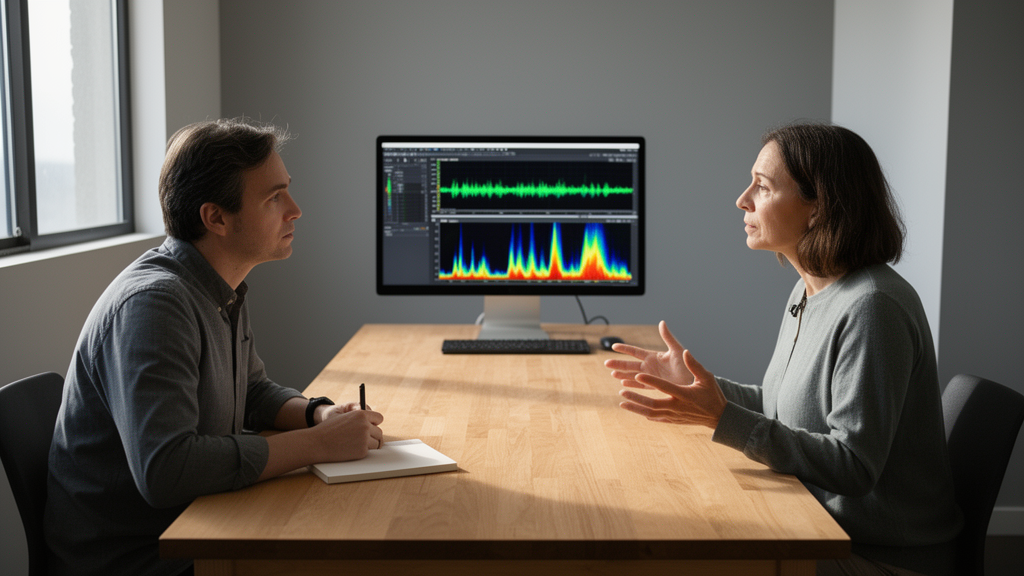
Communication impairments in autism spectrum disorder can be objectively identified in conversational speech through natural language processing techniques, according to a study investigating adult participants during naturalistic interaction. Researchers applied computational linguistics approaches to evaluate conversational samples, observing that automated language markers reliably captured distinctive speech features that have traditionally required subjective clinical evaluation.
Assessment of communicative differences in autism has historically relied upon qualitative clinical observation and subjective standardized evaluations. To explore a more objective, efficient, reproducible, and tractable alternative, the investigative team utilized automated natural language processing pipelines designed to extract quantitative linguistic metrics from unscripted, natural dialogue.
The study examined recorded conversational speech samples gathered from 41 autistic adults alongside a comparison group of 33 neurotypical adults. By selecting a mature adult cohort and employing a conversational spoken task rather than highly structured prompts, the authors sought to analyze naturalistic speech dynamics, while extending computational autism research into non-English language contexts.
The computational pipeline analyzed several dimensions of spoken communication, focusing specifically on repetitive and idiosyncratic language usage, syntactic patterns, emotional sentiment, and generic conversational speech features. The linguistic models quantified lexical selection, vocabulary distribution, structural syntax markers, and interactional shifts across conversational turns.
The linguistic analysis revealed that autistic adults demonstrated a higher tendency to repeat themselves and incorporated more unusual words and idiosyncratic expressions into their dialogues compared to neurotypical peers. The computational models also identified a more negative overall emotional tone and a preference for shorter word lengths in the autistic cohort.
The conversational dynamics also displayed more frequent speaker transitions, which corresponded with a requirement for more frequent prompts from the examiner to sustain dialogue.
The researchers observed specific associations between automated language features and standardized cognitive measures. The presence of idiosyncratic vocabulary was related to lower cognitive functioning as well as reduced abilities in mental state decoding and reasoning, while lower usage of determiners was associated with lower theory of mind performance.
The investigators emphasized that automated computational tools can capture subtle communication characteristics and reflect underlying socio-cognitive processes in adult clinical populations. However, they noted that future research employing larger and longitudinal participant samples remains necessary to validate and expand upon these natural language findings.
Published in the Journal of Autism and Developmental Disorders, the research underscores how objective language processing tools can capture nuanced communication differences that standard qualitative interviews often evaluate with subjective impressions.
The study also demonstrates the practical feasibility of deploying automated computational techniques within adult autism research and non-English conversational contexts.
Subject of Research: Computational analysis of communication patterns in autistic adults using natural language processing
Article Title: Assessing Communication Impairments in Adults With Autism Using Natural Language Processing
Article References: Kizilay, E., Arslan, B., Verim, B., Cesim, E., Turan, Y. E., Demir, M., İlhan, Ö., Demirlek, C., & Bora, E. (2026). Assessing Communication Impairments in Adults With Autism Using Natural Language Processing. Journal of Autism and Developmental Disorders. https://doi.org/10.1007/s10803-026-07605-9
Image Credits: AI Generated
DOI: 10.1007/s10803-026-07605-9
Keywords: autism spectrum disorder, natural language processing, computational linguistics, speech analysis, adult autism, conversational speech, theory of mind, cognitive functioning, idiosyncratic language, speech sentiment, syntax analysis, communication impairments, repetitive speech, referential language, neurodevelopmental research, objective assessment
News Source: Daphne Blevins. (November 12, 2026). Natural Language Processing Detects Subtle Communication Patterns in Adults With Autism. Scienmag.