Researchers investigating viral diversity around the Mabali Forest Reserve in the Democratic Republic of Congo have detected adenovirus DNA in both wild non-human primates and febrile humans, identifying a distinct, divergent phylogenetic lineage in Cercopithecus wolfi. The surveillance effort documented viral DNA across multiple primate species but found no evidence of recent cross-species transmission between the surveyed human and wildlife populations.
Adenoviruses display substantial genetic variation in humans and non-human primates, yet their distribution among wild African primate populations remains incompletely documented. To address this gap, the research team conducted adenovirus screening and characterization within a One Health framework, examining biological samples collected from free-ranging primates and people living adjacent to the reserve ecosystem.
The field study analyzed 630 non-human primate fecal specimens collected in December 2023, along with 221 stool samples gathered in July 2025 from local individuals presenting with fever. To verify the animal hosts, the investigators sequenced the mitochondrial 16S rRNA gene, successfully determining primate species identity for 569 of the 630 fecal samples, representing an identification rate of 90.3 percent.
Laboratory screening for adenovirus DNA was conducted using quantitative polymerase chain reaction assays targeting the viral hexon gene. Positive specimens were subsequently characterized by sequencing a partial region of the viral DNA polymerase gene, followed by phylogenetic evaluations based on deduced amino acid sequences.
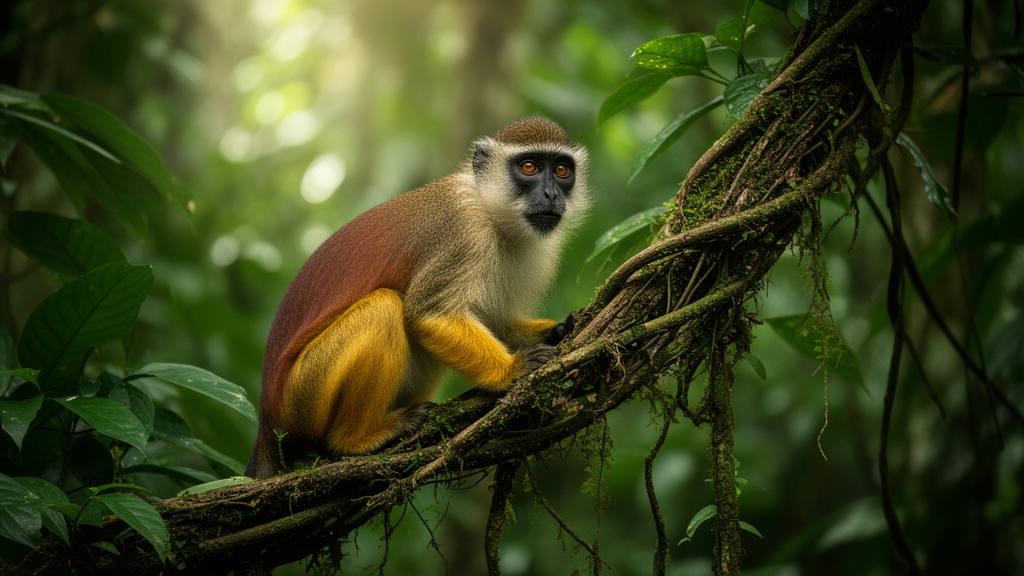
Among the 569 confirmed non-human primate samples, adenovirus DNA was detected in 10 specimens, representing a positivity rate of 1.76 percent. These positive cases were distributed across three primate species, comprising six detections in Cercopithecus wolfi, three in Cercopithecus ascanius, and one in Lophocebus aterrimus. Five of the sequences derived from Cercopithecus wolfi formed a distinct monophyletic cluster supported by a 77 percent bootstrap value, whereas the three Cercopithecus ascanius sequences clustered near the human adenovirus 41 reference sequence.
Parallel testing of human stool specimens revealed adenovirus DNA in 9 of the 221 febrile individuals, yielding a detection rate of 4.1 percent. The human-derived viral sequences exhibited genetic affinities with several recognized human adenovirus reference types. Despite these affinities and the detection of viral DNA in both groups, the authors emphasized that the observed data do not establish recent cross-species transmission between the sampled human and wild primate cohorts.
The investigators noted important methodological constraints, pointing out that their phylogenetic reconstructions relied on an alignment of only 76 amino acid positions, which limits the resolution of evolutionary relationships. They concluded that further genomic characterization and sustained longitudinal surveillance will be necessary to resolve adenovirus diversity patterns and evolutionary dynamics across the human-wildlife interface.
Subject of Research: Adenovirus genetic diversity in wild non-human primates and humans in the Democratic Republic of Congo
Article Title: Genetic diversity of adenoviruses in humans and wild non-human primates from the Mabali Reserve (DRC), including a divergent adenovirus cluster in Cercopithecus wolfi
Article References: Kumakamba, C., Amona, I., Mangombi, J., Muyembe-Tamfum, J.-J., Fenollar, F., & Mediannikov, O. (2026). Genetic diversity of adenoviruses in humans and wild non-human primates from the Mabali Reserve (DRC), including a divergent adenovirus cluster in Cercopithecus wolfi. Virology Journal. https://doi.org/10.1186/s12985-026-03357-1
Image Credits: AI Generated
DOI: 10.1186/s12985-026-03357-1
Keywords: Adenovirus diversity, Cercopithecus wolfi, Cercopithecus ascanius, Lophocebus aterrimus, Mabali Forest Reserve, Democratic Republic of Congo, One Health framework, Hexon gene, DNA polymerase gene, 16S rRNA sequencing, qPCR screening, HAdV-41, Non-human primates, Cross-species transmission, Fecal sample analysis, Phylogenetic cluster, Human-wildlife interface
News Source: Drew Townsend. (November 12, 2026). Divergent Adenovirus Cluster Identified in Wild Cercopithecus wolfi in DR Congo. Scienmag.