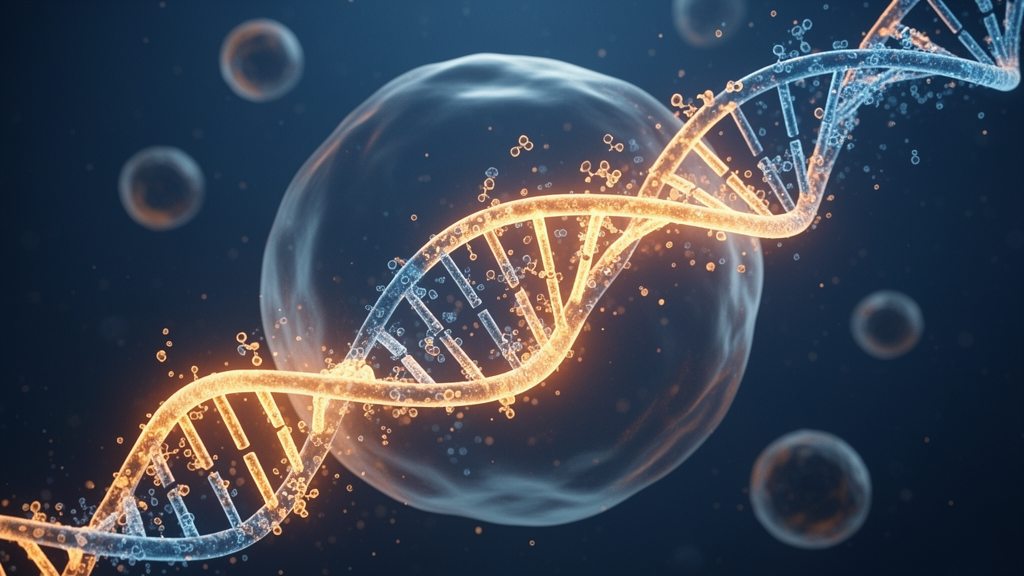
A systematic review published in The Innovation Life reveals that pseudogenes—gene copies inactivated by mutation and historically categorized as nonfunctional junk DNA—have actively driven environmental adaptation across vertebrates while playing complex roles in human disease. Analyzing genomic patterns across diverse animal lineages, the authors demonstrate that when species transition into new ecological niches, once-vital genes frequently become dispensable, allowing their loss of function to confer distinct survival advantages rather than evolutionary deficits.
Genomic identification strategies increasingly rely on comparative cross-species analyses, screening homologous genes for loss-of-function mutations to separate verified gene-loss events from sequencing assembly errors. In the human genome alone, researchers have cataloged roughly 14,000 pseudogenes whose distribution across chromosomes is non-random. Across vertebrate history, recurrent pseudogenization events have systematically altered biological phenotypes, particularly within immunity, sensory perception, cellular metabolism, and dietary specialization.
Immune and sensory systems highlight the adaptive potential of targeted gene loss in response to novel habitat pressures. Whales and other marine mammals encountering aquatic bacterial environments lost the functional pattern-recognition receptor TLR5, which senses bacterial flagellin; functional investigations show that TLR5 pseudogenization dampens damaging inflammation and improves overall survival following bacterial infection. Similarly, subterranean life relaxed visual selective constraints in naked mole-rats, leading to the accumulation of inactivating mutations across multiple phototransduction and retinal-integrity genes, resulting in a degenerate eye structure that mirrors adaptations observed in other underground mammals.
Metabolic and dietary adaptations provide further evidence of beneficial gene inactivation across disparate lineages. Hummingbirds, which require sustained hovering flight powered entirely by nectar, experienced pseudogenization of the muscle-specific gluconeogenic enzyme gene FBP2; this loss enhances glycolytic flux, mitochondrial biogenesis, and cellular respiratory capacity to meet intense carbohydrate demands. In dietary evolution, the transition of giant pandas from omnivorous feeding to an almost exclusive bamboo diet coincided with the loss of DUOX2, which weakened thyroid hormone synthesis and reduced basal metabolic rate to match low-energy forage, while inactivation of the umami receptor gene T1R1 likely accompanied the same nutritional transition.
Beyond historical vertebrate adaptation, pseudogenes actively participate in human disease networks, largely through duplicated gene copies that retain transcription. Transcribed pseudogenes produce regulatory RNAs, encode truncated peptides, or function as cis-regulatory elements capable of both mitigating and exacerbating illness. For example, the pseudogene PTENP1 acts as a microRNA sponge to relieve transcriptional repression on the tumor suppressor PTEN, thereby curbing cancer-cell proliferation, and HBBP1 modulates TAL1 to alleviate beta-thalassemia, whereas transcripts from pseudogenes such as TDGF1P3 drive tumor progression.
The review identifies an asymmetry in contemporary genomics: while pseudogene-derived regulatory RNAs are extensively documented across human oncology, hematopoiesis, and metabolic disorders, their functional roles remain largely untested in adaptive evolution. This gap persists because evolutionary adaptation research has primarily focused on unitary pseudogenes lacking functional duplicates, and non-model wildlife species typically resist routine experimental and genetic manipulation in laboratory settings.
Emerging genomic technologies are opening avenues to establish causal links between pseudogenization and phenotypic adaptation. Advanced long-read RNA sequencing alongside CRISPR/Cas9 base editing, which can directly introduce or revert premature stop codons in experimental models, provides precise tools to test whether specific gene inactivations drive observed traits. Furthermore, instances of convergent pseudogenization in distantly related species confronting comparable environmental pressures offer a powerful framework for evaluating the predictability of evolutionary trajectories.
The conceptual synthesis presented by lead researcher Jin and colleagues underscores a fundamental shift in evolutionary biology, reframing pseudogenes from discarded genetic remnants into dynamic participants within regulatory architecture. By examining how mutated gene sequences persist across diverse vertebrate genomes, the systematic review demonstrates that gene loss cannot be viewed merely as evolutionary damage or random decay. Instead, shedding ancestral genetic functions operates as a viable adaptive strategy when species encounter unfamiliar environmental demands.
In human disease networks, pseudogene elements act as double-edged regulators, exerting either protective or pathogenic effects in the development of cancer, blood disorders affecting hematopoiesis, and broader metabolic conditions.
Subject of Research: Adaptive evolution and human disease mechanisms mediated by vertebrate pseudogenes
Article Title: Losing genes helped whales, naked mole-rats, and hummingbirds adapt
Article References: Losing genes helped whales, naked mole-rats, and hummingbirds adapt. Original publication (Bibliographic details unavailable.)
Image Credits: AI Generated
DOI: Not provided
Keywords: pseudogenes, pseudogenization, adaptive evolution, vertebrate genetics, The Innovation Life, TLR5, cetacean adaptation, naked mole-rats, FBP2, hummingbird metabolism, giant pandas, DUOX2, T1R1, PTENP1, HBBP1, TDGF1P3, CRISPR-Cas9 base editing, long-read RNA sequencing
News Source: Juliet Wilcox. (November 12, 2026). Gene Loss Through Pseudogenization Drove Adaptive Evolution Across Diverse Vertebrates. Scienmag.